Compact CNC Router Guide: Features, Specifications, and Buying Considerations
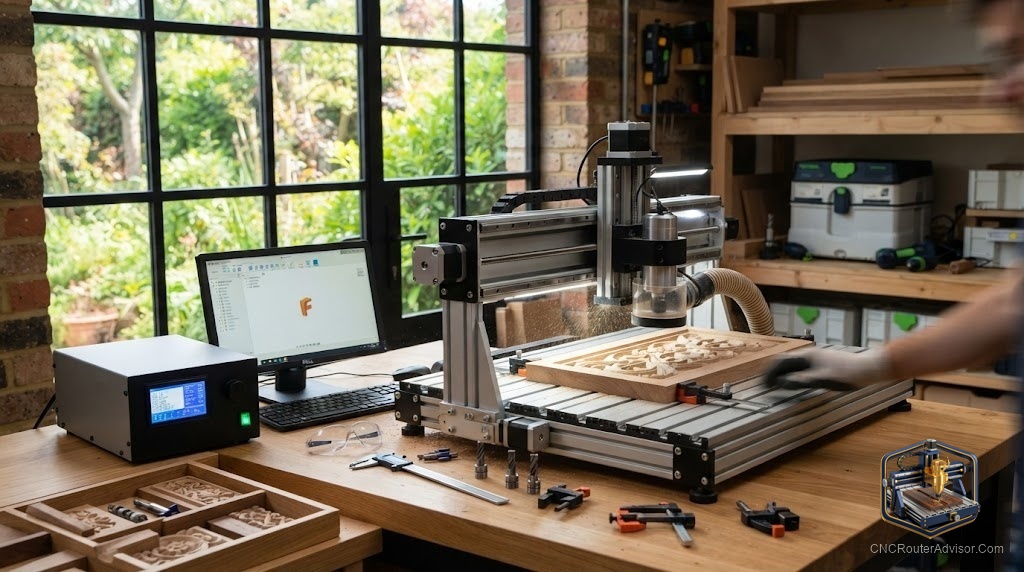
Not everyone has a garage bay or a dedicated shop to give a CNC router. For a great many makers, the machine has to share a desk, a spare corner, or a small studio, and it has to do so without dominating the room. That is where a compact CNC router earns its place. Small enough to live on a bench, capable enough to make real parts, it is how a huge number of people get into CNC. This guide covers what to look for when space is at a premium.
What compact really means
A compact CNC router is a small-footprint machine, usually a desktop unit, designed to fit where a full-size machine cannot. It trades a large work area for portability and convenience. The important thing to understand is that compact does not have to mean incapable. A well-built small machine engraves, cuts, and carves wood, plastics, and softer materials with genuine precision. It simply does it within a smaller work envelope.
Features that matter in a small machine
When every dimension is tight, a few features carry extra weight:
- Work area, the most important trade-off, so match it honestly to the largest parts you plan to make.
- Frame rigidity, since even a small machine benefits from a stiff frame in steel or heavy aluminum extrusion for clean cuts.
- Motion system, with lead screws or ball screws favoring precision and belts favoring lower cost.
- Spindle, where a trim router or a capable DC spindle covers most hobby materials.
- Controller and software, ideally a GRBL controller with approachable, well-supported software.
A compact machine that gets these right punches well above its size.
Specifications to check
Beyond the marketing, look at the numbers that decide fit and capability. Confirm the actual work area in all three axes, since Z travel in particular is often limited on small machines and caps how thick a piece you can cut. Check the overall footprint against your space, remembering to allow clearance for the gantry to move and for material to load. And note the spindle’s power and speed range so you know what materials it will handle.
Choosing a compact machine
For learning and small parts, a desktop machine is ideal. The Genmitsu 3018-PRO is one of the most popular compact routers for engraving and small work, and a low-risk way to learn the whole workflow. If you want a bit more rigidity in a still-small package, the Genmitsu 3020-PRO MAX V2 stiffens the frame while staying desktop friendly. For those who want more work area without jumping to a full shop machine, the FoxAlien Masuter Pro offers more room while remaining manageable.
Living with a compact machine
Small machines are a pleasure precisely because they fit into normal life. Still, plan for the essentials. Dust collection matters even on a small machine, both for cleaner cuts and for your lungs. Secure workholding is just as important as on a big machine, since a small part that shifts is still ruined. And noise, while less than a full spindle, is worth considering in a shared living space.
The right expectations
A compact CNC router is the right tool for learning, prototyping, engraving, jewelry-scale work, small signs, and parts that fit its envelope. It is not the machine for full sheets or heavy production, and asking it to be leads to frustration. Match it to small-format work and it delights. Many makers start compact, learn the craft, and only later add a larger machine once they know exactly what they need. That is a smart path, and a good compact router makes the first step easy.