CNC Routing NYC Explained: Uses, Setup, and Key Considerations
New York City is a hard place to own a big machine and a wonderful place to need one. Space is tight, rents are high, and buildings have rules, yet the city is packed with designers, fabricators, set builders, sign makers, and architects who all need precise cut parts. That tension is exactly why CNC routing has a distinct character in NYC, and why understanding it, whether you plan to buy a machine or hire the work out, pays off. This guide looks at CNC routing through a New York lens.
What CNC routing offers a city maker
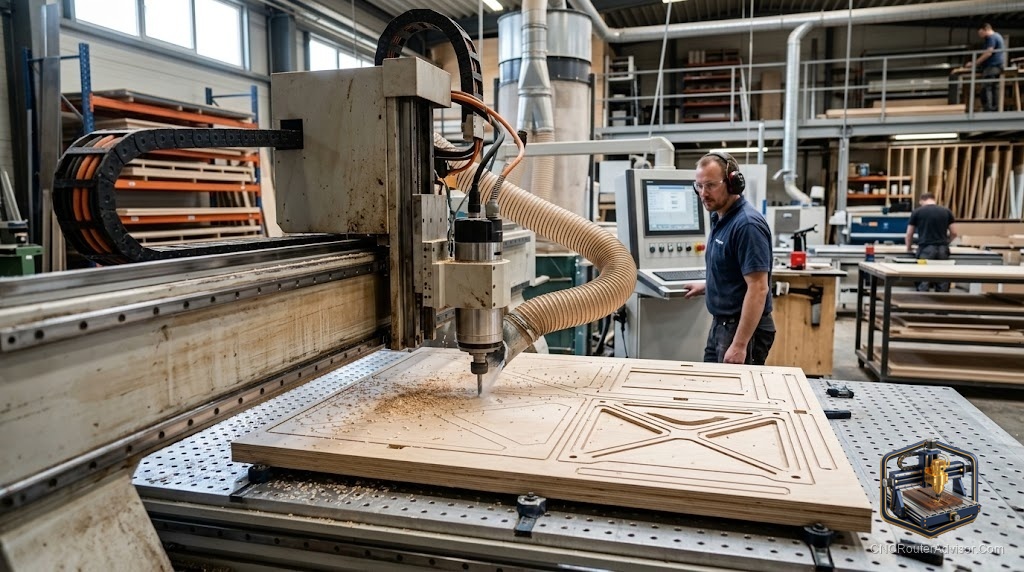
At its core, CNC routing uses a computer to guide a spinning cutter through material with precision and repeatability. A machine moves the cutter across three axes, the X axis for left and right, the Y axis for front and back, and the Z axis for depth, following a design turned into G-code. For NYC’s makers, that means signs, displays, furniture parts, architectural details, set pieces, and prototypes, produced accurately and repeatably from a digital file.
In a city built on design and small-batch craft, that capability is in constant demand.
The space question
The defining constraint in NYC is space. A large gantry router needs a footprint that many apartments and small studios simply cannot spare, along with power, dust management, and noise tolerance that shared buildings may not allow. This shapes how people approach CNC routing in the city:
- Desktop machines fit small studios and let individuals prototype and produce small parts without a dedicated shop.
- Shared makerspaces give access to larger machines without the cost and footprint of owning one.
- Local CNC routing services handle larger jobs and larger material for those who would rather send out the work.
Deciding which of these fits your situation is the key first step.
If you want to own a machine
For those who do have the room, judge a machine on the same fundamentals that matter anywhere: work area matched to your projects, frame rigidity for clean cuts, a motion system suited to your precision needs, and enough spindle power for your materials. In a dense building, also weigh noise and dust seriously, since a machine that runs cleanly and quietly is far easier to live with when neighbors share your walls. Good dust extraction is not optional in a shared space.
If you want to hire it out
Many New Yorkers find it smarter to use a local CNC routing service than to own and house a machine. When you do, describe your job clearly, provide clean design files, and ask about material options, sizes they can handle, turnaround, and finishing. A good service can take a design and return finished parts without you owning a single tool, which suits the city’s space realities perfectly.
Key considerations for NYC
Before committing either way, weigh what the city demands. Factor in space, power, noise, and dust for ownership. Factor in cost, turnaround, and file preparation for hiring out. And be honest about your volume, since occasional projects favor services or makerspaces while steady work may justify a machine of your own. Matching the approach to your real needs and constraints is what makes CNC routing practical in a place as dense as New York.
Making it work in the city
CNC routing thrives in NYC despite the space crunch, because the demand for precise, custom parts is everywhere. Whether you carve out room for a desktop machine, join a makerspace, or partner with a local service, the path from digital design to finished part is open to you. Choose the route that fits your space, budget, and volume, and the city’s constraints stop being a barrier and become just another design problem to solve.