CNC Routing Meaning Explained: Uses, Setup, and Key Considerations
The phrase CNC routing gets used constantly in workshops and product listings, but its plain meaning is worth pinning down, because understanding it makes everything else about the machine click into place. Strip away the jargon and CNC routing is simply the process of using a computer to guide a spinning cutter through material with precision and repeatability. Once that idea lands, the tools, the software, and the projects all start to make sense.
What CNC routing means
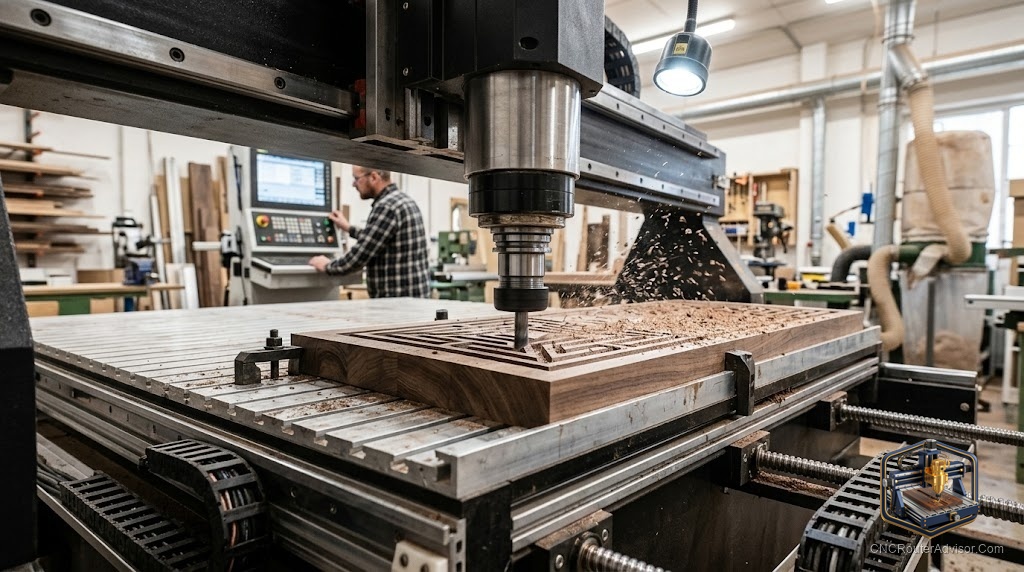
CNC stands for Computer Numerical Control. Routing refers to cutting, carving, and shaping material with a rotating cutter, the same basic action a handheld router performs. Put them together and CNC routing is the computer-controlled version of that work. Instead of a person guiding the cutter by hand, a computer drives motors that move the cutter along programmed paths. The machine does exactly what the design specifies, every time.
The magic word in that definition is repeatability. A skilled hand can make one beautiful part. A CNC router can make a hundred identical ones without fatigue or drift.
How the process works
Underneath the term is a clear chain of steps. It starts with a design created in software. That design is converted into G-code, the instructions the machine understands. A controller, often a GRBL controller on hobby machines, reads the G-code and drives the motors. The cutter then moves across three axes, the X axis for left and right, the Y axis for front and back, and the Z axis for depth, following the design exactly. Material is held firmly in place while the cutter does its work.
What CNC routing is used for
The process is remarkably versatile. It carves signs and three-dimensional reliefs, cuts flat parts and furniture components, engraves detail and lettering, and produces repeatable parts for small production runs. It works across materials, from wood and plastics to softer metals with the right setup. That range is why CNC routing shows up in hobby garages, sign shops, cabinet makers, and manufacturers alike.
The parts that make it work
A machine’s ability to route well depends on a few fundamentals. Frame rigidity, from a steel frame or heavy aluminum extrusion, keeps cuts clean. The motion system, whether ball screws, lead screws, or timing belts, shapes precision. Spindle power decides what materials and depths are practical. And the work area sets how large a piece you can cut. These are the things to understand when judging whether a machine will route the way you need.
Key considerations
If the meaning of CNC routing has you interested in trying it, a few things are worth knowing up front. There is a software workflow to learn, since design and toolpath generation is where much of the skill lives. Workholding matters on every job, because material that moves ruins the cut. Dust management is part of the process, both for visibility and health. And matching the machine to your intended work, in size and power, saves frustration later.
From term to tool
CNC routing, at its core, is just precision cutting guided by a computer. Understanding that plain meaning demystifies the whole field. The machine is not magic, it is a rotating cutter following a digital plan with a steadiness no hand can match. Grasp that, and the path from a design on your screen to a finished piece on your bench stops feeling mysterious and starts feeling achievable.