
CNC Router in Texas: Dealers, Pricing, and Buying Tips
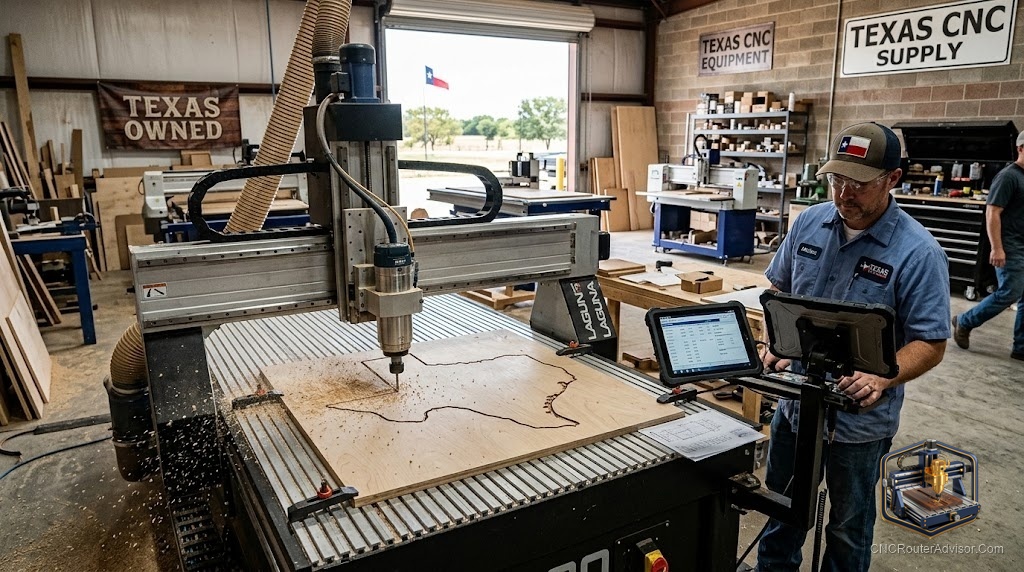
Texas has a deep maker and manufacturing streak, from custom furniture shops in the Hill Country to sign makers in the big cities and ranch fabricators who build what they need themselves. That culture makes it a strong place to buy a CNC router, whether you want a desktop machine for a garage hobby or a large machine for a growing business. If you are shopping for a CNC router in Texas, a little local knowledge helps you buy smart.
Why buying local can pay off in Texas
A CNC router is not a small package, and the bigger machines are genuinely difficult to ship and set up. Buying from a Texas dealer can simplify delivery, setup, and support, especially for heavier machines. Seeing a machine run before you buy tells you more than any spec sheet, and a local relationship often means faster help when you have a question or a problem. For large machines in particular, the logistics advantage alone can justify staying local.
What to evaluate, wherever you buy
The fundamentals that make a good CNC router do not change with the state line. Judge any machine, local or online, on the same points:
- Work area: Match it to the projects you actually plan to make.
- Frame rigidity: A steel frame or heavy aluminum extrusion gives cleaner cuts.
- Motion system: Ball screws or lead screws for precision, timing belts on lighter machines.
- Spindle power: Enough for your materials, from soft wood to aluminum.
- Controller and software: A controller you can get help with and software that suits your workflow.
Watching a machine cut in person, checking for chatter, and listening to the spindle tells you quickly whether the fundamentals are sound.
Questions to ask a Texas dealer
A good local dealer does more than sell. Before you commit, ask:
- Do they offer setup, training, or a walkthrough after purchase.
- Can they supply consumables like bits, collets, and spoilboard material.
- Do they service what they sell, or only sell it.
- Are parts available if something fails later.
- Can they show machines running in the field or connect you with references.
A dealer who supports the machine after the sale is worth more than a marginally lower price from one who vanishes once the deal closes.
Thinking about pricing
Pricing spans a wide range, from affordable desktop machines to substantial investments for large industrial units. Rather than chasing the lowest number, weigh the total picture: the machine, the tooling and consumables you will need, any setup and training, and the ongoing support. A slightly higher price that includes real support and parts availability often costs less over the life of the machine than a bare-bones deal that leaves you stranded. Match the spend to the work you plan to do, so you neither overbuy for a hobby nor underbuy for a business.
Local versus online
Buying online often wins on selection and headline price, while buying from a Texas dealer wins on hands-on evaluation, delivery of large machines, and ongoing support. If you are new to CNC or buying a big machine, the local advantages carry real weight. If you are experienced and comfortable setting up and maintaining a machine yourself, online may serve you well. There is no single right answer, only the one that fits how much support you want.
Buying with confidence
Wherever you land, buy on the fundamentals and on the strength of the support behind the machine. Evaluate work area, rigidity, motion system, spindle, and software, ask the hard questions about service and parts, and see the machine run when you can. Do that, and a CNC router bought in Texas will earn its place in your shop for years.