CNC Router Technician Explained: Role, Skills, and Getting Started
Behind every CNC router that runs reliably in a shop is someone who knows how to set it up, keep it cutting, and fix it when it stops. That person is the CNC router technician. Whether you are considering it as a career, hiring for the role, or simply want to become that person for your own machine, it helps to understand what the job actually involves. The role blends hands-on mechanical work, software fluency, and the kind of patient troubleshooting that keeps production moving.
What a CNC router technician does
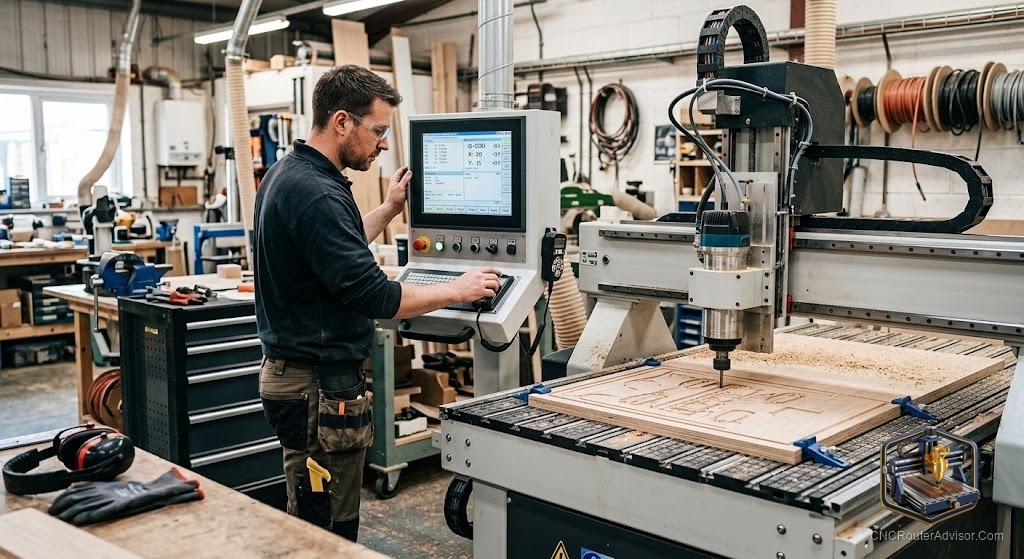
A CNC router technician is responsible for the machine across its whole working life. That covers setup and operation, running jobs, and the maintenance and repair that keep the machine accurate. On a typical day the work might include loading material and tooling, setting work coordinates, running and monitoring jobs, diagnosing a rough cut or an error, and performing routine maintenance. The technician is the bridge between a design on a screen and a finished part coming off the machine.
The core skills
The role sits at the intersection of several skill sets:
- Machine mechanics: Understanding the frame, the motion system across the X, Y, and Z axes, the spindle, and how they work together.
- Software and G-code: Reading and understanding the toolpaths and G-code that drive the machine, and using the design and CAM software that generate them.
- Tooling knowledge: Choosing bits, setting feeds and speeds, and managing collets and runout for good cuts.
- Troubleshooting: Diagnosing problems methodically, from mechanical faults to spindle and controller issues.
- Maintenance discipline: Keeping the machine clean, lubricated, and calibrated so problems stay rare.
None of these appear overnight, but all of them are learnable with time on a machine.
Troubleshooting is the heart of the job
What truly defines a strong technician is the ability to diagnose. When a cut comes out wrong, a good technician does not guess. They observe the symptom, reason about the likely cause, and check it before changing anything. Rough cuts might point to a loose belt, worn bearing, or tool runout. Shifts in the cut suggest lost motion or an overloaded stepper. Spindle trouble points to bearings, cooling, or wiring. That habit of matching symptom to cause is the skill that saves the most time and the most parts.
Maintenance keeps the role manageable
Much of a technician’s value is preventive. Clearing dust from rails, screws, and the spindle, checking belt tension and fasteners, keeping the motion system lubricated, retiring worn collets, and confirming grounding and wiring all keep the machine dependable. A technician who maintains well spends far less time on emergency repairs, because the emergencies simply happen less often.
Getting started in the role
If you want to grow into this work, the best path is time on a machine. Learn the fundamentals of how a CNC router moves and cuts. Get comfortable with design and CAM software so you understand where the G-code comes from. Practice diagnosing problems rather than replacing parts at random. And build the maintenance habits that keep a machine healthy. Manufacturer resources and active user communities are valuable teachers, since most problems you will face have already been solved and documented by someone else.
A role that rewards curiosity
Being a CNC router technician is a good fit for people who like understanding how things work and enjoy the satisfaction of a machine running exactly as it should. The blend of mechanical, digital, and problem-solving work keeps it interesting, and the skills transfer across machines and materials. Whether you pursue it professionally or simply become the technician for your own shop, the knowledge pays back every time the machine hums along and turns your design into a finished part.