
CNC Router Sanding Head Guide: Features, Specifications, and Buying Considerations
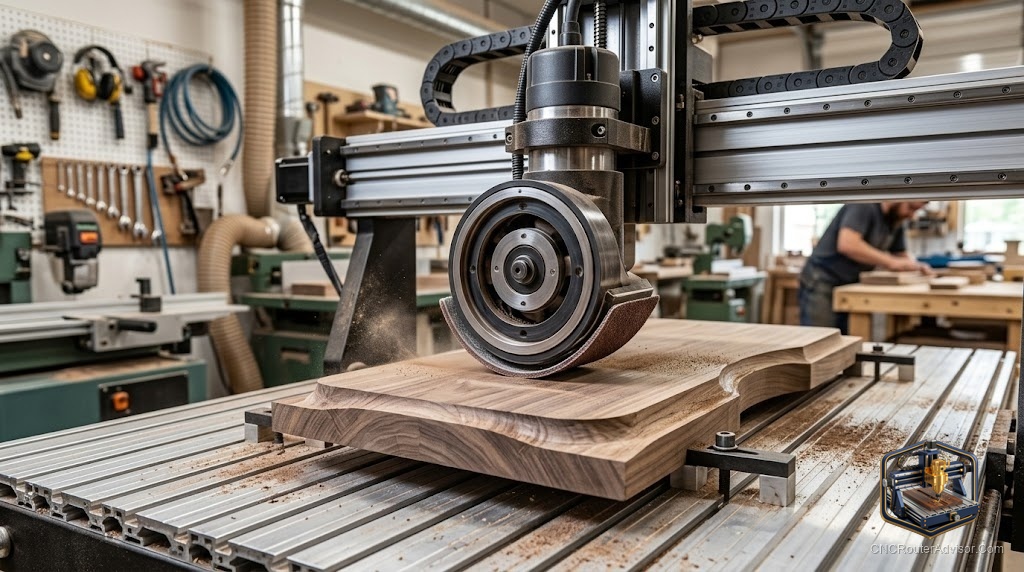
Most people think of a CNC router as a cutting tool, but the same machine can finish a surface too. A sanding head turns the router into a machine that not only shapes a part but smooths it, taking a step that would otherwise mean hours of hand sanding and folding it into the automated workflow. Before you add one to your setup, it helps to understand what a sanding head does, where it fits, and what to weigh before buying.
What a sanding head does
A sanding head mounts an abrasive in place of, or alongside, the usual cutting tool so the machine can bring a machined surface to a smoother finish. On carved and contoured work, this matters most, because the fine step lines left by a ball-nose finishing pass are exactly the kind of thing that is tedious to sand by hand. A sanding operation driven by the machine follows the same contours the cutter did, reaching curves and recesses consistently.
The appeal is repeatability. If you produce the same part in batches, machine sanding gives every piece the same finish rather than depending on how tired your hands were on the tenth unit.
Key features to look at
When you evaluate a sanding head, a few things drive whether it will serve you well:
- Compatibility with your spindle or mount: The head has to fit how your machine holds tools, so confirm the mounting and shank arrangement against your setup.
- Abrasive type and grit options: Different finishes need different abrasives, so flexibility in grit matters for moving from rough to fine.
- Flexibility of the head: Some designs conform to contours better than others, which affects how well they reach into shaped surfaces.
- Dust handling: Sanding creates fine dust, so pairing the operation with strong dust collection is essential for both finish and air quality.
- Speed range: Your spindle needs a speed that suits the abrasive, so variable speed control on the spindle is helpful here.
Specifications that matter
Beyond features, pay attention to the practical numbers. The shank size has to match your collet. The head diameter and reach determine what geometry it can finish. And the recommended speed range needs to line up with what your spindle can actually deliver. A mismatch in any of these turns a promising accessory into a shelf ornament.
Buying considerations
A sanding head makes the most sense when finishing is a real bottleneck in your work. If you carve contoured pieces regularly or produce batches where consistency matters, the time saved adds up quickly. If you mostly cut flat parts that need little finishing, the payoff is smaller.
Think also about your dust setup, since sanding produces fine particles that demand good extraction and respiratory protection. And confirm that your machine has the rigidity and control to run the head steadily, because a flexing gantry undermines finishing just as it undermines cutting.
Where it fits in the workflow
A sanding head does not replace good cutting technique, it complements it. The best results still start with a clean finishing pass from a sharp tool, followed by a sanding operation that refines rather than rescues the surface. Used that way, it closes the gap between a machined part and a finished one, and it hands back the hours you would otherwise spend sanding by hand.
For the right kind of work, that trade is easy to justify. For flat, simple parts, your money may be better spent elsewhere in the shop. Match the accessory to the work you actually do, and it becomes a genuine upgrade rather than an impulse.