CNC Routers Near Me: How to Compare Local Dealers and Machines
Searching for a CNC router near you usually means one of two things. Either you want to buy a machine from someone local who can support it, or your machine has broken down and you need repair help fast. Both situations reward the same skill: knowing what questions to ask so you can tell a genuinely helpful local option from one that will leave you stranded.
Why local can be worth it
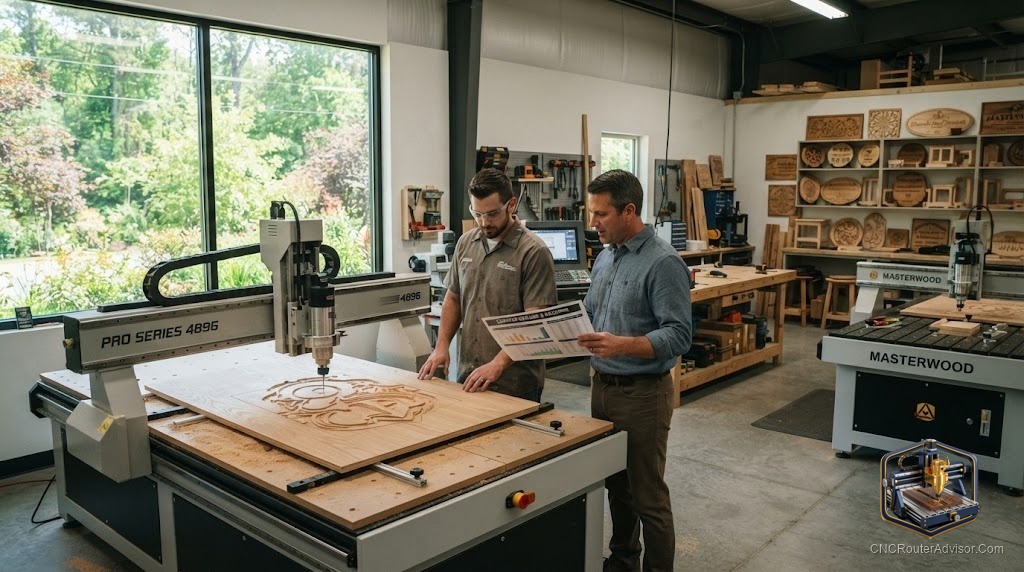
Buying a CNC router online is convenient, but a local dealer offers things a shipping box cannot. You can see the machine run before you commit. You can ask about the frame, the motion system, and the controller in person. And when something goes wrong, a local relationship often means faster answers than a support queue. For heavier machines especially, local delivery and setup can save you a genuinely difficult logistics problem.
What to evaluate in a local machine
Whether you are buying new or used, the fundamentals do not change. Look at the same things you would online, just with the advantage of seeing them firsthand:
- Work area: Does it fit the projects you plan to make.
- Frame rigidity: Steel frame or heavy aluminum extrusion means cleaner cuts.
- Motion system: Ball screws or lead screws for precision, timing belts on lighter machines.
- Spindle power: Enough for your materials, whether that is soft wood or aluminum.
- Controller and software: A GRBL controller or similar that you can actually get help with.
Seeing a machine cut in person tells you more in five minutes than a spec sheet does in an hour. Watch for chatter, listen to the spindle, and check how the gantry moves.
Comparing local dealers
Not every local seller is equal. A few questions separate the strong ones:
- Do they offer setup, training, or a walkthrough after purchase.
- Can they source consumables like bits, collets, and spoilboard material.
- Do they service what they sell, or only sell it.
- Are parts available if a component fails down the line.
- Can they show references or examples of machines running in the field.
A dealer who supports the machine after the sale is worth more than a slightly lower sticker price from someone who disappears once payment clears.
If you are searching for repair
When the search is about a machine that has stopped working, describe the symptom clearly before anyone visits or quotes. Note whether the problem is electrical, mechanical, or software related, and what you have already tried. Many faults, such as a worn spindle bearing, a loose connection, or a controller setting, are common enough that a good local tech will recognize them quickly. Ask whether the repair shop has experience with your specific controller and spindle type, since familiarity shortens the job.
Weighing local against online
Local is not automatically better, but it wins on support, hands-on evaluation, and logistics for large machines. Online often wins on selection and price. The right call depends on how much help you want and how confident you feel setting up and maintaining a machine yourself. If you are new to CNC, the extra support of a local relationship can be the difference between a machine that gets used and one that gathers dust.
The bottom line
A nearby dealer or repair shop can be a real asset, but only if you evaluate them with the same care you would give the machine itself. Ask about support, parts, and service, see the machine run when you can, and choose the option that will still be helpful long after the sale.