CNC Router Definition: What It Is, How It Works, and What It Cuts
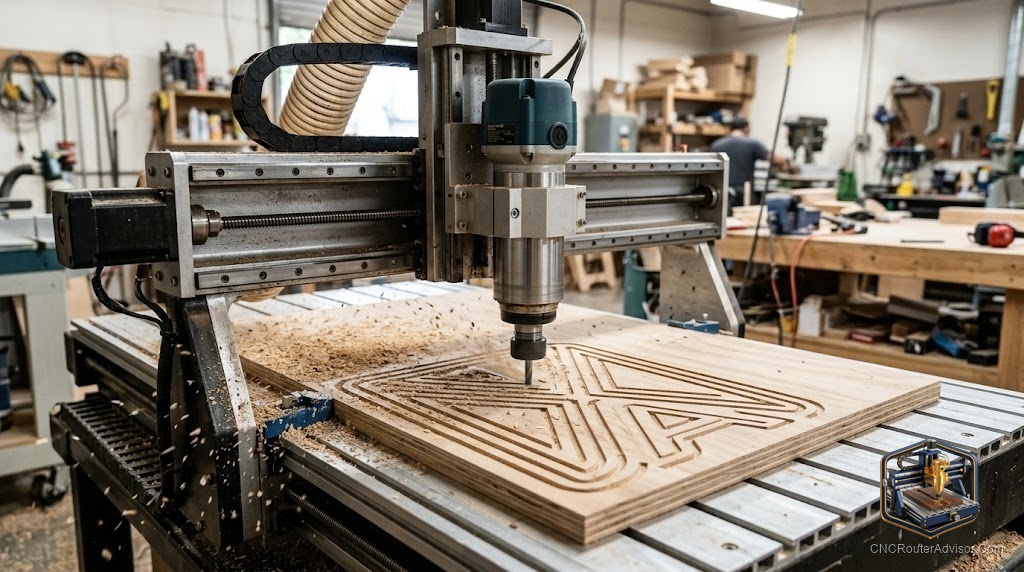
Watch a CNC router run for the first time and it looks a little like magic: a spinning bit traces an invisible path through a sheet of wood and a finished part appears, identical to the drawing on the screen and identical to the last ten you made. There is no magic, though, just a clear idea executed precisely. Understanding the CNC router definition, what the term actually means and how the machine turns a design into a cut, is the foundation everything else in this hobby or trade is built on.
A CNC router is a computer-controlled cutting machine that uses a rotating tool to carve, cut, and shape material by moving that tool along multiple axes according to programmed instructions. CNC stands for Computer Numerical Control, which simply means a computer directs the machine’s movements using numbers, coordinates in code, rather than a human guiding the tool by hand.
The short version: a CNC router takes a digital design, converts it into coordinate instructions called G-code, and moves a spinning cutting tool across the X, Y, and Z axes to reproduce that design in a physical material, exactly and repeatably, as many times as you want.
Breaking down the name
The term rewards being read in pieces. “Computer Numerical Control” is the control method: a computer commands the machine using numerical coordinates instead of manual operation. “Router” is the cutting method: like a handheld wood router, it spins a bit at high speed to remove material. Put together, a CNC router is a router whose movements are controlled by a computer rather than your hands. That single shift, from hand-guided to computer-guided, is what gives the machine its precision and, above all, its repeatability.
How a CNC router works, step by step
Every job follows the same path from idea to object. First comes design, where you create or import a shape in CAD software, or a simpler design program. Next comes CAM, where software converts that design into toolpaths and outputs G-code, the coordinate instructions the machine understands. Then comes setup, where you secure the material to the bed, load the correct bit, and set the work origin so the machine knows where the part begins. Finally comes the cut, where the controller reads the G-code and drives the spinning tool along the X (left-right), Y (front-back), and Z (up-down) axes to remove material and form the part.
Because every movement is defined by numbers, the machine repeats the exact same part again and again with no drift, which is the core advantage over cutting by hand.
The main parts that make it work
A CNC router is a handful of systems working together. The frame provides the rigid structure everything mounts to, and its stiffness largely determines cut quality. The gantry is the bridge that carries the cutting head across the material. The spindle or router holds and spins the bit. The motion system, using motors with belts, lead screws, ball screws, or rack and pinion, moves the head precisely along each axis. The controller is the brain that reads G-code and commands the motors. And the bed or table holds the workpiece. Understanding these parts makes every other CNC discussion, from rigidity to spindle upgrades, easier to follow.
What a CNC router cuts
CNC routers are versatile, which is much of their appeal. They cut wood and plywood, MDF, acrylic and many plastics, foam, and soft non-ferrous metals like aluminium and brass with the right tooling and settings. They are the standard tool for signmaking, cabinetry and furniture parts, 3D carving and relief work, prototyping, and countless hobby projects. What they are not built for is hard metals like steel; that is the domain of a CNC mill, which is heavier and slower by design. A router trades that heavy-metal capability for speed and a large working area, which is exactly what wood and plastic work wants.
CNC router versus related machines
One quick clarification saves confusion. A CNC router is optimised for large, relatively soft materials at high speed, which is why it dominates wood and plastic work. A CNC mill is built for precision on hard metals, heavier and more rigid, working slower on smaller stock. A laser cutter uses a beam rather than a spinning bit and excels at engraving and thin cutting. Same family of computer-controlled machines, different jobs. Knowing the router’s lane is what keeps expectations realistic.
The verdict
The CNC router definition comes down to this: a router whose spinning cutting tool is guided by a computer along multiple axes, turning a digital design into a precise, repeatable physical part. Grasp the workflow, design to CAM to setup to cut, and the main components, frame, gantry, spindle, motion system, controller, and bed, and you have the mental model that makes everything else about these machines make sense.
Three things to remember:
- CNC means Computer Numerical Control: a computer guides the tool with numerical coordinates instead of a human hand.
- The workflow is always design, CAM (which outputs G-code), setup, then cut, and it moves the tool across the X, Y, and Z axes.
- Routers excel at wood, plastics, and soft metals at speed over a large area; hard metals belong to a CNC mill.
FAQ
What does CNC router mean? It is a computer-controlled cutting machine that spins a bit to carve and cut material, moving the tool along multiple axes based on programmed coordinates. CNC stands for Computer Numerical Control.
What does CNC stand for? Computer Numerical Control. It means a computer directs the machine’s movements using numerical coordinates in code, rather than a person guiding the tool manually.
How does a CNC router work? You create a design in software, convert it to toolpaths and G-code with CAM software, secure the material and set the origin, then the controller drives the spinning tool along the X, Y, and Z axes to cut the part.
What materials can a CNC router cut? Wood, plywood, MDF, acrylic and many plastics, foam, and soft non-ferrous metals like aluminium and brass with proper tooling. It is not built for hard metals like steel.
What is the difference between a CNC router and a CNC mill? A router is optimised for large, softer materials at high speed and is common for wood and plastic. A mill is heavier and more rigid, built for precision on hard metals at slower speeds.
What is G-code? G-code is the set of coordinate-based instructions a CNC machine follows. CAM software generates it from your design, telling the machine exactly where and how to move the tool.
What are the main parts of a CNC router? The frame, the gantry that carries the cutting head, the spindle or router that spins the bit, the motion system that moves each axis, the controller that reads G-code, and the bed that holds the workpiece.
References
- CNC Router Info, How to Choose a CNC Router (machine fundamentals): https://cncrouterinfo.com/guides/how-to-choose-a-cnc-router/
- 731 Woodworks, CNC Machines for Small Woodworking Shops (machine overview): https://www.731woodworks.com/731-blog/best-cnc-machines-for-small-woodworking-shops-in-2025-beginner-to-pro-picks