CNC Routers Near Me: Finding Local Classes, Dealers, and Hands-On Help
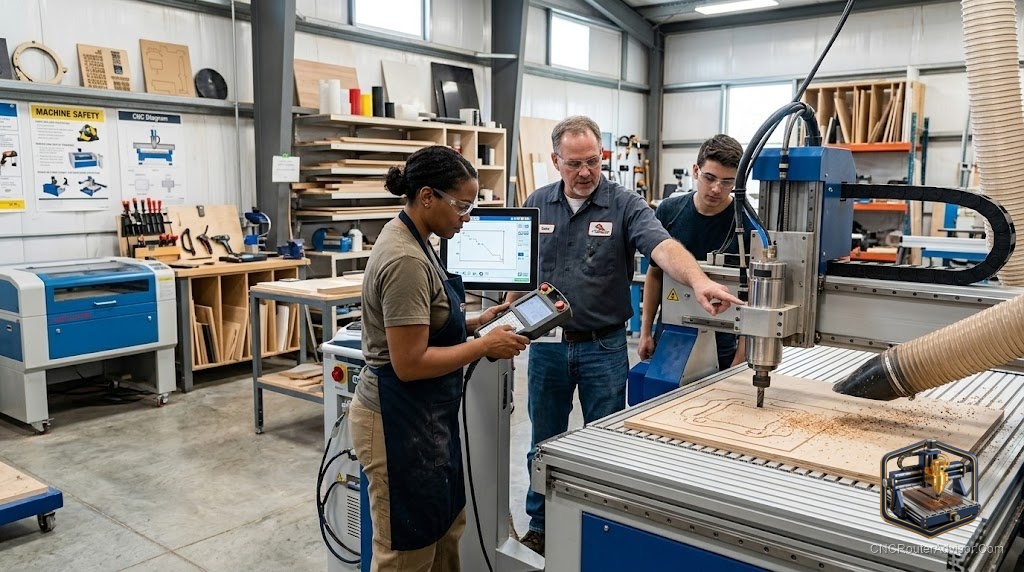
Searching “CNC routers near me” usually means one of a few things: you want to take a class and learn on a real machine, you want to see one in person before buying, or you want local support instead of shipping a heavy machine back and forth. All three are smart instincts. A CNC router is a substantial tool, and getting hands-on time, local advice, and nearby help can save you money and frustration that no amount of online research replaces. The trick is knowing where to look, because the options are more varied than a single search suggests.
Finding CNC help near you means tapping local resources like makerspaces, community college and trade classes, dealers and demo showrooms, and woodworking clubs, each of which offers a different mix of learning, hands-on time, and buying support. This guide covers where to find each, how to evaluate them, and how to get the most from local access to machines and expertise.
Where to find hands-on CNC access and classes
Several kinds of places offer local access, and each serves a different need:
- Makerspaces and hackerspaces. Membership workshops that often have a CNC router you can learn on and use, plus members who will show you the ropes. The fastest route to hands-on time without buying.
- Community colleges and trade schools. Many run woodworking, cabinetmaking, or CNC and machining courses, from short evening classes to certificate programs, on real equipment.
- Dealer showrooms and demos. Machine dealers and manufacturers hold demo days or keep showroom machines you can watch cut before buying. The best way to compare machines in person.
- Woodworking and maker clubs. Local guilds and clubs frequently have equipment, workshops, and experienced members happy to teach.
- Manufacturer training. Some brands offer training, sometimes local or regional, when you buy a machine.
How to find them
- Search by specific term, trying “makerspace,” “woodworking class,” “CNC class,” and “community college woodworking” with your town or city, since each surfaces different results.
- Check makerspace directories, as networks and directories list member spaces by location.
- Ask local woodworking stores, which often know the classes, clubs, and dealers in the area.
- Look up dealers for the brands you are considering, then ask about demo days and showroom visits.
- Search local community boards and social groups, where classes and clubs post.
What to evaluate when you find one
- Machine access, meaning real time on a real machine, not just a lecture. Hands-on is the point.
- Class level, matching beginner or advanced content to where you are.
- Instructor experience, since a knowledgeable teacher shortens the learning curve dramatically.
- The machines used, because learning on a machine similar to what you will buy transfers best.
- Cost and commitment, from a one-day workshop to a semester, matched to your goals.
- Ongoing access, as a makerspace membership lets you keep practicing, unlike a one-off class.
Getting the most from local access
- Take a class before buying if you can, since it tells you what machine and features you actually need.
- Use a makerspace to test the hobby without committing to a purchase.
- Visit a dealer demo to compare machines cutting real material, which reveals differences a spec sheet hides.
- Build local relationships, because nearby experienced makers are the support you will value when you hit a problem.
The honest verdict
Local, hands-on CNC access is one of the best investments a beginner can make, and it costs far less than the machine itself. A makerspace or a class gets you cutting on a real machine with someone to answer questions, a dealer demo lets you compare before you spend, and a local club gives you people to ask when something goes wrong. Search several specific terms rather than one, prioritise real machine time over lectures, and try to learn before you buy. The knowledge and relationships you build locally pay off long after the search that started them.
Frequently asked questions
Where can I learn to use a CNC router near me? Makerspaces, community colleges and trade schools, woodworking clubs, and dealer training. Each offers a different mix of hands-on time, structured teaching, and buying support.
Can I use a CNC router without buying one? Yes. Makerspaces and hackerspaces offer membership access to machines, and some libraries and colleges provide access, letting you learn and make before committing to a purchase.
How do I find CNC classes locally? Search specific terms like “makerspace,” “CNC class,” and “community college woodworking” with your location, check makerspace directories, and ask local woodworking stores.
Should I take a class before buying a machine? If you can, yes. A class shows you what machine and features you actually need, which prevents an expensive buying mistake driven by guesswork.
Where can I see a CNC router before buying? Dealer showrooms and demo days let you watch machines cut real material. Comparing machines in person reveals differences a spec sheet does not show.
What should I look for in a CNC class? Real hands-on machine time rather than only lectures, a level matching your experience, an experienced instructor, and machines similar to what you plan to buy.
Are makerspaces worth joining for CNC? Often yes. They give ongoing machine access, a community to learn from, and a way to test the hobby without buying, which a one-off class does not provide.