
CNC Router 8 x 4 Guide: Work Area, Uses, Features, and Buying Factors
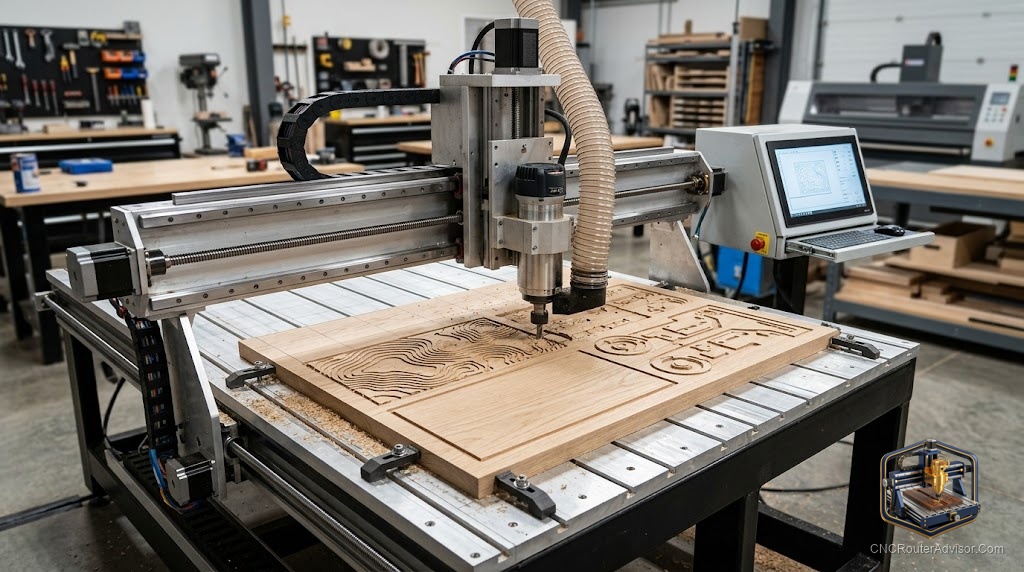
The moment a woodworking or sign business gets serious about output, the same machine keeps coming up: the 8 by 4 CNC router. The reason is simple and physical. A standard sheet of plywood, MDF, or acrylic is 8 feet by 4 feet, and a machine that swallows a whole sheet in one setup changes the economics of everything you cut. No seaming, no splitting sheets on a table saw first, no accuracy lost across sections. It is the machine that turns sheet goods into a production line.
An 8 by 4 CNC router is a full-sheet machine with a cutting area around 8 feet by 4 feet, built to process entire standard sheets of plywood, MDF, acrylic, and similar panels in a single setup for cabinet, sign, and production work. This guide covers what the size buys you, the features that matter at this scale, and the factors to weigh before committing to a machine this large.
Why the 8 by 4 size matters
The work area is the whole point. Because building materials come in 8 by 4 sheets, a machine sized to match them lets you:
- Cut a full sheet without seaming, so large parts stay accurate and you skip the error of joining sections.
- Nest many parts on one sheet, maximizing material yield and cutting a whole batch in one run.
- Skip the pre-cutting step, loading a full sheet straight from the rack instead of breaking it down first.
That efficiency is why the size is the workhorse standard for cabinet shops, sign makers, and anyone doing volume in sheet goods.
Common uses
- Cabinet and furniture parts, cut and nested from full sheets of plywood and MDF.
- Signage, in acrylic, PVC, aluminum composite panel, and wood.
- Store fixtures and displays, often flat-pack designs.
- Production runs of nested parts for other shops.
Features that matter at this scale
A big table only pays off if the machine around it is built to match:
- A rigid frame, typically heavy steel or thick cast components, because a large gantry must stay stiff across the full span.
- Rack-and-pinion drive on the long axis, which suits the distances better than screws and keeps rapids fast.
- A capable spindle, usually a VFD water- or air-cooled unit that holds power for continuous cutting.
- A vacuum table, close to essential at this size for holding full sheets flat and loading them fast.
- Dust collection, since a full-sheet machine makes dust in volume.
- Optional automatic tool changer, worth it when jobs need several tools and downtime costs money.
Buying factors
- Space is the first reality. An 8 by 4 machine plus room to load sheets and walk around it needs serious floor area. Measure before you buy.
- Electrical service, since a spindle, vacuum pump, and dust collector together often need proper high-amperage or three-phase power.
- Budget the full system, including the vacuum pump, dust collection, tooling, and a spoilboard, not just the machine.
- Rigging and installation, because these machines are heavy and need solid floors and careful placement.
- Support and parts, which matter more as production depends on uptime.
- Match automation to volume, adding an ATC and vacuum zoning only when your throughput justifies them.
The honest verdict
The 8 by 4 CNC router is the right machine when your work is genuinely sheet-goods production, cabinets, signs, fixtures, and nested parts at volume. Its size pays for itself in material yield, accuracy, and time saved not breaking down sheets. It is the wrong machine for a hobbyist or a shop short on floor space and power, where a prosumer gantry does the job without the footprint. If you commit, budget for the vacuum table, dust collection, and electrical up front, plan the space honestly, and buy a machine rigid enough to hold accuracy across the full sheet.
Frequently asked questions
What is an 8 by 4 CNC router used for? Processing full standard sheets of plywood, MDF, acrylic, and panels in one setup, for cabinet parts, signage, store fixtures, and volume production of nested parts.
Why is the 8 by 4 size so common? Because building sheets come in 8 by 4 feet. A machine matching that size cuts a whole sheet without seaming and lets you nest many parts on one panel.
Do I need a vacuum table on an 8 by 4 machine? Close to essential. It holds full sheets flat and loads them fast, which matters enormously when you are processing whole sheets in production.
What drive system do these machines use? Usually rack and pinion on the long axis, which handles the distance better than screws and keeps rapid moves fast across a large table.
How much space does an 8 by 4 router need? The table plus room to load full sheets and walk around it, which is a large footprint. Measure your shop and plan sheet handling before buying.
What electrical service is required? Often high-amperage or three-phase power, since the spindle, vacuum pump, and dust collector draw significant current together. Confirm before purchase.
Is an 8 by 4 router overkill for a hobbyist? Usually yes. The footprint, power, and cost suit production. A hobbyist is better served by a prosumer gantry that handles smaller parts without the demands.