
China CNC Router Guide: Features, Specifications, and Buying Considerations
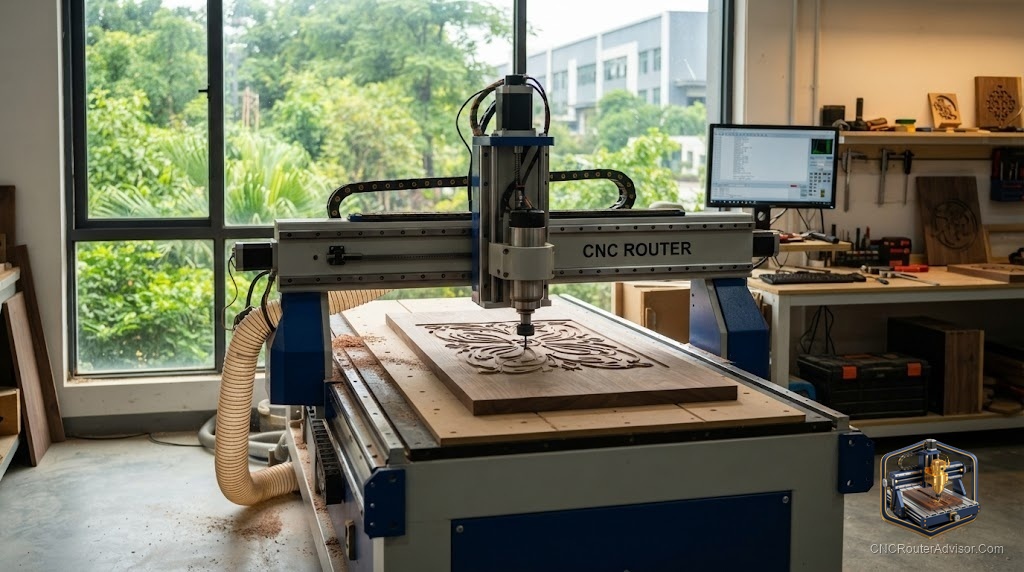
Many CNC routers on the market are manufactured in China, spanning the full range from inexpensive desktop machines to large industrial systems. That breadth is exactly why “a China CNC router” tells you little on its own: quality, capability, and support vary enormously between manufacturers and models. The smart buyer does not judge a machine by where it is made but evaluates the specific model on its fundamentals and confirms the things that most affect a long-distance purchase. This guide explains the features and specifications to check and the buying considerations, especially support and verification, that matter most.
Country of origin says little about a specific machine, so the useful approach is to evaluate each model on its fundamentals and pay special attention to support and verification.
Chinese-manufactured CNC routers span inexpensive desktop machines to large industrial systems, with quality and support varying widely by manufacturer and model, so evaluate the specific machine on its fundamentals rather than its origin. Check frame rigidity and build quality (which set cut quality and material capability), work area and Z clearance, spindle power and type (often water-cooled VFD spindles on mid and larger machines), motion system (linear rails with ball or lead screws indicate quality), and control and software. The buying considerations that matter most for these purchases are support and spare-parts availability (which vary widely and can be harder at a distance), warranty terms, shipping and import costs and lead times, and verification, confirming exact specifications and seeking independent user feedback rather than relying on listings. Well-chosen Chinese machines offer strong value; the key is judging the specific model and its support, not the label.
Judge the specific model on its fundamentals, and weigh support, parts, warranty, and verification especially carefully for a distance purchase.
Why “made in China” tells you little
Because so many machines across every tier are made in China, the label spans:
- Inexpensive desktop machines for hobbyists.
- Capable mid-range machines with VFD spindles and linear rails.
- Large industrial systems for production.
Quality, precision, and support differ enormously between manufacturers and models. So the origin alone is not a useful signal, judge the specific machine.
Features and specifications to check
Frame rigidity and build quality. The frame’s stiffness and construction set cut quality and material capability. Look for solid construction appropriate to the machine’s size and price; this is the most important fundamental.
Work area and Z clearance. Confirm the travel fits your projects and material thickness, and that usable area matches the nominal figures.
Spindle power and type. Mid and larger machines often use water-cooled VFD spindles, which are quiet, durable, and capable. Match spindle power to your materials, and confirm cooling and control.
Motion system. Linear rails with ball or lead screws indicate a precise, durable machine; V-wheels and belts point to a lighter-duty build. The motion system signals quality and sets precision.
Control and software. Confirm the controller (some use dedicated DSP controllers, others GRBL or Mach-based systems) and its CAD/CAM compatibility fit your workflow.
Buying considerations that matter most
Support and spare parts. These vary widely by manufacturer and can be harder to obtain at a distance. Confirm what support and spares are available before buying, since a machine you cannot service is a liability.
Warranty terms. Understand the warranty and how claims are handled across a distance, including who covers return shipping.
Shipping, import, and lead times. Factor freight, import duties, taxes, and delivery lead times into the true cost and timeline, especially for large machines.
Verification. Confirm exact specifications with the seller rather than trusting listing figures, and seek independent feedback from current users about real-world quality, accuracy, and support.
Language and communication. Consider how easily you can communicate with the manufacturer or seller for support and troubleshooting.
How to buy well
- Identify the specific manufacturer and model, not just “a China CNC router.”
- Evaluate the fundamentals, weighting rigidity, spindle, and motion system.
- Research support, parts, and reputation through independent user feedback.
- Confirm specifications and warranty directly with the seller.
- Calculate the true landed cost including shipping and import.
This turns a vague label into a grounded decision and helps you capture the strong value many Chinese machines offer while avoiding the poorly supported ones.
The verdict
Chinese-manufactured CNC routers span the whole market from cheap desktop machines to large industrial systems, so the label tells you little; judge the specific model on its fundamentals. Check frame rigidity and build quality, work area and Z clearance, spindle power and type, motion system, and control and software, weighting rigidity most. Then pay special attention to the considerations that matter most for these purchases: support and spare-parts availability, warranty terms, shipping and import costs and lead times, and verification through independent user feedback and direct confirmation of specifications. Well-chosen Chinese machines offer strong value; the key is evaluating the specific machine and its support rather than the country on the label.
Three things to take with you:
- “Made in China” spans the entire market, so judge the specific manufacturer and model on its fundamentals, rigidity, work area, spindle, motion system, and control, not its origin.
- Support and spare-parts availability, warranty, and shipping and import costs matter especially for these purchases and can be harder at a distance; confirm them before buying.
- Verify exact specifications with the seller and seek independent user feedback, then calculate the true landed cost including freight and import.
FAQ
Are China CNC routers any good? They range from excellent value to poor, because Chinese manufacturers make machines across every tier. The label alone tells you little. Well-chosen machines offer strong value; the key is evaluating the specific manufacturer and model on its fundamentals and its support rather than judging by country of origin.
What should I check when buying a Chinese CNC router? The fundamentals, frame rigidity and build quality, work area and Z clearance, spindle power and type, motion system, and control and software, plus the considerations that matter most at a distance: support and spare-parts availability, warranty terms, shipping and import costs and lead times, and independent verification of specifications.
Is support harder to get on an imported CNC router? It can be. Support and spare-parts availability vary widely by manufacturer and may be harder to obtain across a distance, with language and shipping adding friction. Confirm what support, warranty, and spares are available before buying, since a machine you cannot service or get parts for is a liability.
What spindle do Chinese CNC routers use? Desktop machines often use trim routers or small spindles, while mid-range and larger machines commonly use water-cooled VFD spindles, which are quiet, durable, and capable. Match the spindle power and cooling to your materials, and confirm the controller works with your preferred CAD/CAM software.
How do I verify a Chinese CNC router’s specifications? Confirm the exact work area, spindle, frame, and motion details directly with the seller rather than trusting listing figures, and seek independent feedback from current users about real-world quality, accuracy, and support. This verification is especially important for a long-distance purchase where you cannot inspect the machine first.
What hidden costs come with importing a CNC router? Freight, import duties, taxes, and delivery lead times, which can be significant for large machines, plus any costs of obtaining spare parts or support across a distance. Calculate the true landed cost, not just the listed price, and factor lead times into your timeline before committing.
References
- Wikipedia, CNC router overview: https://en.wikipedia.org/wiki/CNC_router
- CNC Cookbook, evaluating imported CNC machines: https://www.cnccookbook.com