
Best Home CNC Router: How to Choose the Right One for Your Space
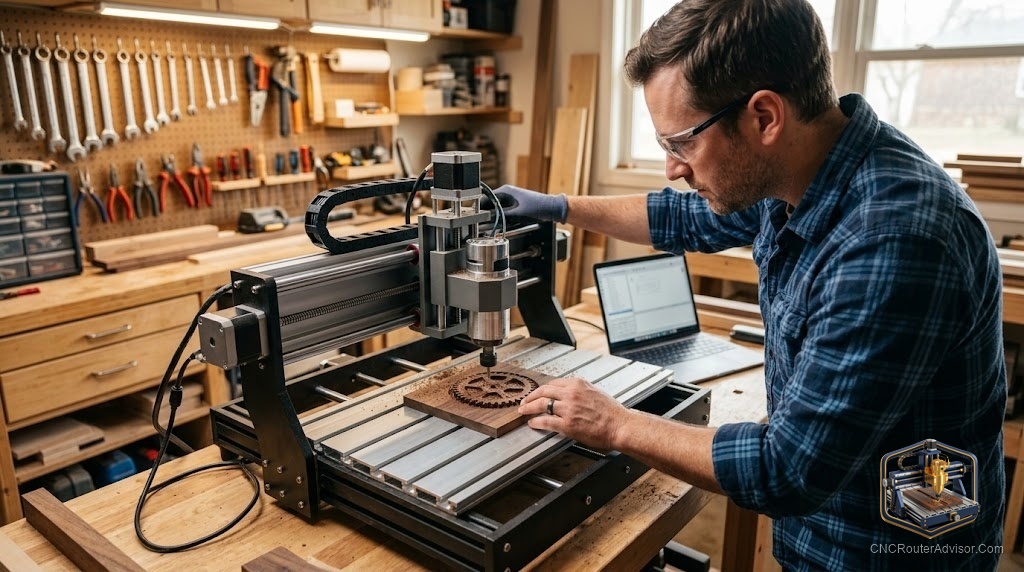
Bringing a CNC router into your home is a decision about fit as much as capability. The machine has to earn its place beside everything else in a garage, basement, or spare room, which means its size, noise, dust, and power draw matter alongside how well it cuts. The best home CNC router is the one that fits your space and life while still doing the projects you want, and the way to find it is to compare the right features and match them to your situation. This guide walks through those features and gives you a simple decision framework.
Choosing a home machine is a fit problem: the goal is the router that does your projects while living comfortably in your space, so the comparison must weigh home realities alongside cutting ability.
The best home CNC router is the one that fits your space, power, and noise tolerance while handling your projects, which means comparing footprint, work area, rigidity, spindle power and noise, dust containment, household power compatibility, and ease of learning, then matching them to your situation. A bench-class machine like the FoxAlien Masuter suits many home shops, while a larger desktop machine like the Genmitsu PROVerXL 4030 adds capacity while still running on household power. Decide by measuring your space, listing your projects, and setting your tolerance for noise and mess, then choosing the machine whose features fit all three. Prioritize fit and usability over maximum specifications, since a machine that does not fit your space or life will not get used.
Start from your space, projects, and noise tolerance, then choose the machine that fits all three; fit beats maximum specs at home.
A simple decision framework
Choosing a home machine is easiest as three questions:
- How much space do you have? Measure the bench or floor area, including clearance for material overhang and access. This sets the maximum machine footprint, which is larger than the work area.
- What projects will you make? List your typical and largest parts. This sets the work area you need and the rigidity and spindle power your materials demand.
- How much noise and mess can you tolerate? This drives spindle choice, dust containment, and whether you need an enclosure.
The machine that satisfies all three is your best home router, regardless of what tops a spec chart.
Footprint and work area
- Footprint: confirm the machine fits your measured space with clearance. Remember the frame and gantry travel extend beyond the bed.
- Work area: buy the size your projects need with modest margin. Bench-class machines suit signs, small furniture parts, and carvings; larger desktop machines add capacity for a home shop.
Right-size to your space and projects rather than overbuying a bed you cannot fit or will not fill.
Rigidity and spindle
- Rigidity: an aluminum or steel frame with linear rails cuts cleaner and handles more materials than a light, flexible machine. Protect rigidity even at home.
- Spindle power and noise: match power to your materials, and favor a quieter VFD or brushless DC spindle over a loud trim router when the machine runs near living spaces.
Rigidity decides cut quality; spindle choice decides both capability and how pleasant the machine is to run at home.
Dust, power, and learning
- Dust containment: a good dust shoe with a shop vacuum, and ideally an enclosure, keeps fine dust out of your home. This is one of the most important home considerations.
- Household power: the best home machines run on standard single-phase outlets. Confirm the requirement before buying.
- Ease of learning: clear documentation, beginner-friendly software, and an active community make a home machine, often owned by newer users, far easier to succeed with.
The verdict
The best home CNC router is the one that fits your space, power, and noise tolerance while handling your projects, not the one with the biggest specifications. Use a simple framework, measure your space, list your projects, and set your tolerance for noise and mess, then compare footprint and work area, rigidity, spindle power and noise, dust containment, household power, and ease of learning, and choose the machine that satisfies all three. Bench-class machines like the FoxAlien Masuter fit many home shops, while larger desktop options like the Genmitsu PROVerXL 4030 add capacity on household power. Prioritize fit and usability, since a machine that does not fit your life will not get used.
Three things to take with you:
- Choose a home router by fit: measure your space, list your projects, and set your noise and mess tolerance, then pick the machine that satisfies all three.
- Weigh footprint, spindle noise, and dust containment alongside rigidity and work area, and favor a quieter spindle and an enclosure for home use.
- Confirm the machine runs on household power and is easy to learn; bench-class options like the FoxAlien Masuter and larger desktop machines like the Genmitsu PROVerXL 4030 are popular home picks.
FAQ
What is the best home CNC router? The one that fits your space, power, and noise tolerance while handling your projects. There is no universal winner. Bench-class machines like the FoxAlien Masuter suit many home shops, while larger desktop options like the Genmitsu PROVerXL 4030 add capacity on household power.
How do I choose a CNC router for my home? Measure your available space (including clearance), list your typical and largest projects, and set your tolerance for noise and mess. Then compare footprint, work area, rigidity, spindle power and noise, dust containment, household power, and ease of learning, and choose the machine that satisfies all three.
Will a home CNC router be too loud? It depends on the spindle and containment. A quieter VFD or brushless DC spindle is far less disruptive than a trim router, and an enclosure reduces both noise and dust. Consider noise tolerance and run times when choosing a machine for a home near living spaces.
Do home CNC routers plug into a normal outlet? The best ones run on standard single-phase household outlets without electrical work. Confirm the requirement for a specific machine before buying, since larger machines with bigger spindles may need dedicated circuits or more power.
How do I keep the dust down at home? Use a dust shoe connected to a shop vacuum or dust collector, and ideally an enclosure around the machine. Effective dust containment keeps fine dust out of your living space and is one of the most important considerations for a home CNC router.
Should I prioritize a big work area for home use? Usually no. Prioritize fit, rigidity, and usability over raw size. A machine that fits your space comfortably and cuts cleanly serves you better than the largest bed you can find, which may not fit or get filled. Right-size the work area to your projects.
References
- All3DP, home CNC router buyer’s guide: https://all3dp.com
- FoxAlien Masuter (verified Amazon listing): Check on Amazon
- Genmitsu PROVerXL 4030 (verified Amazon listing): Check on Amazon