
Best CNC Router for Home Use: Features to Compare Before You Buy
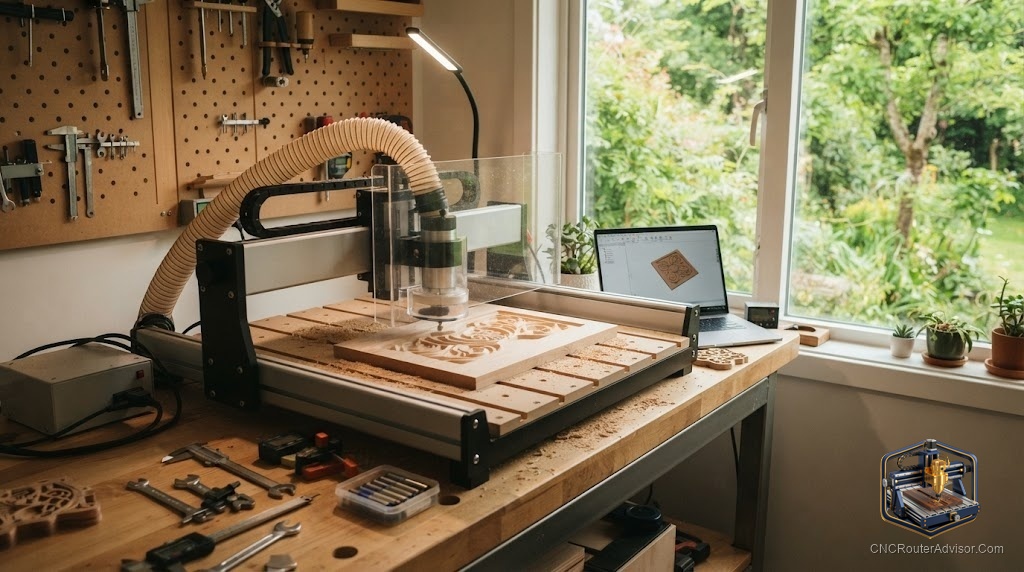
A CNC router for the home shares your space, your power outlets, and often your evenings, so the best one for home use is judged by more than cutting ability. Noise, dust, footprint, and how easy it is to learn all matter as much as work area and spindle power when the machine lives in a garage, basement, or spare room. There is no single best home router; the best one is the machine whose features fit your space, your projects, and your tolerance for noise and mess. This guide lays out the features to compare so your home CNC is a joy rather than a nuisance.
Home use adds constraints a workshop does not, space, noise, dust, and power, so the right comparison weighs those alongside the usual cutting fundamentals.
The best CNC router for home use is the one whose features fit a home environment: a footprint that suits your space, manageable noise and dust, standard household power, and an easy learning curve, alongside the usual fundamentals of rigidity, spindle power, and work area sized to your projects. Compare candidates on footprint and work area, frame rigidity (for cut quality), spindle power and noise (a quieter VFD or DC spindle suits a home), dust containment (an enclosure or good dust shoe keeps the space clean), and community and software support (which ease learning). Bench-class machines like the FoxAlien Masuter and larger desktop options like the Genmitsu PROVerXL 4030 are popular home choices that run on household power. Prioritize the machine that fits your space, projects, and tolerance for noise and mess.
For home use, weigh footprint, noise, dust, and household power alongside rigidity and work area, then pick the machine that fits your life.
Footprint and work area
At home, space is often the first constraint:
- Footprint: the machine’s physical size is larger than its work area, since the frame and gantry travel extend beyond the bed. Measure your space and confirm the machine fits with clearance for material and access.
- Work area: buy the size your projects need with modest margin. Bench-class machines suit signs, small furniture parts, and carvings without dominating a room; larger desktop machines add capacity while still fitting a home shop.
- Bench or stand: confirm you have a solid, flat surface, since stability underpins accuracy.
Right-size the machine to your space and projects rather than buying the largest bed you can, which may not fit or get filled.
Rigidity and cut quality
Home use does not excuse a flimsy machine:
- Frame and guides: an aluminum or steel frame with linear rails cuts cleaner and handles more materials than a light, V-wheel machine.
- Drive system: lead or ball screws offer more precision than belts.
Rigidity still decides cut quality and material range, so protect it even in a home machine.
Noise and dust: the home factors
These matter far more at home than in a dedicated workshop:
- Spindle noise: a VFD or brushless DC spindle is quieter than a trim router, a real benefit when the machine runs near living spaces.
- Dust containment: a good dust shoe with a shop vacuum, and ideally an enclosure, keeps fine dust out of your home and reduces noise. An enclosure is one of the best home upgrades.
- Run times: consider when you can run the machine given household noise tolerance, and plan dust collection accordingly.
A machine that is loud and messy will not get used at home, so weigh noise and dust heavily.
Power, learning, and support
Household power. The best home machines run on standard single-phase household outlets, avoiding electrical work. Confirm the requirement before buying.
Easy learning curve. For home users, often newer to CNC, a machine with clear documentation, bundled or well-supported free software, and an active community is far easier to succeed with.
Community and parts. A popular platform means free tutorials, shared settings, and available parts, which smooths the learning curve and keeps the machine running.
The verdict
The best CNC router for home use is the machine whose features fit a home: a footprint that suits your space, manageable noise and dust, standard household power, and an easy learning curve, alongside rigidity, spindle power, and a right-sized work area. Compare candidates on footprint and work area, rigidity for cut quality, spindle power and noise, dust containment, and community and software support, weighting the home factors, space, noise, and mess, more heavily than a workshop buyer would. Bench-class machines like the FoxAlien Masuter and larger desktop options like the Genmitsu PROVerXL 4030 are popular home choices on household power. Pick the one that fits your space, projects, and tolerance for noise and mess.
Three things to take with you:
- For home use, weigh footprint, noise, dust, and household power alongside the usual rigidity, spindle, and work-area fundamentals.
- Protect rigidity for cut quality, choose a quieter VFD or DC spindle, and plan dust containment, ideally an enclosure, to keep your home clean.
- Favor a machine on standard household power with an easy learning curve and strong community; popular choices include the FoxAlien Masuter and Genmitsu PROVerXL 4030.
FAQ
What is the best CNC router for home use? There is no single best machine. The best home router is the one whose features, footprint, noise, dust, household power, learning curve, plus rigidity and work area, fit your space and projects. Bench-class machines like the FoxAlien Masuter and larger desktop options like the Genmitsu PROVerXL 4030 are popular home choices.
Do home CNC routers run on normal household power? The best ones do, running on standard single-phase household outlets without electrical work. Confirm the requirement for a specific machine before buying, especially if it has a larger spindle, since some bigger machines need dedicated circuits or more power.
How do I reduce CNC router noise at home? Choose a quieter VFD or brushless DC spindle rather than a trim router, build or buy an enclosure to contain noise and dust, and plan run times around household tolerance. An enclosure is one of the best home upgrades for both noise and cleanliness.
How do I keep CNC dust out of my house? Use a good dust shoe connected to a shop vacuum or dust collector, and ideally an enclosure around the machine. Fine dust is both a nuisance and a health concern, so effective dust containment is one of the most important home considerations.
Is a big CNC router a bad idea for home? Not necessarily, but confirm it fits your space with clearance, runs on your available power, and that you can manage its noise and dust. Many home users are better served by a bench-class or larger desktop machine that fits comfortably than by the largest bed they can find.
What machine is easiest to learn for home use? One with clear documentation, bundled or well-supported free software, and an active community, since home users are often newer to CNC. A GRBL-based machine with abundant tutorials and shared settings, such as popular desktop and bench-class models, is easiest to succeed with.
References
- All3DP, home and desktop CNC router buyer’s guide: https://all3dp.com
- FoxAlien Masuter (verified Amazon listing): Check on Amazon
- Genmitsu PROVerXL 4030 (verified Amazon listing): Check on Amazon