
American Made CNC Router Explained: Uses, Setup, and Key Considerations
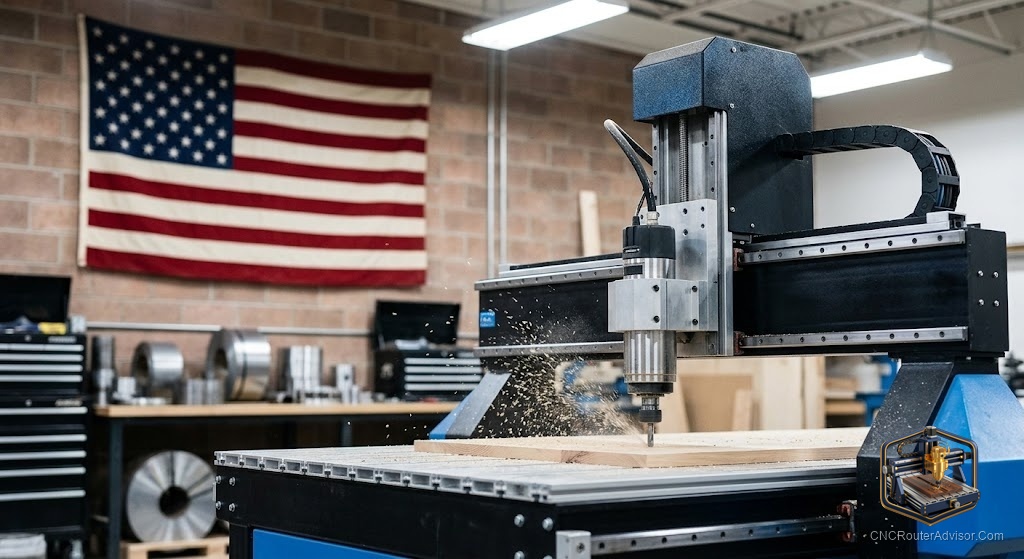
For a lot of buyers, “American made” is shorthand for a bundle of things they actually care about: local support and spare parts, sturdier construction, easier warranty service, and keeping money closer to home. Those are legitimate reasons to prefer a domestically built machine. But “American made” is also a marketing phrase that can mean anything from fully manufactured in the United States to merely assembled there from imported parts. This guide explains what an American made CNC router really offers, what to verify behind the label, and the key considerations that should drive the decision alongside country of origin.
Country of origin is one factor among many, so the goal is to understand what it genuinely buys you and how to weigh it against the fundamentals that decide any machine.
An American made CNC router is a router designed and manufactured (or substantially built) in the United States, often chosen for local support, readily available spare parts, easier warranty service, and frequently sturdier construction. The label can range from fully domestic manufacturing to US assembly of imported components, so it is worth verifying what “made in the USA” means for a given machine. Beyond origin, judge it on the same fundamentals as any router: work area, frame rigidity and motion system, spindle power, Z clearance, and control and software. Domestic machines often command a higher price, so weigh the real value of local support and build quality against the machine’s specifications and your budget.
Prefer American made for support, parts, and build quality, but verify the claim and still judge the machine on its fundamentals.
What “American made” really buys you
The practical benefits that draw buyers to domestic machines:
- Local support: phone and email help in your time zone, often from people who built the machine.
- Spare parts availability: faster access to replacement parts without long international shipping.
- Easier warranty service: domestic warranty handling is usually simpler and quicker.
- Build quality: many domestic machines are built rigid and heavy, though this is not guaranteed by origin alone.
- Keeping spending domestic: a values-based reason many buyers weigh.
These are real advantages, especially support and parts, which matter enormously when a machine goes down and you need it running.
Verify what the label means
Because “American made” is not tightly policed in casual use, check what it means for a specific machine:
- Fully manufactured in the US versus assembled here from imported parts versus designed here and built abroad.
- Where support and parts actually come from, since that is the benefit you are really buying.
- Whether the price premium reflects genuine domestic manufacturing and support or just marketing.
Ask the seller directly and look for specifics. A machine assembled domestically with strong local support may serve you better than one merely labeled patriotic, so focus on the substance behind the claim.
Setup and use considerations
An American made router sets up like any other, but origin touches a few practical points:
- Documentation and support tend to be in clear English with accessible help, easing setup and troubleshooting.
- Parts and upgrades are easier to source domestically, which matters for a machine you will maintain over years.
- Power and standards are built for domestic voltage and plugs, avoiding conversion issues.
- Community around established US brands is often large, with abundant tutorials and shared settings.
Otherwise, follow standard practice: a solid bench, a squared frame, the right spindle and collet, a supported controller, a spoilboard, sound workholding, and a test cut before real work.
Key considerations before you buy
Match the fundamentals to your work. Confirm work area, rigidity and motion system, spindle power, and Z clearance fit your projects. Origin does not substitute for the right specifications.
Weigh the price premium. Domestic machines often cost more. Decide whether the value of local support, parts, and build quality justifies it for you, versus an imported machine with a good support reputation.
Prioritize support and parts. These are the benefits that pay off over years of ownership, so verify they are genuinely strong for the specific machine.
Check the community. An active user base means easier troubleshooting, shared settings, and available upgrades, which stretches the value of any machine.
The verdict
An American made CNC router is a strong choice when the label reflects genuine local support, readily available spare parts, easier warranty service, and sturdy construction, benefits that matter most when a machine needs help or repair. Verify what “made in the USA” means for the specific machine, since the phrase ranges from full domestic manufacturing to local assembly of imported parts. Then judge it on the same fundamentals as any router, work area, rigidity, spindle, Z clearance, and control, and weigh the usual price premium against the real value of support and build quality. Bought with those checks, a domestic machine rewards you for years.
Three things to take with you:
- “American made” mainly buys local support, spare parts, easier warranty, and often sturdier build; these matter most when a machine needs help or repair.
- Verify what the label means for the specific machine (fully manufactured, assembled, or designed here) and where support and parts actually come from.
- Still judge the machine on fundamentals, work area, rigidity, spindle, Z clearance, and control, and weigh the price premium against the real value of domestic support and quality.
FAQ
What does “American made CNC router” actually mean? It can range from fully designed and manufactured in the United States to assembled domestically from imported components, or merely designed here. Because the phrase is loosely used, verify what it means for a specific machine and, above all, where support and spare parts actually come from.
Why choose an American made CNC router? Mainly for local support in your time zone, faster access to spare parts, easier warranty service, and often sturdier construction. These benefits matter most when a machine goes down and you need it running quickly, which is when international shipping and support delays hurt.
Are American made CNC routers better quality? Many are built rigid and heavy, but origin alone does not guarantee quality. Judge each machine on its fundamentals, frame rigidity, motion system, spindle, and work area, rather than assuming the label ensures a better machine.
Do American made routers cost more? Often yes. Domestic manufacturing and support usually carry a price premium. Decide whether the value of local support, parts availability, and build quality justifies the extra cost for you, compared with an imported machine that has a strong support reputation.
How do I verify a machine is really American made? Ask the seller whether it is fully manufactured, assembled, or only designed in the US, and where support and parts come from. Look for specifics rather than marketing language, since the substance behind the claim is what delivers the benefits you want.
Is domestic support really that important? For a machine you will own and maintain for years, yes. Fast, accessible support and readily available spare parts determine how quickly you recover from problems, which often matters more day to day than a small difference in specifications.
References
- Wikipedia, CNC router overview: https://en.wikipedia.org/wiki/CNC_router
- All3DP, CNC router buyer’s guide: https://all3dp.com