3D Print CNC Router Guide: Combining Additive and Subtractive on One Machine
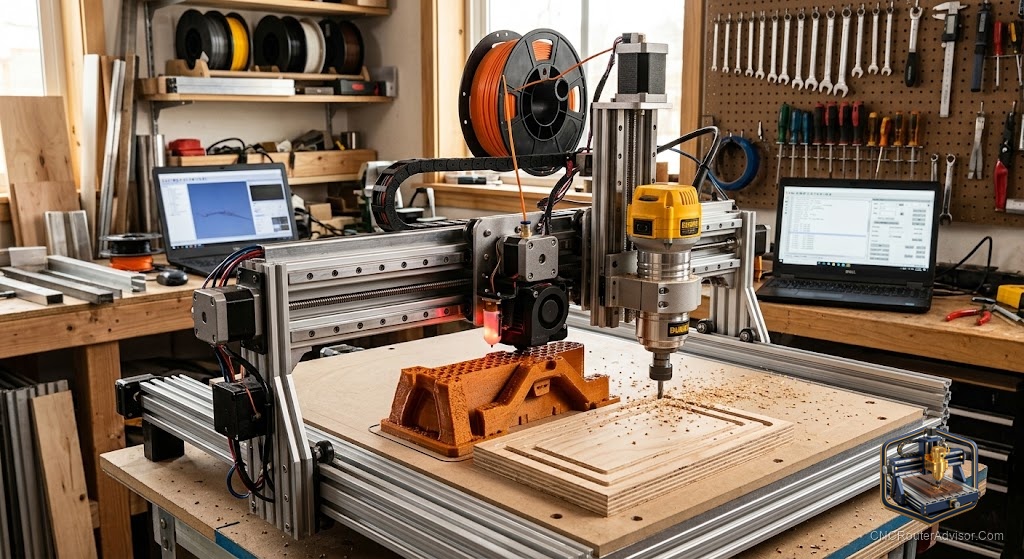
Somewhere along the way, a lot of makers end up wanting both: a 3D printer that builds parts up layer by layer, and a CNC router that cuts parts down from solid stock. The two processes are opposites, additive versus subtractive, and it is natural to wonder whether one machine can do both, and whether that is a good idea. The short answer is that combination machines exist and can be genuinely useful, but the two processes place very different demands on the hardware, and understanding those demands is the key to knowing whether a hybrid suits you or whether two dedicated machines are the better call. This guide explains the concept, the trade-offs, and the buying considerations.
The appeal of one machine doing both is obvious: less cost, less bench space, one motion system. The catch is that a great router and a great 3D printer want different things from a frame, and a hybrid necessarily compromises. Knowing where those compromises fall lets you choose wisely.
A 3D print CNC router is a machine that combines additive manufacturing (3D printing, building parts up in layers) and subtractive manufacturing (CNC routing, cutting parts down from stock) on a single platform, typically by swapping tool heads (a print head and a spindle) on a shared motion system. The appeal is doing both processes in one footprint at lower combined cost. The trade-off is that the two processes need different things: CNC routing demands high rigidity and power to resist cutting forces, while 3D printing needs precise, lighter motion and heat management, so a hybrid compromises between them. Buying considerations include the machine’s rigidity (whether it is stiff enough for real routing), the quality of each mode, ease of switching, and whether your work justifies a hybrid over two dedicated machines.
A hybrid suits makers who want both capabilities occasionally in one small footprint; dedicated machines serve better if you rely heavily on either process.
Additive versus subtractive: opposite processes
Understanding why a hybrid compromises starts with how different the two processes are:
- 3D printing (additive) builds a part up, usually by extruding melted plastic layer by layer. It excels at complex geometry, internal cavities, and shapes impossible to cut, and it wastes little material. It needs precise, relatively light and fast motion, and careful heat management, but it exerts almost no force on the frame.
- CNC routing (subtractive) removes material from solid stock with a spinning cutter. It excels at strong parts in wood, metal, and dense plastics, and at fine surface finish, but it generates significant cutting forces, so it needs a rigid, heavy frame and a powerful spindle to cut cleanly without deflection or chatter.
One process needs stiffness and power against real forces; the other needs light, precise, force-free motion. That fundamental difference is why building one machine to do both means compromising.
The trade-offs of a hybrid
Rigidity is the crux. A frame stiff enough for good routing is heavier than a printer needs, and a frame optimized for printing is usually too flexible to route well, especially hardwood or metal. Most hybrids lean lighter, so the routing side is limited to soft materials and light cuts. Judge a hybrid first on whether it is rigid enough for the routing you actually want.
Each mode may be merely adequate. A dedicated printer and a dedicated router each optimize for their process; a hybrid balances, so each mode may be good rather than great. If you print or route demanding work often, dedicated machines usually win.
Switching and setup. Changing between print head and spindle, and between the very different workflows (slicing for printing, CAM for routing), adds steps. Ease of switching varies by machine and affects how pleasant the hybrid is to live with.
Dust and mess versus clean printing. Routing produces chips and dust that you do not want fouling a print head or bed; a hybrid must manage the two very different mess profiles on one machine.
Who a hybrid suits
A 3D print CNC router makes sense when:
- You want both capabilities occasionally and value one small footprint and lower combined cost over peak performance in either.
- Your routing is light, soft materials, engraving, light cuts, within what a lighter hybrid frame handles.
- Bench space or budget is tight enough that two machines are impractical.
It makes less sense when:
- You rely heavily on either process, especially routing hardwood or metal, where a rigid dedicated router is needed.
- You want the best results each process can give, which dedicated machines deliver.
- You run both often, where constant switching becomes a chore versus having each machine ready.
Buying considerations
Assess rigidity honestly for your routing. This is the make-or-break. Confirm the frame and spindle suit the materials and cuts you want to route; do not assume a hybrid routs like a dedicated machine.
Judge each mode’s quality, not just that both exist. Look at real results in both printing and routing, and at the spindle power and print specifications.
Check ease of switching heads and workflows, and how the machine manages dust versus clean printing.
Weigh it against two dedicated machines. Compare the combined cost, space, and performance of a hybrid against a separate printer and router. If your work leans hard on one process, dedicated often wins; if you want both lightly in one footprint, a hybrid can be ideal.
The verdict
A 3D print CNC router combines additive and subtractive manufacturing on one platform, an appealing way to get both capabilities in a small footprint at lower combined cost. The catch is that the two processes demand opposite things, rigidity and power for routing, light precise motion for printing, so a hybrid compromises, usually leaning lighter and limiting the routing side. It suits makers who want both occasionally and route only light materials; those who rely heavily on either process, especially hardwood or metal routing, are better served by dedicated machines. Judge a hybrid first on whether it is rigid enough for the routing you actually want.
Three things to take with you:
- A hybrid does both additive (3D printing) and subtractive (CNC routing) on a shared motion system, typically by swapping a print head and a spindle.
- The processes need opposite things, routing needs rigidity and power, printing needs light precise motion, so a hybrid compromises and usually limits routing to soft materials and light cuts.
- Choose a hybrid for occasional dual use in a small footprint; choose dedicated machines if you rely heavily on either process or want the best results each can give.
FAQ
Can one machine do both 3D printing and CNC routing? Yes, hybrid machines combine both on a shared motion system, usually by swapping between a print head and a spindle. However, because the two processes demand different things from the hardware, a hybrid compromises, typically favoring lighter routing.
Why do 3D printing and CNC routing need different machines? Routing removes material with a spinning cutter and generates significant force, so it needs a rigid, heavy frame and a powerful spindle. Printing builds parts in layers with almost no force but needs light, precise, fast motion and heat management. One needs stiffness and power, the other lightness and precision.
Is a hybrid 3D print and CNC machine good for hardwood or metal? Usually not. Most hybrids lean lighter to serve printing, so the routing side is limited to soft materials and light cuts. For hardwood or metal routing, a rigid dedicated CNC router is the right tool.
Who should buy a 3D print CNC router? Makers who want both capabilities occasionally, route only light materials, and value one small footprint and lower combined cost over peak performance. Those who rely heavily on either process, or want the best results each can give, are better served by dedicated machines.
What are the downsides of a hybrid additive-subtractive machine? Compromised rigidity (limiting routing), each mode being adequate rather than great, added steps switching between heads and workflows, and managing routing dust versus clean printing on one machine.
Is it better to buy two dedicated machines instead? If you rely heavily on either printing or routing, or want the best results each process can give, two dedicated machines usually win. A hybrid is better only when you want both capabilities lightly in one footprint and budget or space rules out two machines.
References
- All3DP, additive versus subtractive manufacturing overview: https://all3dp.com
- Wikipedia, CNC router and machining overview: https://en.wikipedia.org/wiki/CNC_router