
Vertical CNC Router Explained: What It Means, Where It Is Used, and Key Considerations
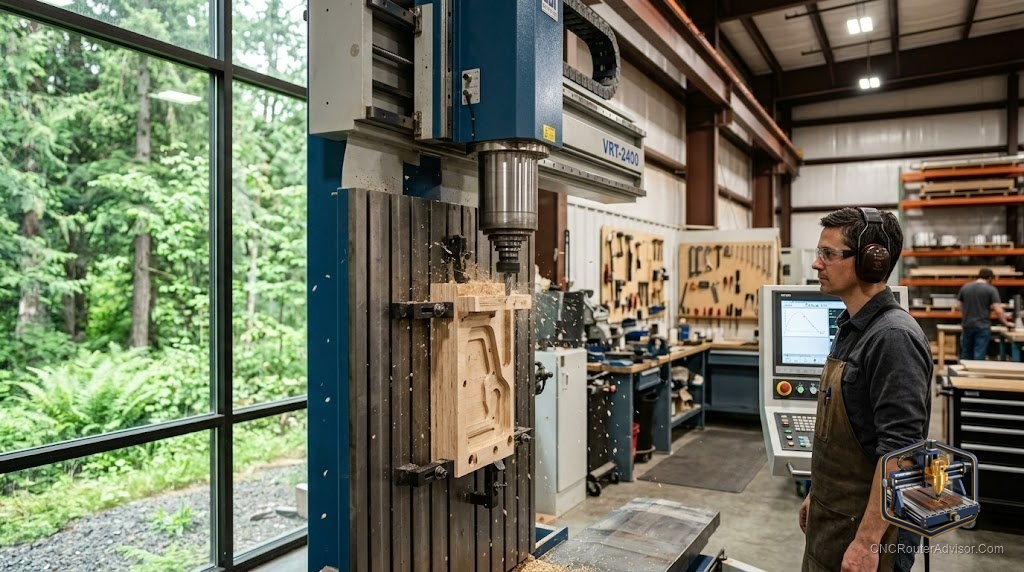
The phrase “vertical CNC router” causes a fair amount of confusion, because it gets used to mean a few different things depending on who is talking. Sometimes it refers to a machine oriented to work vertically to save floor space; sometimes it means a router set up to cut into the edge or face of tall stock; and sometimes people use it loosely for the vertical axis of any router. Sorting out what is actually meant is the first step to deciding whether such a setup fits your work. This guide untangles the term, explains where vertical routing genuinely helps, and covers the practical considerations if you are looking at one.
Understanding the concept matters because a vertical orientation solves specific problems (floor space, long-stock handling, certain joinery) while introducing others (workholding against gravity, dust falling into the work), and knowing which applies to you prevents a costly mismatch.
A vertical CNC router generally refers to a router configured so the work or the cutting is oriented vertically rather than lying flat on a horizontal bed. This can mean a space-saving machine that stands the work area upright, or a setup designed to cut into the edges, ends, or faces of tall or long stock (useful for certain joinery, panel edging, and processing long boards in a small footprint). The key considerations are workholding (the material must be held securely against gravity), rigidity (vertical forces and long overhangs stress the frame), dust and chip handling (chips fall differently), and whether the geometry actually suits your parts. For most general woodworking and sign work, a conventional horizontal router remains the default; vertical setups earn their place for specific space or long-stock needs.
The orientation is a tool for particular problems, not a general upgrade; choose it when your work has a space or long-stock reason to.
What people mean by “vertical CNC router”
The term covers a spectrum:
- Space-saving vertical machines: the work area stands upright so the machine occupies a smaller floor footprint, appealing in tight shops. The workpiece is held vertically and the router traverses a vertical plane.
- Vertical processing of long stock: setups (including some panel saws and beam-processing machines) that hold long or tall boards on edge or upright to cut, drill, or groove them, common in cabinetry and joinery where you process the ends and edges of long parts.
- The vertical axis of a standard router: loosely, people sometimes just mean the Z axis (the up-and-down cutting axis) of an ordinary router, which is not a separate machine type at all.
Because the term is ambiguous, clarify which meaning applies before buying or building, since the machines and trade-offs differ substantially.
Where vertical routing genuinely helps
Saving floor space
A shop tight on floor area may benefit from a machine that stands the work upright, trading floor footprint for vertical height. If floor space is your binding constraint and your parts suit vertical holding, this is a real advantage.
Processing long or tall stock
Holding long boards or tall panels vertically can make certain operations easier: cutting joinery into the ends of long rails, edging tall panels, or drilling and grooving long parts without a very long horizontal bed. In cabinetry and joinery this can be efficient.
Specific joinery and edge work
Some joints and edge operations are more natural to perform with the work held vertically, presenting the end or edge to the cutter. Where your parts need that geometry, a vertical setup simplifies fixturing.
Key considerations
Workholding against gravity. The defining challenge of vertical work is that gravity pulls the part down and away from the bed rather than helping seat it. Workholding must be secure and often more elaborate than a flat bed, using clamps, grippers, or vacuum designed for vertical holding. Get this wrong and parts shift or fall.
Rigidity and forces. Vertical orientation and long overhangs place different stresses on the frame. A rigid structure is essential to resist deflection and vibration, especially when processing long stock where bending forces are high.
Dust and chip handling. On a horizontal bed, chips fall onto the bed and are cleared by a dust shoe; vertically, chips fall differently and dust collection must be arranged to suit, or chips accumulate where they interfere.
Does the geometry suit your parts. Above all, confirm the vertical orientation actually fits your typical work. For general flat-sheet cutting, signs, and 3D carving, a horizontal router is simpler and better. Choose vertical only when space or long-stock processing gives a clear reason.
The verdict
A vertical CNC router is a solution to specific problems, saving floor space or making long-stock and certain joinery operations easier, rather than a general upgrade over a horizontal machine. If your binding constraint is floor space, or your work centers on processing long boards and tall panels, a vertical setup can be efficient. But it demands more careful workholding against gravity, a rigid frame, and thoughtful dust handling. For most general routing, a conventional horizontal machine remains the better default. Clarify which meaning of the term applies to you, and match the orientation to your actual parts.
Three things to take with you:
- “Vertical CNC router” is ambiguous: it can mean a space-saving upright machine, a setup for processing long or tall stock, or loosely just the Z axis of a standard router. Clarify which before buying.
- Vertical orientation earns its place for specific space or long-stock needs; for general flat-sheet, sign, and 3D work a horizontal router is simpler and better.
- The defining challenges are workholding against gravity, frame rigidity under vertical and overhang forces, and dust handling; plan all three before committing.
FAQ
What is a vertical CNC router? Generally a router configured so the work or cutting is oriented vertically rather than flat on a horizontal bed. It can mean a space-saving upright machine, a setup for cutting into the edges and ends of long or tall stock, or loosely the vertical Z axis of a standard router.
Why would someone use a vertical CNC router? Mainly to save floor space (standing the work upright reduces footprint) or to process long or tall stock more easily (cutting joinery into ends, edging tall panels, or working long boards without a very long horizontal bed). Some joinery is also more natural with the work held vertically.
What is the main challenge of vertical CNC routing? Workholding against gravity. On a vertical setup, gravity pulls the part away from the bed rather than helping seat it, so the holding system must be secure and often more elaborate than a flat bed, using clamps, grippers, or vacuum designed for vertical work.
Is a vertical CNC router better than a horizontal one? Not generally. It is better for specific needs (tight floor space or long-stock processing) but harder for workholding and dust handling. For general flat-sheet cutting, signs, and 3D carving, a conventional horizontal router is simpler and usually better.
How does dust collection work on a vertical CNC router? Differently from a horizontal bed, where chips fall onto the bed and are cleared by a dust shoe. On a vertical setup, chips fall away from the cut differently, so dust collection must be arranged to suit the orientation or chips accumulate where they interfere.
Does a vertical CNC router need a more rigid frame? Yes. Vertical orientation and long overhangs (especially when processing long stock) place high bending forces and different stresses on the structure, so a rigid frame is essential to resist deflection and vibration for accurate cuts.
References
- Wikipedia, CNC router overview and configurations: https://en.wikipedia.org/wiki/CNC_router
- CNCzone, machine configuration and workholding discussions: https://www.cnczone.com