Used CNC Router for Sale Near Me: Where to Look and How to Buy Locally
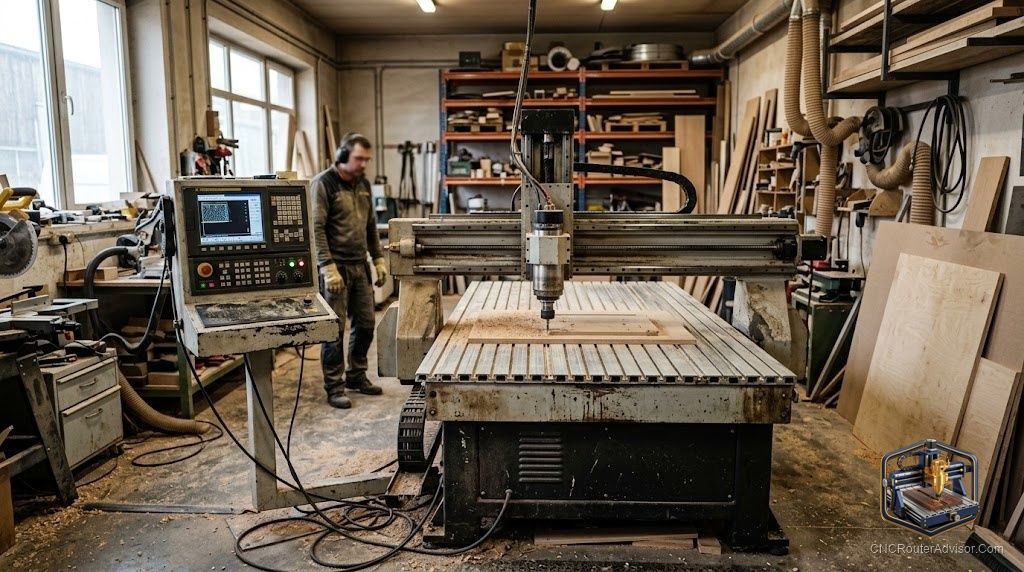
Searching “used CNC router for sale near me” is usually driven by one very sensible instinct: a CNC router is big and heavy, and buying one close enough to inspect in person and haul home yourself avoids the cost, risk, and hassle of freight shipping a machine that can weigh hundreds of pounds. Local buying has real advantages, but it also means the selection is whatever happens to be near you, so knowing where to look, how to evaluate a local machine, and how to handle the transaction turns a hopeful search into a good purchase. This guide covers all three.
Buying a used CNC router locally combines the general skill of evaluating a used machine with the specific practicalities of local sourcing: finding what is actually near you, inspecting it in person (a genuine advantage), and safely handling payment and pickup of a large, heavy machine.
Buying a used CNC router locally means sourcing a machine near enough to inspect in person and transport yourself, which avoids costly freight and lets you verify condition before paying. The main places to look are online marketplaces (Facebook Marketplace, Craigslist, and equipment-specific sites), business liquidations and auctions (shop closures and dealer trade-ins), and local maker and woodworking communities. The advantages of local buying are in-person inspection, self-transport, and often a better price; the key is to inspect thoroughly (mechanics, spindle, and electronics), confirm the machine runs, and handle the transaction safely.
A local purchase lets you see and test the machine before buying, the single best protection against a bad used-machine deal.
Where to look
Online marketplaces
The most common starting point:
- Facebook Marketplace often has local hobby and small-shop machines, with the seller’s profile and the ability to message and arrange a visit. Filter by distance.
- Craigslist remains a strong source for local used equipment, organized by region, including tools and heavy equipment sections.
- Equipment-specific sites (such as machinery resale platforms) list larger and industrial machines, sometimes with local options.
Search consistently and set alerts where possible, as good local machines sell quickly.
Business liquidations and auctions
Often the best value:
- Shop closures and downsizings put well-maintained production machines on the market, sometimes below market value.
- Auction houses (industrial and estate) list CNC equipment; local auctions let you inspect and pick up nearby. Read auction terms carefully (buyer premiums, as-is conditions, removal deadlines).
- Dealer trade-ins: CNC dealers sometimes sell used or trade-in machines, occasionally with some support or a limited warranty, which reduces risk.
Local communities
Worth tapping:
- Makerspaces and woodworking clubs often know of members selling machines, and a community-sourced machine comes with some accountability and often help evaluating it.
- Local CNC and woodworking forums or groups carry classifieds and word-of-mouth leads.
- Trade schools and colleges occasionally sell older equipment when they upgrade.
The advantage of buying local: inspect in person
The central benefit of local buying is that you can inspect and test before paying, the best protection against a bad deal. When you visit:
- See it run. Insist the machine powers up, homes its axes, and ideally runs a simple job or jogs all axes. This is the most important single check.
- Inspect the mechanics. Feel for smooth motion along each axis, check for play and backlash in the gantry and carriage, and inspect rails, bearings, and the drive system (ball screws or rack) for wear.
- Check the spindle. Listen for bearing noise and, if possible, check runout. Ask about spindle hours and cooling type.
- Confirm completeness. Controller, spindle and VFD, software and licenses, tooling, and documentation should be present. A complete machine is worth far more than a bare one.
- Assess the environment. A machine kept in a clean, dry shop is likelier well-maintained than one in a damp, dusty, or neglected space.
This in-person evaluation is exactly what remote freight buying denies you, and it is why local buying is worth prioritizing.
Questions to ask the seller
- Age, hours, and maintenance history: how old is it, how much has it run, and how was it maintained?
- Why it is being sold: upgrading or shop closure is reassuring; unresolved problems are not.
- What is included: controller, spindle, software and licenses, tooling, documentation, accessories.
- Support and parts: is the machine still supported by its maker, and are parts available?
- Any known issues: ask directly about faults, past crashes, and repairs.
Handling the transaction and pickup safely
Payment safety. For local deals, meet at the machine’s location (a real shop or address adds legitimacy), and prefer secure payment methods appropriate to the amount. Be cautious of deals that seem too good or sellers pushing for unusual payment or deposits before you have seen the machine.
Plan the move. CNC routers are heavy and large. Confirm weight and dimensions, and bring or arrange the right equipment (a trailer or truck, a pallet jack, an engine hoist or helpers, and straps). Know how you will get it out of the seller’s space and into yours. Underestimating the move is a common and costly mistake.
Confirm power at home. Check the voltage and phase the machine needs and whether your shop supplies it before you commit, or budget for a converter or electrical work.
Get what documents exist. Manuals, any transferable licenses, and a simple bill of sale protect you and help you run and support the machine.
The verdict
Buying a used CNC router locally trades a smaller selection for the real advantages of in-person inspection, self-transport, and often a better price. Look on online marketplaces, at business liquidations and auctions, and through local maker and woodworking communities. Use the in-person visit to see the machine run and inspect its mechanics, spindle, and electronics, ask the seller the right questions, and handle payment and the heavy pickup safely. Done this way, buying near you is often the smartest way to get into CNC.
Three things to take with you:
- The big advantage of buying local is in-person inspection: insist on seeing the machine power up, home, and run, and check the mechanics, spindle, and electronics before you pay.
- Look across online marketplaces (Facebook Marketplace, Craigslist), business liquidations and auctions (often the best value), and local maker and woodworking communities.
- Handle the transaction safely and plan the heavy move and your shop’s power supply in advance; underestimating logistics and power is a common, costly mistake.
FAQ
Where can I find a used CNC router for sale near me? Online marketplaces (Facebook Marketplace, Craigslist, and equipment resale sites), business liquidations and auctions (shop closures, estate and industrial auctions, dealer trade-ins), and local maker and woodworking communities (makerspaces, clubs, forums, and trade schools). Set alerts, as good local machines sell fast.
Why buy a CNC router locally instead of shipping one? Local buying lets you inspect and test the machine in person before paying, the best protection against a bad deal, and lets you transport it yourself, avoiding the significant cost and risk of freight-shipping a heavy machine. The trade-off is a smaller selection.
What should I check when inspecting a local used CNC router? See it power up, home, and run; feel for smooth motion and check for play in the gantry and carriage; inspect rails, bearings, and drives for wear; check the spindle for bearing noise and runout; and confirm completeness (controller, spindle, software, tooling, documentation).
Are auctions and liquidations a good place to buy a used CNC router? Often yes, they can offer the best value, as shop closures and downsizings put well-maintained machines on the market, sometimes below market value. Read auction terms carefully (buyer premiums, as-is conditions, and removal deadlines) and inspect before bidding where possible.
How do I safely pay for a used CNC router bought locally? Meet at the machine’s location (a real shop adds legitimacy), use secure payment appropriate to the amount, and be cautious of deals that seem too good or sellers pushing unusual payment or deposits before you have seen the machine. A simple bill of sale protects both parties.
How do I move a used CNC router I bought locally? Confirm the weight and dimensions, and arrange the right equipment (a trailer or truck, a pallet jack, an engine hoist or helpers, and straps). Plan how to get it out of the seller’s space and into yours. Also confirm your shop’s power (voltage and phase) matches the machine before committing.
References
- CNCzone, used CNC router buying discussions: https://www.cnczone.com
- OpenBuilds, CNC machine inspection and buying reference: https://openbuilds.com