
CNC Routing Services New Haven CT: Millwork, Prototypes, and Where to Find Them
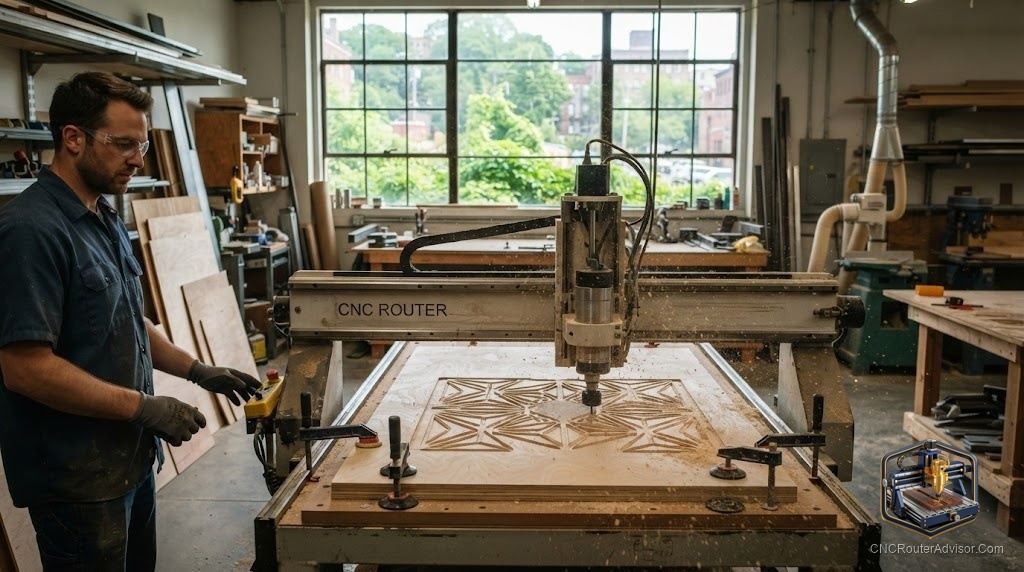
The architect’s note on the drawing said “match existing,” which meant a 1930s-era oak panel profile, a specific figure in the grain, and a tolerance set by walls that had settled for nearly a century. The millwork shop handling the Yale University project had seen that request before. New Haven rewards a certain kind of precision craft, because the city’s buildings demand it, and the fabricators who have survived here tend to know the difference between close and right.
For CNC routing services in New Haven, the strongest local options come from two directions: millwork and architectural fabrication shops serving the building and renovation market, and the prototype and short-run fabrication sector that has grown alongside Yale’s research programs and the city’s biotech corridor. Both exist, and both are worth finding.
A CNC routing service uses a computer-controlled machine to cut your material to a digital design, for a per-job or per-hour fee. For New Haven buyers, that covers a wide range: a carved panel, a prototype enclosure, an architectural bracket, a display fixture, or a production component. The shop’s background shapes what it does best.
For wood and architectural work, start with millwork shops and cabinet fabricators. For prototype and industrial parts, look toward the fabrication and job shop sector in the greater New Haven and Naugatuck Valley corridor.
New Haven’s fabrication landscape
Yale University is the economic anchor that shapes much of New Haven’s professional services market, and its constant building, renovation, and exhibition programs generate steady demand for high-quality millwork, custom furniture, set and exhibition fabrication, and prototype work. Contractors working on Yale buildings quickly learn that generic will not pass review, and the shops that win that work are the ones with CNC capability paired with real craft finishing skills.
Beyond Yale, the manufacturing heritage of the greater New Haven area runs deep. Winchester firearms, Sargent locks, and a large industrial base shaped the city’s skilled-trades culture. That legacy has partly transitioned into advanced manufacturing and precision fabrication, and there are job shops in the Naugatuck Valley and the greater New Haven corridor with serious CNC capability on metals, composites, and plastics alongside wood.
The growing biotech and life sciences presence around Science Park and the Yale medical campus also generates prototype and short-run fabrication demand, mostly for enclosures, fixtures, and lab-adjacent components. Shops serving that sector prioritize accuracy and fast turnaround over volume.
What to look for when vetting a shop
For architectural millwork and wood work:
- Ask specifically about species availability. A shop that stocks only MDF and birch plywood cannot match a historic oak or cherry profile.
- Ask about finishing capability. A CNC router produces the geometry; it does not sand, stain, or finish the part. Confirm whether finishing is included or whether you are receiving raw machined parts.
- Ask about profile matching. If you need to match an existing historical molding, the shop needs to either have or make the right tooling, which takes more than a standard flat bit.
For prototype and industrial work:
- Confirm material capability. Prototypes often involve HDPE, acrylic, polycarbonate, or aluminum sheet. Ask what the shop runs regularly.
- Ask about tolerances. General sign-shop tolerances of plus or minus a millimeter are fine for display work; for mechanical fits, you need to confirm the machine’s calibrated accuracy.
- Ask about turnaround. Prototype cycles move fast, and a shop that cannot turn a simple part in 48 hours may not fit the pace.
File preparation
DXF is the universal starting point. Organized layers (profile, pocket, engrave), closed vectors, no overlapping geometry. For architectural work that involves profiles or moldings, a STEP or 3D DXF may be required, and a physical sample or dimensioned cross-section drawing communicates intent more clearly than a digital file alone. For prototype work, include a drawing with critical dimensions called out, not just the geometry file.
A clean, complete package moves faster through any shop’s queue. A file that arrives with questions attached slows every step.
The verdict
New Haven has CNC routing capability suited to high-quality architectural work and precision prototype fabrication. The millwork and renovation market has shaped a tier of shops that take wood finishing seriously, and the Yale ecosystem has created demand for fast, accurate short-run fabrication. The right shop for your project depends on whether your work is architectural, prototype, or industrial, and each category has clear local representatives worth finding.
Three things to take with you:
- For architectural and historic millwork, ask about species, profile-matching capability, and finishing before you discuss price.
- For prototype work, ask about tolerances and turnaround directly, since the fabrication tier serving research and biotech moves at a different pace than a sign shop.
- A dimensioned drawing alongside your DXF file communicates intent clearly and speeds up estimation for any complex job.
FAQ
Are there CNC routing shops in New Haven, CT? Yes. New Haven has millwork and cabinet shops serving the architectural market, job shops in the Naugatuck Valley corridor handling industrial and prototype work, and fabricators serving the research and biotech sector. The right match depends on your material and application.
What type of CNC routing shop should I use for architectural millwork? A millwork or cabinet shop with CNC capability and in-house finishing is the right fit. Confirm they can source or machine the specific wood species and profiles your project needs.
How do I find CNC routing services in the New Haven area? Search for millwork shops, cabinet fabricators, and job shops in New Haven and the Naugatuck Valley corridor. Direct calls with your material and spec get faster, more accurate answers than generic online searches.
What file format does a millwork or routing shop need? DXF for 2D geometry, STEP or 3D DXF for profiled or three-dimensional work. Include a dimensioned drawing for any job with tight tolerances or profile-matching requirements.
Can New Haven shops handle prototype fabrication? Yes. The fabrication sector serving Yale and the biotech corridor is accustomed to fast turnaround on short-run prototype parts in wood, plastics, and metals. Ask directly about their experience and turnaround time.
What is typical turnaround for CNC routing in New Haven? For commercial and architectural work, a few days is common. For prototype work serving research cycles, some shops can turn simple jobs in 24 to 48 hours. Ask directly.
References
- Xometry, “CNC Routing Services”: https://www.xometry.com/capabilities/cnc-machining-service/cnc-routing/
- Cutting Edge CNC, “Send Us Your CAD Files”: https://cuttingedgecnc.co.uk/send-us-your-cad-files/