CNC Routing Services Atlanta: How to Find and Vet the Right Shop
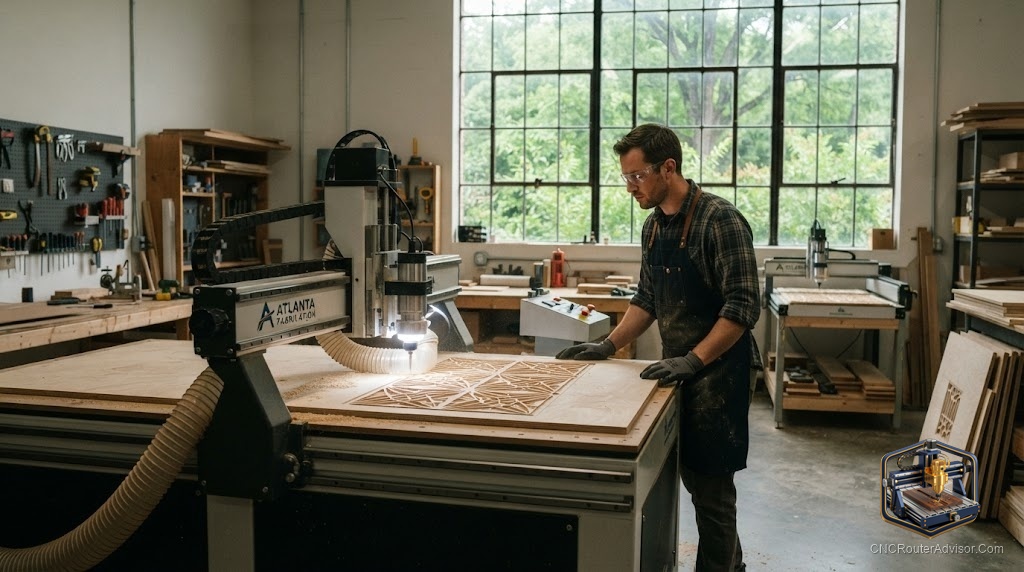
A set designer walked out of a production meeting with a materials request that would make most shops blanch: twelve 4-by-8 panels of custom-routed MDF, two-sided relief text, four-day turnaround. The job was real, the deadline was serious, and Atlanta’s film and sign industry took it in stride. This is a city that treats large-format CNC cutting as a basic operating expectation.
Finding a CNC routing service in Atlanta is not hard. Finding one with the right machine, the right materials in stock, and a process that can actually accept your file without a drama is the actual task, and that is what this guide is for.
A CNC routing service is a shop that owns and operates a computer-controlled cutting machine and cuts your material to your design, usually for a per-job or per-hour fee. You supply the file, they supply the machine, material, operator, and a finished part. The range runs from walk-in sign shops cutting MDF letters to production facilities routing aluminum and composite panels for aerospace suppliers.
If you are in Atlanta and need parts cut, the short answer is: search for local sign fabricators, cabinet shops with CNC capability, and dedicated prototype fabrication shops. Atlanta’s density of film, architecture, and manufacturing work means the options are real. The key is matching your material and tolerance to the right facility.
What Atlanta’s CNC routing economy looks like
Atlanta pulls from several distinct industries that all feed CNC routing demand. The film and television production base , anchored by studios in the metro area and a production economy that has made Georgia one of the top filming locations in the country , creates consistent work for prop fabrication, set pieces, and display components routed from foam, MDF, and hard plastics.
Sign and graphics fabrication is a large and competitive market here, which means there are well-equipped shops running production-grade CNC tables for channel letters, dimensional signs, and POP displays. If your project is wood, MDF, aluminum composite, or acrylic, the sign industry shops are worth calling first.
Beyond that, Atlanta’s manufacturing base , aerospace suppliers near Dobbins Air Reserve Base, automotive components suppliers throughout the metro, and a large construction and millwork sector , means there are shops capable of tighter tolerances and less-common materials. For structural or precision parts, look at fabrication shops that serve industrial clients rather than sign shops.
What to look for before you send a file
Not every shop can run every job. Ask these questions before you commit your design:
- What is the machine’s work area? A shop running a 4-by-4 table cannot cut a single 4-by-8 sheet panel in one pass. Confirm the cutting envelope matches your part.
- What materials do they regularly run? Shops optimized for MDF and PVC foam may not have the tooling for HDPE, polycarbonate, or aluminum. Material expertise shows in edge quality and clean corners.
- What file formats do they accept? DXF is the most universal. Many shops also take SVG, AI, or DWG. Ask about layer conventions if your design has multiple depths or operations.
- Do they do file review before quoting? A good shop looks at your geometry before running it and tells you if something needs to be fixed. A shop that just runs whatever arrives and charges for mistakes is a more expensive partner than one that catches problems upfront.
- What is their typical turnaround? For non-rush work, a day or two is reasonable. For film-industry timelines, confirm explicitly that the shop can and will prioritize rush work, and ask what rush fees look like.
File prep: doing your part before the quote
The fastest way to get a clean quote and a clean part is to send a clean file. For 2D cutting, use closed-loop vectors with no duplicate lines, organized on layers by operation (profile cut, pocketing, engraving). DXF is preferred and almost universally readable. Include the material, thickness, and quantity in your email, not just the file. For 3D or relief work, an STL or high-resolution 3D file with a clear brief on depth and material saves the shop’s estimation time and your revision rounds.
Shops that offer an online upload-and-quote system , common in larger metro areas , let you see pricing instantly for simple 2D work. For complex jobs, a phone call with a quick file review almost always gets a more accurate number than an online form.
Red flags to avoid
A shop that cannot tell you the make and model of their CNC table is not necessarily a bad shop, but it is a shop that does not track or care about that information , which tells you something about how they manage quality. Look for shops that can describe their machine’s capability and their typical tolerances. If a shop’s quote comes with no questions about your file, it either ran through a simple automated estimator, or it did not look at the file at all. Either way, confirm before you commit.
The verdict
Atlanta has the CNC routing capacity to handle a huge range of work, from foam props to composite panels. The market is competitive, which keeps quality up and turnaround expectations realistic. Match your material and tolerance to a shop that runs that material regularly, send a clean DXF with complete notes, and confirm machine size before anything else.
Three things to take with you:
- Look first at sign fabricators and millwork shops for wood and sheet goods; they are well-equipped and numerous.
- Prepare a clean DXF with layers labeled by operation and include material and thickness in your quote request.
- For industrial or tight-tolerance work, call shops that serve manufacturing clients, not just the sign industry.
FAQ
How do I find a CNC routing service near Atlanta? Search for sign fabrication shops, cabinet shops with CNC equipment, and prototype fabrication houses. Atlanta’s film and manufacturing base means the options are real; the work is matching your material and tolerance to the right facility.
What file format should I send to a CNC routing shop? DXF is the most universally accepted. SVG, AI, DWG, and PDF vector files are also common. For 3D carving, send an STL or STEP file. Always include material type, thickness, and quantity in your quote request.
What materials can Atlanta CNC routing shops work with? Most sign and fabrication shops handle MDF, plywood, PVC foam, acrylic, and aluminum composite. Shops serving industrial clients often extend to HDPE, polycarbonate, aluminum sheet, and composites. Confirm material capability before sending your file.
How fast can a CNC routing job be turned around in Atlanta? For standard jobs, a day or two is typical at a well-equipped shop. Film and production industry shops are accustomed to rush turnaround; confirm availability and ask about rush fees directly.
What should I ask before choosing a CNC routing service? Ask about machine work area, materials they regularly run, accepted file formats, whether they review files before quoting, and their standard turnaround. A shop that reviews your file and asks clarifying questions before quoting is a better long-term partner.
Do Atlanta shops charge per hour or per job? Both models exist. Some shops quote per job based on machine time and material; others bill by the hour for complex or open-ended work. Ask the shop which model they use and whether there is a minimum order.
References
- Xometry, “CNC Routing Services”: https://www.xometry.com/capabilities/cnc-machining-service/cnc-routing/
- Cutting Edge CNC, “Send Us Your CAD Files” (file format guide): https://cuttingedgecnc.co.uk/send-us-your-cad-files/