
CNC Routing Machine: Formats, Features, and How to Choose
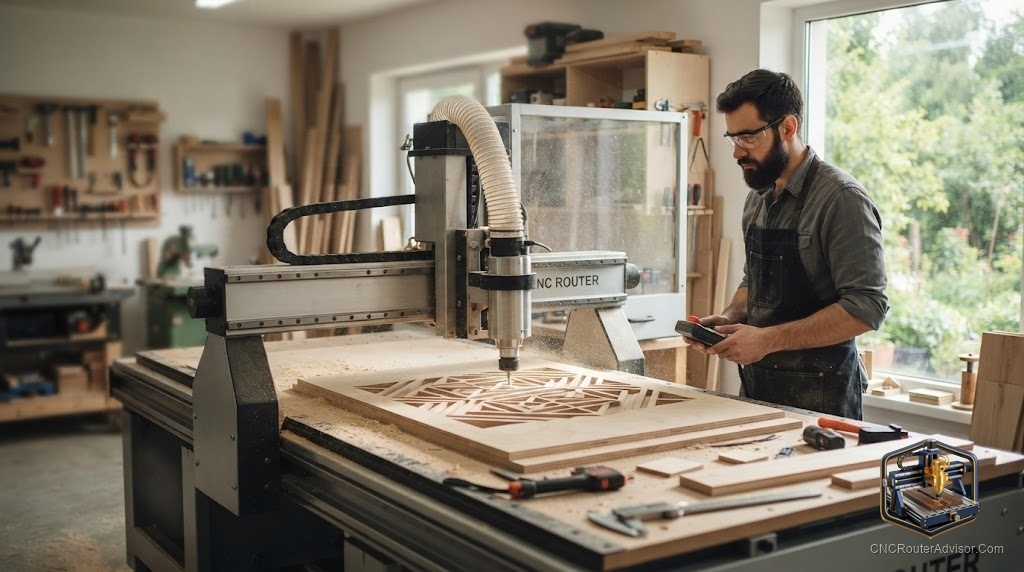
The phrase “CNC routing machine” describes a range from a 7-pound desktop machine cutting balsa to a 2,000-pound production gantry processing full sheets of 3/4-inch hardwood. Both are CNC routing machines. The difference is not technology. It is scale, rigidity, and the class of work each is built to handle.
A CNC routing machine is any computer-controlled machine using a rotating bit to cut material by following digital toolpaths. Formats range from desktop hobby machines to industrial production gantries.
Format Comparison
Desktop (bench-top):
- Working area: 7x11 to 24x24 inches
- Power: 110V, 400W-800W
- Frame: aluminum extrusion
- Best for: hobbyists, small sign shops, creative businesses
Genmitsu 3018-PROVer V2 - learning machine. Genmitsu 4040-PRO MAX - ready-to-run desktop standard. FoxAlien Masuter Pro - pre-assembled alternative.
Mid-range (dedicated stand):
- Working area: 24x24 to 33x50 inches
- Power: 110V
- Best for: small production woodworking, sign shops, furniture components
- Examples: Shapeoko 5 Pro, LongMill MK2.5, Onefinity Woodworker
Production (4x8):
- Working area: 48x96 inches
- Power: 220V
- Best for: cabinet shops, sign houses, architectural millwork
- Examples: Avid CNC PRO4896, ShopBot PRS Alpha
Drive System Quality
- Desktop: linear rails vs. V-wheels. Linear rails last longer.
- Mid-range: ball screw Z vs. belt Z. Ball screw controls depth precisely.
- Production: servo vs. stepper. Servos are closed-loop and self-correcting.
FAQ
What CNC routing machine format suits a small shop? Mid-range machines with 24x33 to 33x50-inch working areas cover most small-shop cabinet, sign, and furniture work.
Can a desktop routing machine handle production work? For small volumes of small pieces: yes. For consistent daily production of cabinet doors and sign panels: no.
What is the difference between a CNC router and a CNC mill? CNC routers: higher RPM, larger working areas, wood and soft materials. CNC mills: lower RPM, tighter tolerances, metal. The categories overlap for soft metals.
References
- Carbide 3D. Machine comparison. carbide3d.com
- Avid CNC. Production lineup. avidcnc.com