
CNC Router and Plasma Table: How They Differ and Whether to Combine Them
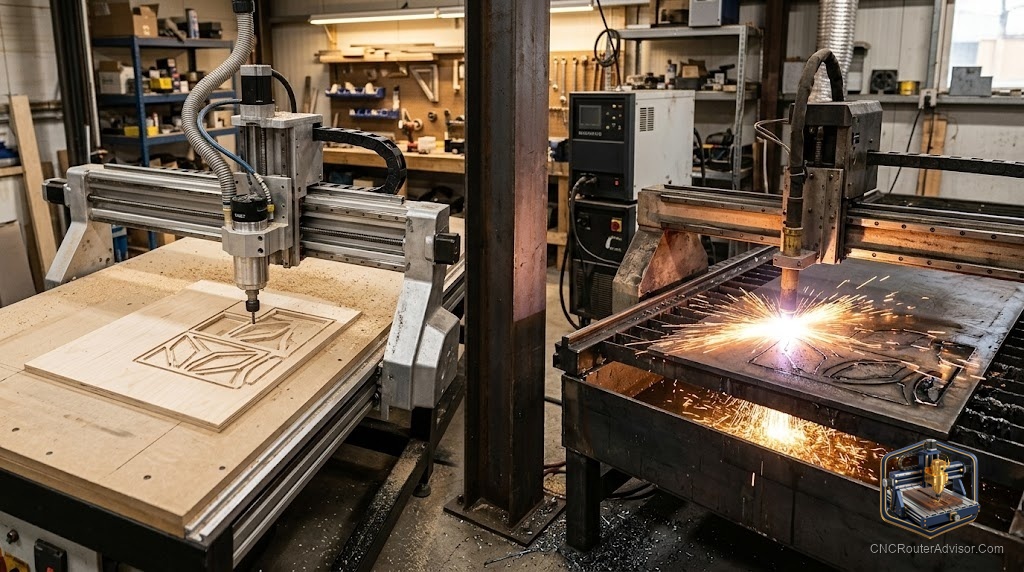
At first glance, a CNC router and a CNC plasma table look like close cousins: both are computer-controlled gantry machines that move a cutting head over a work area following toolpaths. That surface similarity leads many people to ask whether one machine can do both jobs, or whether a combination machine is a smart way to get routing and plasma cutting in one footprint. The honest answer requires understanding that these two machines are built around opposite requirements, and while combination machines exist, they involve real tradeoffs that are worth understanding before you buy.
A CNC router and a CNC plasma table are both computer-controlled gantry cutting machines, but a router uses a spinning bit to mechanically cut wood, plastic, and non-ferrous metal, while a plasma table uses a high-temperature electrical arc (plasma) to cut electrically conductive metals like steel and aluminum. Their fundamentally different cutting methods give them opposite design priorities, though combination and hybrid machines exist.
The short answer: a router and a plasma table are optimized for opposite things, routing needs rigidity and dust control; plasma needs a water or downdraft table and tolerates a lighter frame, so a single machine that does both well is rare. Combination machines exist (ShopSabre, PlasmaCAM, iGolden, and router accessories for plasma tables), but they are a compromise. For serious work in both, most shops run two dedicated machines.
How the two machines differ
Cutting method (the root difference).
- CNC router: a high-speed spinning bit physically removes material. Subtractive, mechanical.
- CNC plasma table: a plasma torch sends an electrical arc through a jet of ionized gas, melting and blowing away conductive metal. Thermal, electrical.
Materials.
- Router: wood, plywood, MDF, plastics, acrylic, foam, and non-ferrous metals (aluminum, brass) with the right setup.
- Plasma: electrically conductive metals only, mild steel, stainless steel, aluminum, sheet to plate thickness. It cannot cut wood or plastic.
Rigidity requirements.
- Router: high rigidity is essential. Cutting forces and any frame flex cause chatter and poor finish.
- Plasma: the torch never touches the material, so cutting forces are near zero. Plasma tables can use lighter frames because there is no mechanical cutting load.
Z-axis and height control.
- Router: precise Z-depth control for cut depth.
- Plasma: torch height control (THC) maintains standoff distance from the (often warping) metal, a different, specialized system.
Waste and byproducts.
- Router: produces dust and chips, requiring dust collection.
- Plasma: produces sparks, molten metal, smoke, and fumes, requiring a water table or downdraft table and ventilation. Dust collection does not apply.
Table design.
- Router: a flat spoilboard with vacuum or clamp hold-down.
- Plasma: a slat table over a water pan or downdraft plenum to catch molten dross and manage sparks.
Why combining them is a compromise
Because the two machines have opposite needs, one dust control and rigidity, the other spark and fume management with height control, a machine that does both cannot be optimal for either. Combination and hybrid machines do exist:
- Dedicated combination machines: ShopSabre and PlasmaCAM offer machines or configurations addressing both; iGolden and similar makers sell 4x8 and 5x10 combo tables.
- Router accessories for plasma tables: some plasma table makers (for example, Boss Tables) offer a router-spindle accessory, and kits like the Premier Plasma router kit or Arclight Arc Pro add routing to a plasma platform.
The tradeoffs: a plasma-first table adding a router usually lacks the rigidity for quality routing; a router-first machine adding plasma must deal with sparks and heat around precision components and dust systems. Switching between modes also means reconfiguring the table (water/slat vs. spoilboard) and the height-control system.
Choosing the right approach
- You mainly cut wood/plastic, occasionally sheet metal: a rigid router is your base; consider a separate small plasma table rather than compromising the router.
- You mainly cut steel, occasionally sign blanks: a plasma table is your base; a router accessory handles light routing but not precision work.
- You need quality in both, at volume: two dedicated machines are the reliable answer.
- Space and budget are tight, quality tolerance is flexible: a purpose-built combination machine can be a reasonable single-footprint compromise.
The verdict
A CNC router and a CNC plasma table share a gantry-and-toolpath skeleton but are built around opposite requirements: routing demands rigidity and dust control, while plasma demands spark and fume management with torch height control and cuts only conductive metal. Combination machines exist and can make sense when space, budget, and flexible quality expectations align, but they compromise both functions. For serious, high-quality work in both wood and metal, two dedicated machines remain the standard answer.
Three takeaways: routers cut wood, plastic, and non-ferrous metal mechanically, while plasma tables cut only conductive metal with a thermal arc; their opposite needs (rigidity/dust vs. spark/fume/height control) make any single machine a compromise; and combination machines exist but most serious shops run two dedicated machines.
FAQ
Can a CNC router also cut metal like a plasma table? A router can mechanically cut non-ferrous metals (aluminum, brass) with the right setup, but it cannot cut steel plate the way a plasma table does. Plasma cuts conductive metals thermally; routing and plasma are different processes.
Can a plasma table cut wood? No. A plasma table cuts only electrically conductive metals using an arc. It cannot cut wood, plastic, or other non-conductive materials, which are the router’s domain.
Is there a machine that does both routing and plasma cutting? Yes, combination and hybrid machines exist (ShopSabre, PlasmaCAM, iGolden combo tables, and router accessories for plasma tables), but they compromise one or both functions because the two processes have opposite requirements.
Why can’t one machine do both jobs perfectly? Routing needs high rigidity and dust collection; plasma needs a water or downdraft table, spark/fume management, and torch height control. Optimizing for one works against the other, so a combo machine is a compromise.
Do I need two machines for wood and metal work? For high-quality, high-volume work in both, two dedicated machines are the reliable answer. For occasional secondary work with flexible quality expectations, a combination machine or accessory may suffice.
What is torch height control on a plasma table? A system that automatically maintains the torch’s standoff distance from the metal as it warps and moves during cutting. It is specific to plasma and has no equivalent in routing, which uses precise Z-depth control instead.
Which is more expensive, a CNC router or a plasma table? Both range widely. Comparable-size machines are in the same general class, but plasma adds costs for the power supply, consumables, and a water/downdraft table, while routers add costs for spindles and dust collection. Combination machines cost more than either single-purpose machine.
References
- ShopSabre, CNC Router vs CNC Plasma (differences and combination context): https://www.shopsabre.com/
- CNCRouterInfo, How to Choose a CNC Router (rigidity and dust requirements): https://cncrouterinfo.com/guides/how-to-choose-a-cnc-router/
- PlasmaCAM, CNC Plasma Cutting Systems (table design and torch height control): https://www.plasmacam.com/
- Boss Laser / Boss Tables, Plasma Table Router Accessory: https://www.bosslaser.com/
- Cutting Edge, Aluminum CNC Machine Guide (router vs. thermal cutting of metal): https://www.cuttingedgeplasma.com/feeds/blog/aluminum-cnc-machine