CNC Router Accessories: The Add-Ons That Actually Improve Your Results
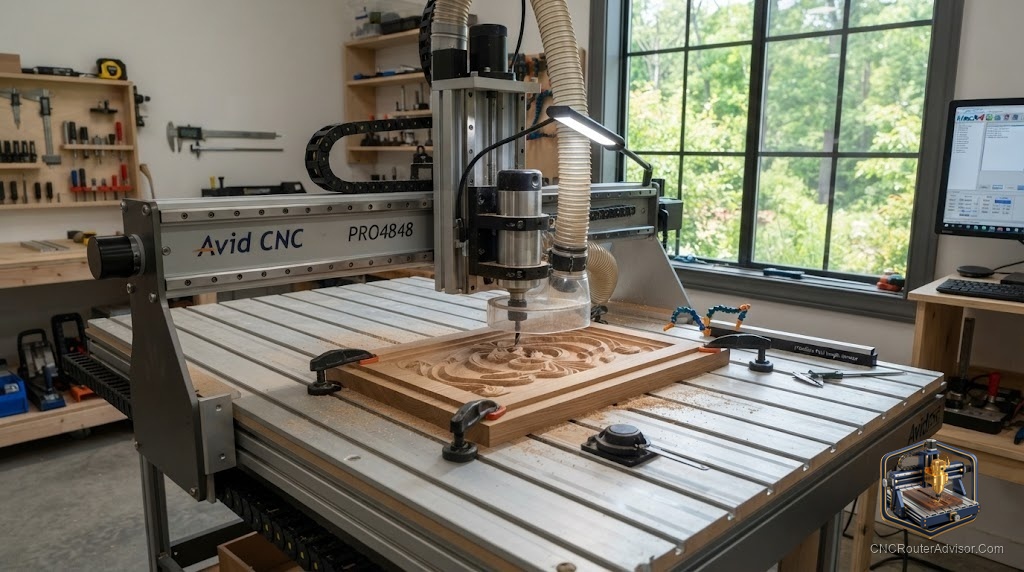
A CNC router out of the box will cut, but the difference between a machine that frustrates you and one that produces clean, repeatable, safe results usually comes down to accessories. Not the gimmicky add-ons, but the handful of practical upgrades, workholding, a dust shoe, a touch probe, the right bits, that solve the real problems every router owner runs into: parts shifting mid-cut, dust everywhere, tools crashing into the workpiece, and setups that take too long. Knowing which accessories genuinely matter, and in what order to buy them, saves money and dramatically improves what your machine can do.
CNC router accessories are the add-on tools, fixtures, and upgrades, beyond the base machine, that improve workholding, dust management, setup accuracy, safety, and material capability. The most impactful accessories are workholding hardware, a dust shoe and dust collection, a touch probe or Z-probe, spoilboard, quality bits, and personal protective equipment.
The short answer on what to buy first: prioritize workholding (clamps, a spoilboard, and hold-down hardware), then dust collection (a dust shoe), then a touch probe for faster, more accurate setup. Add quality bits matched to your materials, and never skip PPE. These essentials solve the problems that most affect cut quality and safety.
The essential accessories, in priority order
1. Workholding. Nothing ruins a cut like a part shifting mid-job. Essential workholding includes:
- Clamps (low-profile step clamps, cam clamps) that hold material to a T-slot table without sitting in the toolpath.
- A spoilboard (see below) with threaded inserts or T-track for versatile clamping.
- Double-sided tape for thin or small parts (light cuts only).
- Vacuum hold-down for production sheet work (not a substitute for clamps on heavy cuts).
2. Spoilboard. A sacrificial MDF board mounted to the machine bed. You cut into it (not the machine), surface it flat with a surfacing bit for a true zero reference, and drill or track it for clamping. Surfacing the spoilboard periodically keeps your work dead flat.
3. Dust shoe and dust collection. A dust shoe (dust boot) surrounds the bit and connects to a shop vac or dust collector, capturing chips at the source. This is a health, cleanliness, and cut-quality upgrade. The Carbide 3D Sweepy and SuckIt are popular examples.
4. Touch probe / Z-probe. A touch probe automatically sets the Z-zero (and, on XYZ probes, X and Y origins) by touching the tool to a conductive plate. It replaces slow, error-prone manual zeroing and prevents crashes. One of the highest-value accuracy accessories.
5. Quality bits (end mills). The right bits, matched to material, transform results:
- Upcut for chip evacuation and pockets.
- Downcut for clean top edges.
- Compression for clean edges on both faces of plywood and laminates.
- V-bits for lettering and decorative carving.
- Ball-nose for 3D contouring.
6. Personal protective equipment (PPE). Safety glasses, hearing protection, and a dust mask or respirator. Non-negotiable, and inexpensive.
Accessories that add capability
- Laser module: adds engraving and thin-material cutting (GRBL machines). See laser safety requirements.
- 4th rotary axis: enables cylindrical carving (table legs, spindles, ornaments).
- Rotary/drag knife or tangential knife: for cutting vinyl, cardboard, and gasket material.
- Camera/vision system: for print-and-cut registration.
- Automatic tool changer (ATC): production-level bit changing without manual intervention.
- Bitsetter/tool length sensor: measures each tool’s length automatically for multi-tool jobs.
Consumables and maintenance accessories
- Collets and collet nuts matched to your bit shanks (1/8 inch, 1/4 inch, 6mm, 8mm).
- Spoilboard surfacing bit for flattening the bed.
- Machine lubricant for lead screws and rails.
- Wrenches and setup blocks for tool changes and zeroing.
The verdict
The CNC router accessories that matter most are the ones that solve the problems every owner faces: workholding to stop parts shifting, dust collection to capture chips at the source, and a touch probe for fast, accurate, crash-free setup, plus quality bits matched to your materials and basic PPE. Buy these essentials before any capability add-ons like a laser or 4th axis. Spend on the accessories that improve every job, not the ones that only apply to occasional projects.
Three takeaways: prioritize workholding, dust collection, and a touch probe, they solve the problems that most affect cut quality and safety; match bits (upcut, downcut, compression, V-bit, ball-nose) to your materials and cut types; and add capability accessories like a laser or 4th axis only after the essentials are in place.
FAQ
What CNC router accessories should I buy first? Workholding (clamps, spoilboard, hold-down hardware), then dust collection (a dust shoe), then a touch probe for setup. Add quality bits and PPE. These essentials most affect cut quality and safety.
What is a spoilboard and do I need one? A sacrificial MDF board mounted to the machine bed that you cut into instead of the machine. Surfacing it flat gives a true zero reference and it provides versatile clamping. Yes, it is an essential accessory.
What is a dust shoe? A brush-skirted enclosure around the bit that connects to a shop vac or dust collector, capturing chips at the source. It improves health, cleanliness, and cut quality. Sweepy and SuckIt are common models.
What is a touch probe or Z-probe used for? It automatically sets the tool’s Z-zero (and X/Y origin on XYZ probes) by touching the bit to a conductive plate, replacing slow manual zeroing and preventing crashes. A high-value accuracy accessory.
What bits do I need for a CNC router? Upcut (chip evacuation, pockets), downcut (clean top edges), compression (clean plywood/laminate edges), V-bits (lettering), and ball-nose (3D contouring). Match bit type and shank size to your material and machine.
What PPE do I need for a CNC router? Safety glasses, hearing protection, and a dust mask or respirator. Fine wood dust is a health hazard, so PPE and dust collection together are essential.
Do I need a bitsetter or tool length sensor? If you run multi-tool jobs, a bitsetter measures each tool’s length automatically so you do not re-zero Z after every change. It saves time and prevents errors on jobs with several bits.
References
- Carbide 3D, Shapeoko Accessories (dust shoe, bitsetter, probe, workholding): https://shop.carbide3d.com/collections/accessories
- Carbide 3D, Guide to CNC Dust Collection (dust shoe setup): https://carbide3d.com/learn/cnc-dust-collection/
- Sienci Labs, CNC Accessories and Upgrades (touch probe, workholding, bits): https://sienci.com/product-category/accessories/
- CNCRouterInfo, CNC Router Bits Explained (upcut, downcut, compression, V-bit): https://cncrouterinfo.com/guides/cnc-router-bits/
- Onefinity CNC, Accessories (workholding, probes, spoilboard): https://www.onefinitycnc.com/accessories