CNC Routing Company: What They Do, When to Hire One, and How to Choose Well
There is a moment every maker and product designer hits: the job is too big, too repetitive, or too precise for the machine in the garage, and buying a bigger one makes no sense for a single run. That is when a CNC routing company earns its place. Instead of owning the machine, you send a file and get finished, cut-to-size parts back, often faster and flatter than you could manage yourself.
A CNC routing company is a shop that cuts, drills, and shapes parts for customers from their own designs using industrial CNC routers, typically working in sheet goods and plastics like plywood, MDF, acrylic, and HDPE, along with foam and softer metals. You provide the drawing and the material spec, and they produce the parts.
Should you use one? Hire a CNC routing company when you need parts larger than your machine can handle, a production run you do not want to babysit, tighter tolerances than your setup can hold, or a material you are not equipped to cut. Buy your own machine when the work is ongoing, small enough for a shop-scale router, and worth the learning curve. The dividing line is usually volume and consistency.
What a CNC routing company actually does
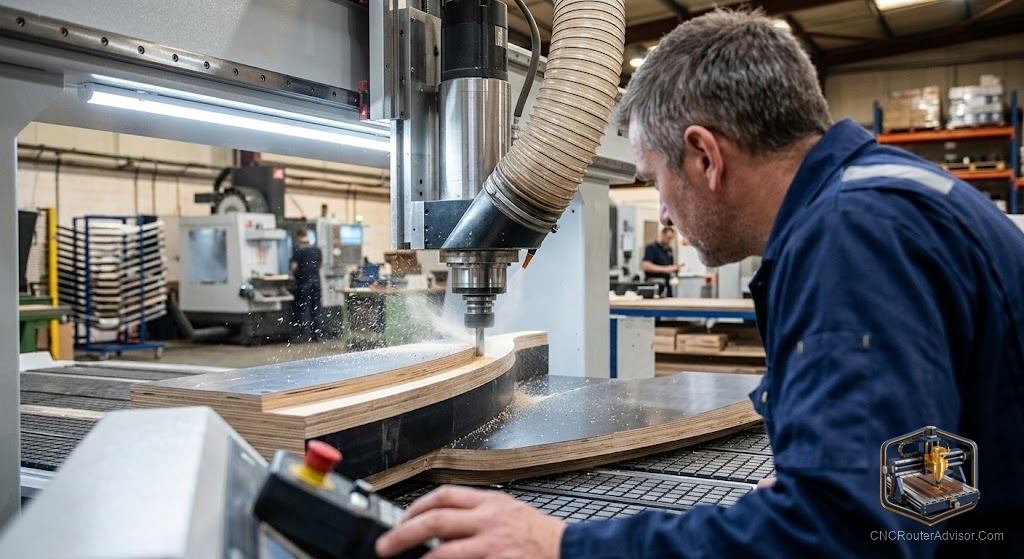
These shops turn digital files into physical parts at a scale most individuals cannot match. Common work includes cutting parts to size from full sheets, nesting many parts efficiently onto one panel, drilling and boring for hardware and joinery, V-carving and engraving, and profiling complex outlines. Many run large-format tables (5 by 10 feet is common) with vacuum hold-down, so they process full sheets flat and fast. Typical output ranges from cabinet and furniture components and sign blanks to display fixtures, prototypes, gaskets, and packaging inserts.
The value is not just the machine. It is a shop that already knows the feeds, speeds, tooling, and workholding for a given material, so your parts come out clean without you learning any of it.
When hiring a shop beats buying a machine
Ownership looks cheaper until you count the whole picture. A CNC routing company makes sense when:
- The parts are bigger than your table. Full 4 by 8 foot sheet work needs a large machine and space most people do not have.
- You need volume without the labor. A run of hundreds of identical parts is a shop’s normal Tuesday and your entire month.
- Tolerance matters. Established shops hold tight, repeatable tolerances (often to within a few thousandths of an inch) that a hobby machine struggles to match.
- The material is unfamiliar. Cutting acrylic, polycarbonate, or aluminum cleanly takes tooling and know-how a shop already owns.
- It is a one-off or a first run. Prototyping through a shop avoids buying a machine to make a handful of parts.
Buy your own only when the work is frequent, fits a shop-scale router, and pays back the machine and the time to learn it.
How to choose a CNC routing company
Not all shops fit all jobs. Weigh these before you send a file:
- Materials and capability. Confirm they routinely cut your material. A plastics specialist and a cabinet-parts shop are not interchangeable.
- Bed size and tolerance. Match their table to your part size and ask what tolerance they hold. Reputable shops state it plainly.
- File formats accepted. Most want clean vector files: DXF, DWG, AI, EPS, or SVG, sometimes native CAD. Ask before you draw.
- Turnaround and lead time. Include their queue and shipping in your planning, not just cut time.
- Finishing and extras. Edge finishing, deburring, assembly, and drilling can save you a second vendor.
- Minimums and setup. Some shops have order minimums or setup charges that make tiny runs impractical, so ask up front.
The best fit is a shop that cuts your material every day, accepts your file format, holds the tolerance you need, and communicates lead times honestly.
Preparing your file so the quote goes smoothly
A clean file gets a faster quote and better parts. Send closed vector paths (no open or doubled lines), specify material, thickness, and grade, mark which lines are cuts versus engraving, and call out hole sizes and any critical dimensions. Include quantity and tolerance expectations. The more precisely you spec the job, the less back-and-forth, and the closer the parts land to what is in your head.
The verdict
A CNC routing company is the right call when the job outgrows your machine: parts too big, runs too long, tolerances too tight, or materials you are not set up to cut. Choose a shop that regularly works your material, matches your part size, states its tolerance, and accepts a standard vector file, and prepare a clean, fully specified file to get an accurate quote. Owning a router is rewarding for steady, shop-scale work, but for large, high-volume, or one-off precision jobs, hiring the shop is usually the smarter and cheaper path.
Three takeaways: hire a shop for size, volume, tolerance, or unfamiliar materials; vet on capability, bed size, tolerance, and accepted file formats; and send a clean, fully specified vector file to speed the quote and sharpen the result.
FAQ
What does a CNC routing company do? It cuts, drills, engraves, and shapes parts to size from your designs using industrial CNC routers, typically in plywood, MDF, acrylic, HDPE, foam, and softer metals.
Is it cheaper to hire a CNC routing company or buy a machine? Hiring is usually cheaper for large parts, one-offs, high-volume runs, or unfamiliar materials. Buying pays off when the work is frequent, fits a shop-scale router, and justifies the learning curve.
What file format does a CNC routing company need? Most accept clean vector files such as DXF, DWG, AI, EPS, or SVG, and some take native CAD files. Confirm the shop’s preference before you design.
What materials can a CNC routing company cut? Commonly wood, plywood, MDF, acrylic, polycarbonate, HDPE and other plastics, foam, and softer metals like aluminum. Capabilities vary, so match the shop to your material.
How do I choose the right CNC routing service? Check that they cut your material regularly, their table fits your part size, they hold the tolerance you need, they accept your file format, and their lead times work for you.
What tolerance can a CNC routing company hold? Established shops often hold within a few thousandths of an inch, tighter and more repeatable than most hobby machines. Ask each shop to state its tolerance.
How should I prepare my file for a quote? Send closed vector paths, specify material, thickness, and grade, mark cuts versus engraving, note critical dimensions and hole sizes, and include quantity and tolerance.
References
- Toolstoday, Choosing the Right CNC Router: https://toolstoday.com/learn/choosing-the-right-cnc-router
- American Micro Industries, How to Select the Right CNC Machining Service Provider: https://www.americanmicroinc.com/resources/choosing-cnc-manufacturing-partner/
- Modus Advanced, How to Select a CNC Machining Services Partner: https://www.modusadvanced.com/resources/blog/how-to-select-a-cnc-machining-services-partner
- 3ERP, What is CNC Routing: https://www.3erp.com/blog/cnc-routing/
- ShopSabre, How Does a CNC Router Work?: https://www.shopsabre.com/how-does-a-cnc-router-work/