
CNC Router Retrofit: Upgrading an Old or Manual Router Into a CNC Machine
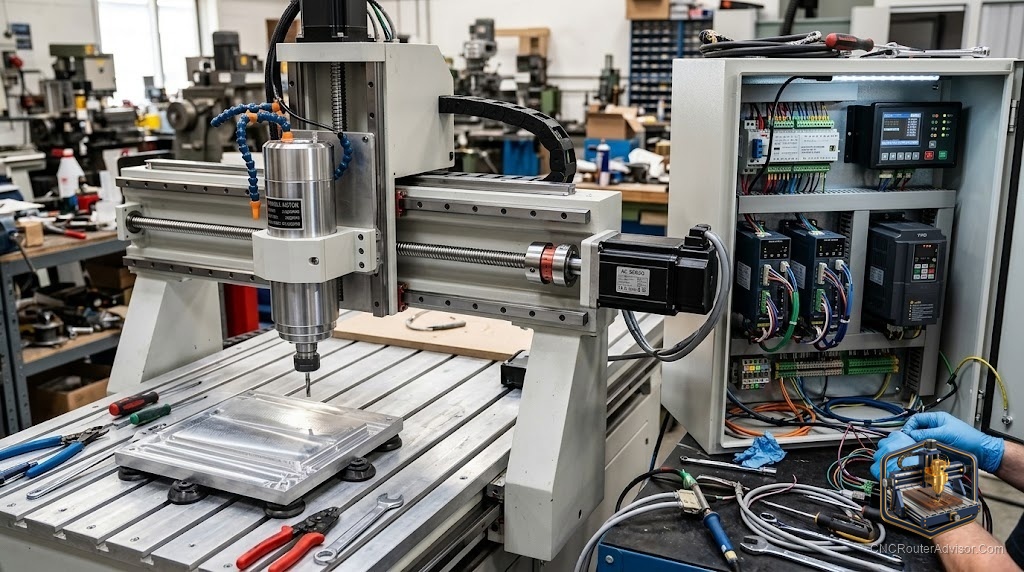
A CNC router retrofit is the project of taking an existing router, whether an old hobby machine, a manual router table, or even a repurposed gantry, and adding or updating the CNC components to bring it to a better cutting standard. It is a project that appeals to people who have a capable mechanical structure but outdated or failed electronics, or who want to upgrade a machine’s motion system without replacing the whole frame. Like any build project, a retrofit succeeds when the goal is clear and the components match the structure.
A CNC router retrofit is the process of adding, replacing, or upgrading the motion system, electronics, controller, or spindle on an existing CNC router or manual gantry, typically to modernize an older machine, repair failed components, or improve performance without a full rebuild.
Here is the direct framing: a retrofit makes sense when the machine’s frame is sound and the failing or limiting components are in the electronics, motion system, or spindle, since replacing those targeted systems costs less than a new machine while preserving the structural investment. The sections below cover the main retrofit types, what each involves, and when a retrofit is the right choice.
Controller and electronics retrofit
The most common retrofit is replacing an obsolete or failed controller with a modern GRBL-based system. Older machines often ran Mach3 or LinuxCNC on aging hardware; replacing the controller with a modern GRBL board gives current firmware, free sender software compatibility, and a large support community. This retrofit requires remapping the existing stepper driver wiring to the new controller, confirming step pulse timing, and reconfiguring axis parameters. It is the most accessible retrofit type for people with basic wiring confidence.
Motion system retrofit
Upgrading from belts to lead screws, or from lead screws to ball screws and linear rails, is a more significant retrofit that meaningfully improves accuracy and rigidity. This type of retrofit is most practical when the frame is solid but the motion system is the performance bottleneck. It requires verifying that the frame can accept the new mounting geometry and that the motor torque matches the new drive’s requirements. A lead-screw-to-ball-screw retrofit on a mid-size machine is a known project in the hobby community with documented builds to reference.
Spindle retrofit
Replacing a worn trim router with a real air-cooled or water-cooled spindle is a targeted retrofit with a high return on investment for machines used for sustained production. The new spindle needs a mount that fits the existing Z-axis carriage and a VFD for speed control. This is achievable on most mid-size machines with basic fabrication skills and is one of the most commonly reported upgrades in CNC communities.
When a retrofit is the right choice
A retrofit makes sense when the frame is sound and the upgrade components cost less than a new machine of similar capability. It makes less sense when the frame itself is the limiting factor (flex, damage, or fundamental geometric error) since no electronics or motion upgrade fixes a bad frame. Assess the frame honestly before investing in a retrofit.
For building from scratch instead of retrofitting, see our guide to build a CNC router for the comparison of paths.
Final verdict
A CNC router retrofit delivers real value when the machine’s frame is sound and the electronics, motion system, or spindle are the limiting or failing components. Controller retrofits to GRBL modernize older machines at low cost; motion system upgrades improve accuracy meaningfully; spindle retrofits extend production capability without a full machine replacement. Assess the frame first, target the upgrade to the actual limiting component, and a retrofit extends a good mechanical structure’s productive life at a fraction of replacement cost.
FAQ
What is a CNC router retrofit? Adding, replacing, or upgrading the motion system, electronics, controller, or spindle on an existing CNC router to modernize, repair, or improve it without a full rebuild.
What is the most common CNC router retrofit? Replacing an outdated or failed controller with a modern GRBL-based system. It is the most accessible retrofit and gives current firmware, free software compatibility, and a large support community.
When should I retrofit instead of buying a new machine? When the frame is sound and the failing or limiting component is in the electronics, motion, or spindle, and the retrofit cost is less than a new machine of similar capability.
Can I upgrade from belts to lead screws? Yes, if the frame geometry and motor torque support the new drive system. This is a known project in the hobby community with documented builds to reference.
Does a spindle retrofit require a VFD? Yes. A real air-cooled or water-cooled spindle requires a VFD for speed control. Budget for the VFD, mount bracket, and wiring alongside the spindle itself.
What makes a retrofit not worth doing? A damaged, racked, or fundamentally flex-prone frame. No electronics or motion upgrade compensates for a bad frame, so assess the structure honestly before investing in a retrofit.
References
- V1 Engineering, upgrade and retrofit community documentation: https://docs.v1e.com
- GRBL project, controller replacement and configuration: https://github.com/gnea/grbl/wiki
- Carbide 3D, machine upgrade guidance: https://carbide3d.com