CNC Router Operator Jobs: What the Role Involves and How to Build the Skills That Get You Hired
CNC router operator is a real and growing job category in sign shops, cabinet and furniture manufacturers, architectural woodworking firms, and aerospace and composite fabrication facilities, and it is a role that rewards practical skill more than credentials. Understanding what a CNC router operator actually does at work, what skills employers consistently ask for, and how to build those skills whether you are starting from scratch or transitioning from another machining role is the foundation for getting into this field.
A CNC router operator is a production worker or technician who sets up, operates, monitors, and maintains CNC router machines to produce parts and products from digital designs, working in industries including woodworking, signmaking, furniture, cabinetry, plastics fabrication, and aerospace composites. The role combines machine operation with basic programming knowledge, quality inspection, and regular maintenance.
Here is the direct framing: CNC router operator jobs are available at multiple skill levels, from entry-level machine monitors to experienced setup technicians who program and troubleshoot, and the skills employers value most are hands-on operation experience, CAM software familiarity, quality inspection discipline, and the problem-solving mindset that keeps production running. The sections below cover the role, the skills, and how to build them.
What a CNC router operator does
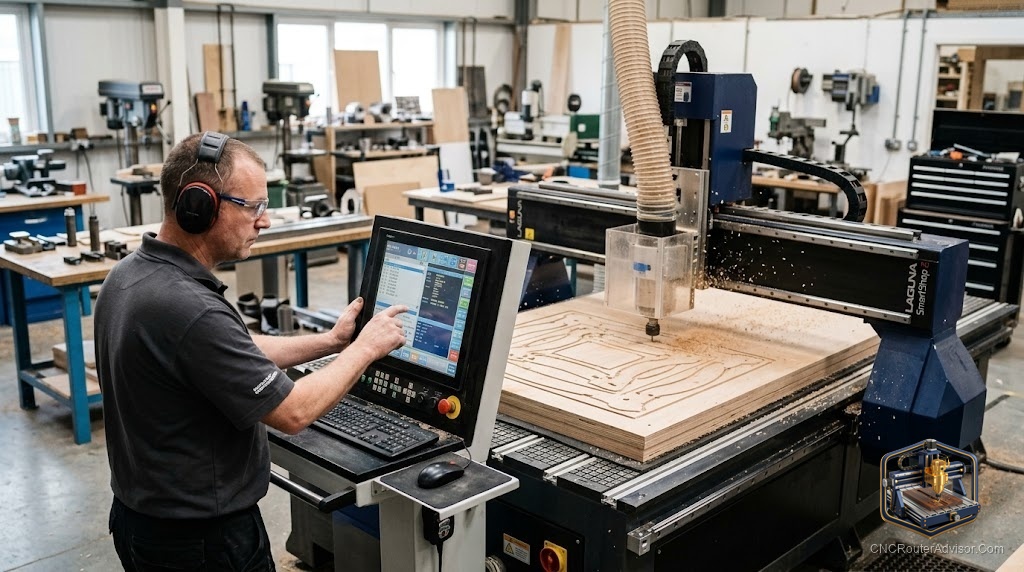
At the entry level, a CNC router operator loads and unloads material, monitors running jobs for quality, replaces bits, and keeps the machine clean and lubricated. At the experienced level, the operator also sets up the machine for new jobs (zeroing, workholding, bit selection), reads and adjusts CAM files, diagnoses and fixes cut quality problems, and does first-level maintenance. In smaller shops the roles overlap: a single person may design, program, and run the machine. In production environments, setup and operation are often separated.
The skills employers ask for
Job listings for CNC router operators consistently require or prefer: machine operation experience (hours at the controls, not just theoretical knowledge), CAM software familiarity (Vectric VCarve, Mastercam, or Fusion depending on the industry), ability to read and interpret technical drawings and cut files, quality inspection using measuring tools, and a maintenance mindset that keeps machines running between service intervals. Safety training and the ability to work in a production environment are baseline requirements everywhere.
How to build the skills
The most direct path to CNC router operator skills is hands-on time at a machine. Community college CNC machining programs provide structured training on industrial machines with documented credentials. Makerspaces with CNC routers are accessible without formal enrollment and let you accumulate real hours. A hobby machine at home is a genuine skill-builder, since the setup, software, and troubleshooting skills transfer to production environments. Online CAM software training (Vectric and Fusion both have structured tutorials) builds the software knowledge independently of machine access.
Salary and demand context
CNC router operators are in demand in woodworking, cabinetry, signmaking, and aerospace composites, with demand growing as more shops automate previously manual cutting. Entry-level operators earn rates that vary by region and industry; experienced setup operators and programmer-operators earn significantly more. The SBA and industry associations track workforce demand in manufacturing, and CNC machining is consistently listed among growing skilled trades.
For the machining knowledge that supports operator skills, see our guide to CNC router machining.
Final verdict
CNC router operator jobs are accessible to people who build practical hands-on skills rather than waiting for the perfect credential, and the skill-building path is available through community college programs, makerspaces, and hobby machines. Employers want operators who know the machine, know the software, and keep production running. Build those three things and the credential follows from the skill, not the other way around.
FAQ
What does a CNC router operator do? Loads and unloads material, monitors running jobs, replaces bits, keeps the machine clean, and at higher skill levels sets up jobs, adjusts CAM files, diagnoses cut quality problems, and performs maintenance.
What skills do CNC router operator jobs require? Hands-on machine experience, CAM software familiarity (VCarve, Mastercam, or Fusion), ability to read technical drawings, quality inspection, maintenance habits, and production environment work discipline.
Do I need a degree to be a CNC router operator? No. Practical hands-on experience and software skills carry more weight than academic credentials. Community college CNC programs provide structured training and credentials; makerspace and hobby experience also builds genuine skills.
Where do CNC router operators work? Sign shops, cabinet and furniture manufacturers, architectural woodworking firms, plastics fabricators, and aerospace composite production facilities. The role is widespread across manufacturing industries that cut sheet goods.
How do I get CNC router experience without a job? Community college CNC programs, makerspaces with machine access, or a hobby machine at home. All three build the hands-on hours and troubleshooting experience that employers value.
Is CNC router operation a growing field? Yes. More shops are automating previously manual cutting, and experienced CNC operators who can also set up and troubleshoot are consistently in demand across manufacturing industries.
References
- U.S. Small Business Administration, manufacturing workforce guidance: https://www.sba.gov
- Association for Manufacturing Technology, CNC workforce and training: https://www.amtonline.org
- Carbide 3D, machining fundamentals for operators: https://carbide3d.com