
CNC Router Desktop: The Form Factor Defined and What to Expect From It
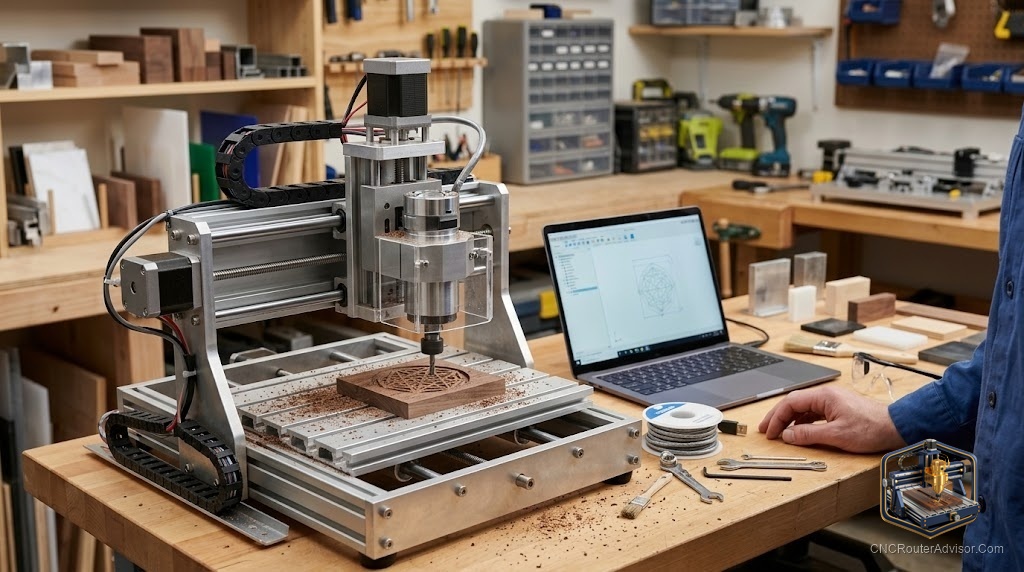
A desktop CNC router is the form factor that turns a kitchen table, a spare desk, or a tight corner of a workshop into a CNC workspace, and for a large number of hobbyists, makers, and small sign shops, that is exactly the flexibility they need. Understanding what the desktop form factor actually means in terms of capability, work area, and the setup it requires is what lets you decide if a desktop machine fits your space and your work, or whether you need something that sits on a dedicated bench or takes up floor space.
A CNC router desktop is a CNC router designed to sit on and operate from a desktop, table, or similar flat surface, with a compact-to-mid work area and a build suited to occasional-to-regular hobby and prosumer use in a non-dedicated workspace. The form factor prioritizes footprint and portability over maximum work area and production rigidity.
Here is the direct guidance: a desktop CNC router is the right form factor for makers, learners, sign makers, and small shops who want a capable CNC machine without a dedicated floor space or permanent workshop installation, and the two main tiers cover light-to-moderate work well. Verified picks at both tiers are noted below. The sections cover the tiers, the form factor trade-offs, and who it suits.
What the desktop form factor gives you
A desktop machine is compact enough to set up and put away, or to operate on a surface shared with other uses. It is light enough to move without heavy equipment, and its small footprint fits most home and office environments. The trade-offs are the same as for any compact machine: work area limited to the desktop footprint, cutting force limited by the lighter frame, and noise and dust management on a shared surface. These are not failures; they define the form factor and the user it suits.
The compact desktop tier
The Genmitsu 3018-PROVer V2 is the most widely used desktop CNC router, with a genuine 300x180mm work area, included electronics, and a large community that makes learning and troubleshooting fast. It sits on a desk, runs from a USB connection, and handles signs, engravings, small carvings, and PCB milling reliably. Named honest limit: the compact frame suits light wood and learning, not dense hardwood production.
The mid-size desktop tier
For a desktop machine with more room, the Genmitsu PROVerXL 4030 V2 is a larger desktop machine with a 400x300mm bed, linear rails, and ball screws. It sits on a bench or sturdy desk and handles a wider range of wood work and larger signs. It is heavier and takes more desk space than the compact tier, but remains a desktop machine in the sense that it needs no floor installation. Named honest limit: its larger footprint and weight require a sturdier surface than a typical lightweight desk.
What a desktop machine needs to perform
Desktop machines perform best on a flat, rigid surface. A lightweight folding table or a wobbly desk transmits vibration that shows in cut quality. A solid workbench, a heavy desk, or even a thick sheet of MDF on a rigid surface under the machine makes a real difference. Noise and dust also need managing on a shared surface; many desktop CNC users add a simple enclosure for dust containment.
For the setup guidance that applies to this form factor, see our guide to the CNC benchtop router.
Final verdict
A CNC router desktop is the right form factor for makers and small shops who want capable CNC work without dedicated floor space, accepting the trade-off of a compact work area and lighter build for the benefit of a machine that fits where you are. The compact tier handles light work and learning; the mid-size tier handles a wider range of wood and larger parts on a sturdier surface. Match the tier to the work and the surface to the machine, and a desktop router is a genuinely productive tool in a genuinely small space.
FAQ
What is a desktop CNC router? A CNC router sized to operate on a desktop, table, or bench, with a compact-to-mid work area and a footprint that fits non-dedicated workspaces.
Can a desktop CNC router cut hardwood? Light machines handle thin softwood and light hardwood. A mid-size desktop with linear rails and ball screws handles real hardwood more reliably. Match the machine’s rigidity to your material.
What surface does a desktop CNC router need? A flat, rigid, level surface. Lightweight or wobbly surfaces transmit vibration to the machine and hurt cut quality. A solid workbench or heavy desk is ideal.
How much space does a desktop CNC router take? The compact tier (3018 class) fits on a desk with room to spare: roughly 400x400mm footprint. Larger desktop machines may need 600x700mm or more. Check the machine’s footprint dimensions before buying.
Can I use a desktop CNC router in an apartment? Yes, with noise and dust management. A simple enclosure contains dust and reduces noise. Many apartment users run compact desktop machines with good results.
Is a desktop router the same as a benchtop router? The terms overlap and are often used interchangeably. Desktop emphasizes small size for desk or table use; benchtop emphasizes workbench operation. In practice they describe the same compact-to-mid class of machines.
References
- SainSmart Genmitsu, desktop machine documentation: https://www.sainsmart.com/blogs/news
- Carbide 3D, desktop machine buying guidance: https://carbide3d.com
- V1 Engineering, small machine form factor reference: https://docs.v1e.com