6040 Router CNC: Specs, Machine Comparisons, and What Separates Good from Mediocre
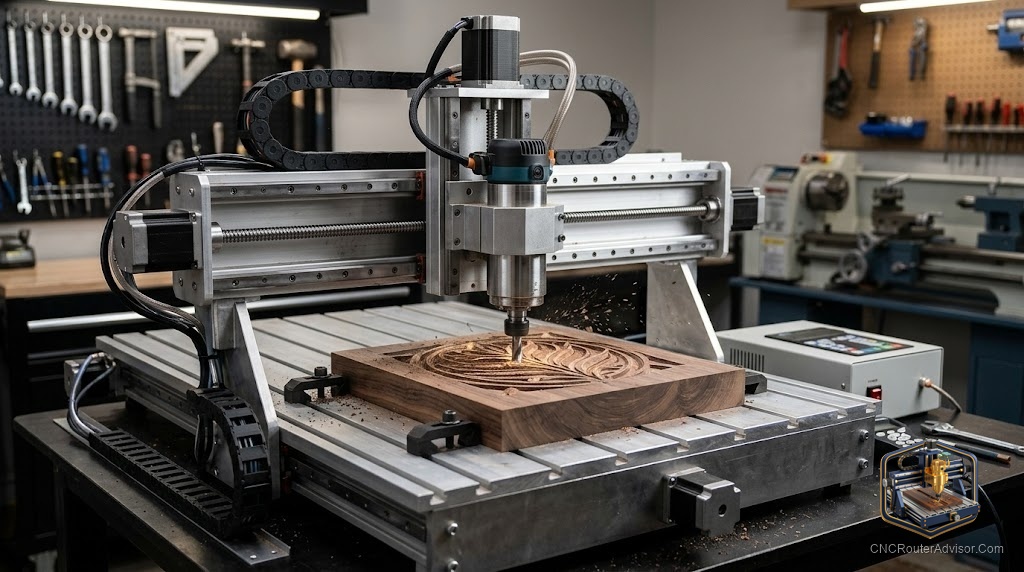
The 6040 router CNC is a well-established machine class, and because of that it is also a well-populated market with a wide range of quality at similar headline specs. The work area (600x400mm) and the basic component list (linear rails, ball screws, three-axis motion) are almost universal in the class, but the difference in cut quality between a well-built 6040 and a mediocre one is not subtle. Knowing what the specs actually tell you, and what they do not, is the key to choosing well in this competitive class.
A 6040 router CNC is a CNC router with a 600 by 400 millimeter work area, typically featuring linear rails and ball screws on three axes, and offered in a wide range of spindle powers from trim-router class to real 2.2kW spindles, suited for wood, plastics, foam, and with the right setup, soft metals. The class spans a wide quality range within similar spec sheets, so frame construction and spindle type are the meaningful differentiators.
Here is the direct guidance: in the 6040 class, the specification that matters most after the work area is the frame construction and spindle type, since most machines in the class share linear rails and ball screws, and those shared specs conceal the quality difference. A verified machine is noted below. The sections below cover the key specs, the meaningful differentiators, and what the class honestly suits.
The specs everyone lists
Every 6040 router lists the 600x400mm work area, linear rails, and ball screws. These are accurate and meaningful baselines: linear rails with ball screws give better precision and less backlash than belt systems, and the work area fits most hobby and prosumer projects. But in a market where every machine lists these same features, they tell you what class you are buying in, not which machine in that class is worth buying.
The differentiators that actually matter
Frame rigidity is the first real differentiator. An all-metal frame, properly designed and assembled, is stiffer than a lighter extrusion-only build, and stiffness determines cut quality under load. Spindle type is the second: a dedicated real spindle (particularly air or water cooled) runs quieter, at controlled RPM, and handles sustained work better than a trim router at the same nominal power. Controller quality and software compatibility (GRBL-based versus proprietary) affect daily usability. These are the differences the spec sheet often hides.
A verified machine in this class
The NymoLabs NBS-6040 CNC Router is a verified 600x400mm machine with linear rails, ball screws, and a 710W spindle. It represents the kind of production-oriented 6040 build that goes beyond the bare spec list. The honest caveats: verify that the spindle speed range matches your materials, confirm the controller is compatible with your preferred software before buying, and note that 710W is suited to wood, plastics, and light aluminum, not demanding metal work.
What the 6040 class genuinely suits
The 6040 router CNC is well-matched to a wide range of productive work: signs, detailed carvings, cabinet components, furniture parts, inlays, and light aluminum work on all-metal builds. It is too large for some compact applications where a 3018 class suffices, and too small for consistent full-sheet furniture processing. In its lane, which covers most serious hobbyists and small shops, it is a capable and practical machine.
For a broader comparison between the 6040 class and machines above and below it, see our guide to the 60 40 CNC router.
Final verdict
A 6040 router CNC offers a capable 600x400mm platform with linear rails and ball screws as standard, but the meaningful differences within the class are frame construction, spindle type, and controller compatibility, none of which appear in the headline specs. Evaluate those three factors specifically, use verified machines as a baseline, and match the spindle and frame to your materials. Buy by spec sheet alone in this class and you risk ending up with a machine that meets the numbers but underperforms on the bench.
FAQ
What is a 6040 router CNC? A CNC router with a 600x400mm work area, typically with linear rails and ball screws on three axes. The class spans wide quality ranges within similar specifications.
What specs matter most in a 6040 router? Beyond the shared linear rails and ball screws, frame construction (stiffness and material), spindle type (real spindle versus trim router), and controller compatibility are the meaningful differentiators.
Can a 6040 router cut aluminum? All-metal 6040 builds with real spindles can cut aluminum with the right bit and setup. Lighter extrusion builds are better suited to wood and plastics. Confirm the machine’s frame and spindle before attempting metal.
Why do 6040 machines vary so much in quality at similar prices? Because frame material, spindle quality, and assembly precision vary significantly even when the spec sheet (work area, linear rails, ball screws) reads the same. These differences are real but not always visible in listings.
Is a 6040 good for signs? Yes. A 600x400mm work area suits a wide range of signs and lettering, and the linear rails and ball screws support the precision that good V-carving requires.
What software works with a 6040 router? Most use GRBL-based controllers, compatible with free senders like UGS and Candle. Confirm the specific controller before buying, since some machines use proprietary software.
References
- NymoLabs, NBS-6040 product documentation: Check on Amazon
- Carbide 3D, machine specification and comparison guidance: https://carbide3d.com
- GRBL project, controller compatibility reference: https://github.com/gnea/grbl/wiki