
Tabletop CNC Router Machine: Buying Factors, Work Area, and What to Compare
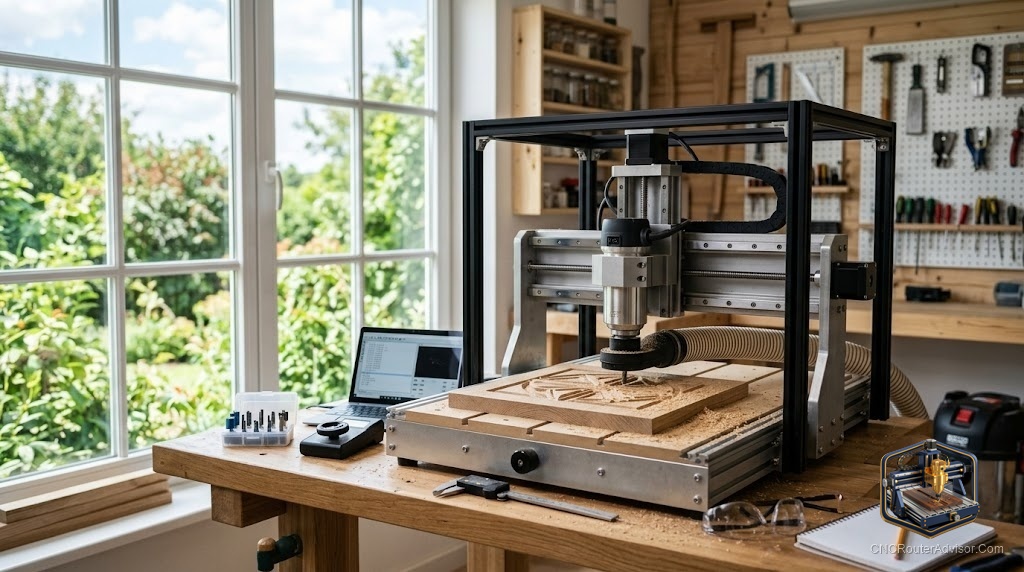
The tabletop CNC router market is wide enough to be genuinely confusing, with machines ranging from light desktop engravers to stout prosumer workhorses, all described with similar marketing language. The way through the confusion is knowing which buying factors actually predict performance, and which are cosmetic differences. Once you know what to compare, the right machine for your work area, materials, and workflow is a much clearer choice.
A tabletop CNC router machine is a CNC router designed to sit on a workbench, evaluated before buying on its work area, rigidity, spindle, motion system, and software compatibility, since those factors predict whether the machine will perform well for your specific materials and project sizes. The right tabletop machine is defined by fit to your work rather than by specifications in isolation.
Here is the direct guidance: evaluate tabletop machines on five factors in order, work area, frame rigidity, spindle type, motion system, and software compatibility, and look past marketing labels to the concrete specs and construction behind them. A verified prosumer option is noted below. The sections below cover each factor and what to look for.
Factor 1: work area
Work area is the most important buying factor because it sets a hard limit on your projects. Measure the largest flat piece you plan to cut regularly, add clearance, and find machines whose work area fits it with room to spare for clamps. Buying a machine whose work area is smaller than your typical project forces either tiling (cutting in sections, hard to align perfectly) or upsizing later. Be honest about your part sizes rather than optimistic; the machine you buy is the one you will be working around for years.
Factor 2: frame rigidity
Rigidity determines how cleanly the machine cuts, especially in harder wood. A stiffer frame is a heavier machine, so treat weight at a given work area as a reliable proxy for rigidity. Look for all-metal or at least metal-framed construction for any wood work, and lean toward heavier machines within your budget. A flexy frame that chimes nicely on paper costs more in frustration than a heavier, sturdier one at similar or lower cost.
Factor 3: spindle type
Tabletop machines use either a trim router or a purpose-built spindle. Trim routers are fine for wood and light work; a real spindle is quieter, runs at controlled RPM, and handles harder cutting better. For most hobbyists and sign makers, a quality trim router is sufficient. For consistent production or harder materials, a real spindle pays for itself in noise, precision, and longevity.
Factor 4: motion system
Belt-and-wheel systems are common in entry machines, affordable and easy to adjust but with more deflection than rail-and-screw systems. Linear rails with lead or ball screws offer better precision and less play, and suit anyone cutting furniture parts, inlays, or precision work. For signs and general carving, belts are fine. For tight tolerance and repeatable parts, rails and screws are the better choice.
Factor 5: software compatibility
Confirm before buying that the machine works with free or standard software. GRBL-based machines are compatible with a large ecosystem of free CAM and sender tools, which keeps your stack open and your costs low. Machines locked to proprietary software can be limiting and expensive to outgrow.
The Genmitsu PROVerXL 4030 V2 is a prosumer tabletop machine that addresses all five factors: a 400x300mm work area, a sturdy metal frame, linear rails, and ball screws, with open software compatibility. The honest caveat: match it to your actual work area needs and confirm it suits your materials before buying.
For a broader comparison of the tabletop router class, see our guide to the table top CNC router.
Final verdict
Buying a tabletop CNC router machine well means evaluating work area first (it must fit your projects), then frame rigidity (heavier tends to be stiffer), spindle type (trim router for light work, real spindle for production), motion system (rails and screws for precision, belts for economy), and software compatibility (GRBL and open software preferred). These five factors predict performance better than any marketing claim. Match them to your work and budget and you find the right machine rather than the best-marketed one.
FAQ
What is the most important buying factor for a tabletop CNC router? Work area first, since it sets a hard limit on your project sizes. Then frame rigidity, spindle type, motion system, and software compatibility.
How do I judge frame rigidity before buying? Weight at a given size is a reliable proxy. Heavier machines with metal frames are generally stiffer and cut cleaner. All-metal or metal-framed construction is better than mixed-material or wood frames.
When do I need a real spindle instead of a trim router? For consistent production, harder woods, or when noise is a concern. A real spindle runs at controlled RPM, is quieter, and lasts longer in demanding use. For light hobby work, a trim router is fine.
What is better for precision: belts or linear rails? Linear rails with lead or ball screws offer better precision and less play, suited to furniture parts, inlays, and tight tolerance work. Belt systems are adequate for signs and general carving.
Should I worry about software compatibility? Yes. GRBL-based machines with open software compatibility keep your costs low and your options open. Machines locked to proprietary tools can limit your workflow as you progress.
Is a larger work area always better? No. A larger machine costs more, takes more space, and only earns its cost if your projects need the area. Buy the work area that fits your actual largest regular piece, not the largest available.
References
- SainSmart Genmitsu, PROVerXL 4030 V2 specifications: https://www.sainsmart.com/blogs/news
- Carbide 3D, machine comparison guidance: https://carbide3d.com
- GRBL project, controller compatibility documentation: https://github.com/gnea/grbl/wiki