
Table Top CNC Router: What It Is, What It Does, and Which One to Buy
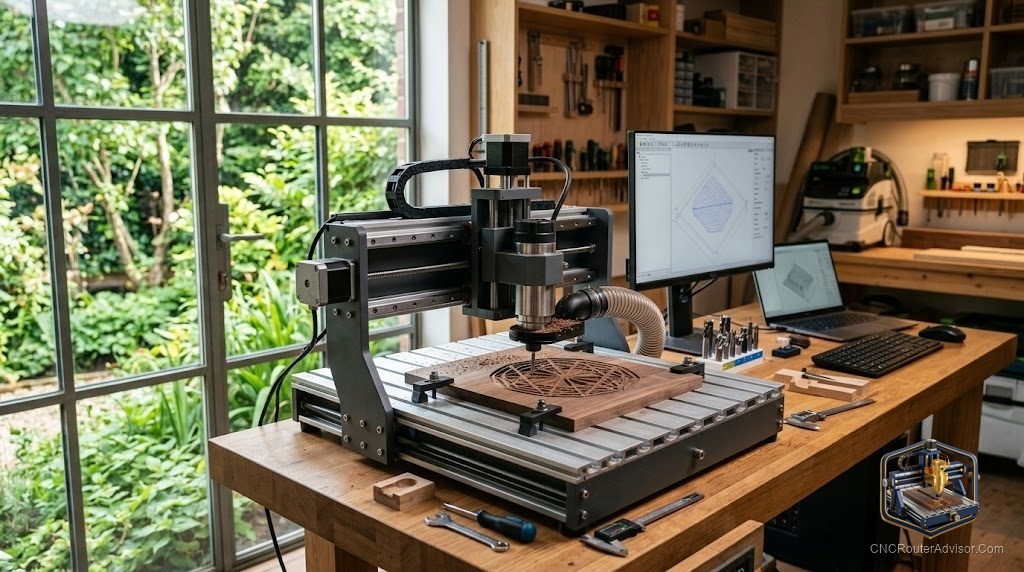
A table top CNC router is the form factor that gets more people into CNC than any other, and for good reason. It sits on a workbench, fits in a small shop or spare room, and handles a wide range of wood and craft work without the footprint, cost, or complexity of a floor-standing machine. If your projects fit its work area and your materials fall within its capability, a tabletop router is a genuinely practical and capable tool rather than a beginner’s compromise. Understanding what that capability is, and where it ends, is the key to buying the right one.
A table top CNC router is a CNC router designed to sit on a workbench or table, combining a compact footprint with a usable work area for wood, plastics, foam, and similar materials. It is the most popular form factor for hobbyists, small shops, sign makers, and learners, offering a full CNC workflow at a scale that fits most workshops.
Here is the direct guidance: the right tabletop router matches its work area to your largest regular parts, its rigidity to your materials, and its spindle to your cutting demands, and two verified machines cover the main tiers. The sections below cover what a table top router does well, the two main performance tiers, and who each suits.
What a table top CNC router does well
Within its footprint, a tabletop router is genuinely capable. It handles signs and lettering, wood carvings and reliefs, small furniture parts, inlays, jewelry, PCB milling, and most flat-cut work in soft and medium-hard wood. It fits the full CNC workflow, design, toolpath, zeroing, cutting, finishing, at a scale that is accessible and low-risk. For most hobbyists and small sign shops, a good tabletop machine is the only machine they ever need.
The compact entry tier
The 3018 class of machine, with a roughly 300x180mm work area, is the classic first tabletop router. The Genmitsu 3018-PROVer V2 is a well-documented machine in this class, with included electronics, free-software compatibility, and a community that makes learning fast. It suits engravings, signs, small carvings, and learning in softwood and thin materials. The honest caveat: it is a light machine, not suited to consistent hardwood production or large parts.
The capable prosumer tier
For larger parts and a wider range of wood work, the FoxAlien Masuter Pro offers more work area and a sturdier build while remaining a tabletop machine. It is a common choice for small shops and serious hobbyists who have outgrown the compact tier and want to cut larger signs, furniture parts, and medium-hard woods reliably. The honest caveat: even the prosumer tier has work area and rigidity limits, so confirm it covers your largest regular parts before buying.
What a tabletop machine cannot do
A tabletop router is not a full-sheet machine, does not replace a floor-standing machine for production work, and is not built for the densest hardwoods or sustained commercial hours. It is the right tool for its scale. Match the work area and rigidity to your real projects, and it excels at what it is designed for.
The table the machine sits on also matters: a flat, rigid surface improves every cut, and our guide to the DIY CNC router table covers what to build or use.
Final verdict
A table top CNC router is a genuinely capable tool for signs, carvings, small furniture parts, and learning, in a form factor that fits most workshops. The compact entry tier handles light wood work and learning; the prosumer tier extends to larger parts and medium-hard woods. Match work area to your real parts, confirm rigidity for your materials, and respect the machine’s honest limits and a tabletop router rewards you with years of capable, convenient CNC work.
FAQ
What is a table top CNC router? A CNC router designed to sit on a workbench or table, combining a compact footprint with a usable work area for wood, plastics, foam, and similar materials.
What can a table top CNC router make? Signs and lettering, wood carvings and reliefs, small furniture parts, inlays, jewelry, PCB milling, and most flat-cut work in soft and medium-hard wood.
What is the work area of a table top router? Varies by machine: compact machines start around 300x180mm; prosumer tabletop machines may go to 400x300mm or larger. Match work area to the largest part you cut regularly.
Can a table top CNC router cut hardwood? Lighter machines handle thin and softer hardwoods; denser hardwoods need a sturdier machine. Confirm the machine’s rigidity matches your hardest regular wood before buying.
What is the difference between compact and prosumer tabletop routers? Compact machines are lighter and more affordable, suited to learning and light wood work. Prosumer machines offer more work area and better rigidity for consistent work in a wider range of woods.
What table should a tabletop router sit on? A rigid, flat surface at a comfortable working height. A flexing or uneven surface transmits movement to the machine, hurting accuracy. A dedicated, solid bench or well-built table is worth having.
References
- SainSmart Genmitsu, tabletop machine specifications and guides: https://www.sainsmart.com/blogs/news
- FoxAlien, Masuter Pro documentation: https://www.foxalien.com
- Carbide 3D, desktop router guidance: https://carbide3d.com