Router Machine CNC: What It Is, What It Does, and What Sets It Apart
The phrase router machine CNC tends to come from people who know both terms but are still forming a clear picture of what, exactly, a CNC router is and how it fits into the broader world of machine tools. It is a fair starting point, because a CNC router bridges the familiar hand tool with the precision of computer control, and understanding what it is, what it does, and what makes it distinct from related machines is the foundation for using it or buying one well.
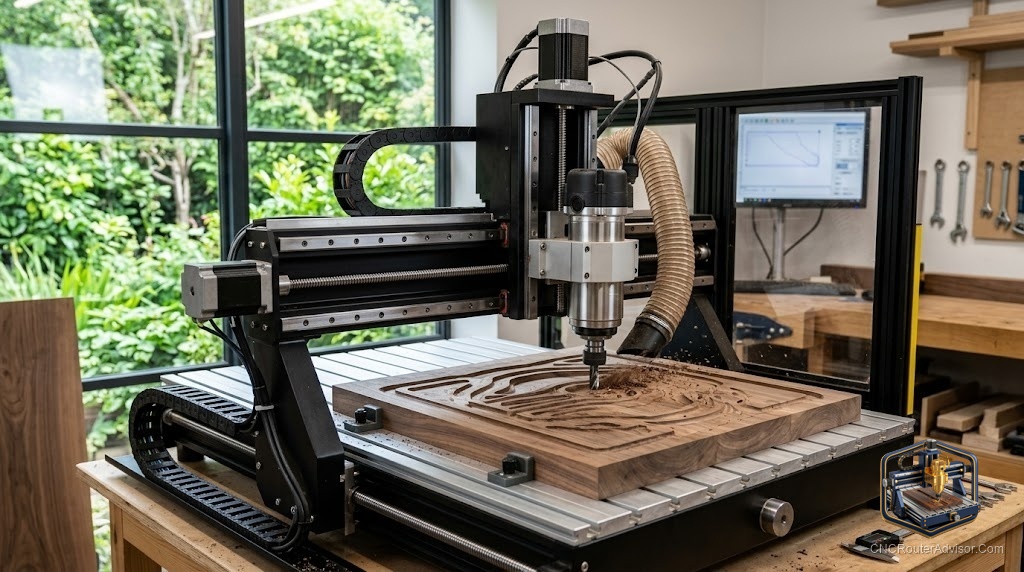
A router machine CNC is a computer numerically controlled machine that moves a rotating cutting tool, the router or spindle, along a programmed path to cut, carve, engrave, or shape material. Unlike a manual router, which a person guides by hand, the CNC router follows a precise digital toolpath derived from a design file, making it accurate, repeatable, and capable of producing complex shapes automatically.
Here is the direct framing: a CNC router machine is the combination of a router or spindle, a motion system that moves it precisely in three or more axes, and a controller that interprets digital instructions, and it is best understood as an automated tool that makes the path the machine follows, not the hand, the source of accuracy. The sections below cover what it does, how it differs from related machines, and what to know before using one.
What a CNC router does
A CNC router cuts by moving a spinning bit along a programmed path. It can profile (cut shapes from material), pocket (cut recessed areas), engrave (cut surface designs), drill, and carve 3D shapes, and it does all of these with consistent repeatability across many copies. That repeatability is the machine’s core advantage: the first part and the hundredth are the same, which is something a hand router or a skilled person cannot guarantee at scale. It works in wood, plastics, foam, composites, and (with the right setup) soft metals.
How it differs from other CNC machines
A CNC router is not a CNC mill, though they look similar. Routers run at higher RPM and suit softer materials like wood and plastics, with large work areas and a design suited to cutting sheets. CNC mills run at lower RPM, are more rigid, and cut metals at higher force. A CNC laser cuts by burning rather than routing. A CNC plasma cutter handles metals differently still. The router is the right machine for wood, signs, furniture, and general soft-material work; for metal, a mill is generally better suited.
The three things that make it work
Every CNC router machine comes down to three systems. The spindle or router is the cutting tool holder. The motion system (rails, screws or belts, and steppers or servos) moves the spindle along programmed paths. The controller interprets the digital program and drives the motion system in real time. All three must work together and be matched to each other and the materials you cut. The frame that holds it all rigid is the foundation those three systems rest on.
For help choosing among the options at different scales and for different uses, see our guide to the best CNC router for a small shop.
Who needs a CNC router machine
A CNC router suits makers and businesses who need accurate, repeatable cuts in wood, plastics, and similar materials at any volume from one part to hundreds, and who want the design to drive the shape rather than manual skill. It suits less well those who only need hand-carved one-offs, those who primarily cut metal (where a mill fits better), or those who need a cutting area far larger than available desktop and mid-size machines offer.
Final verdict
A router machine CNC is a computer-controlled machine that moves a spinning bit along a programmed path to cut, carve, profile, and engrave materials accurately and repeatably. It is defined by three cooperating systems, spindle, motion, and controller, resting on a rigid frame, and it is the right machine for wood, plastics, signs, and furniture where repeatability and precision matter. Understand what it is and what distinguishes it from a mill or laser, and choosing or using one becomes a much clearer process.
FAQ
What is a router machine CNC? A computer numerically controlled machine that moves a spinning router or spindle along a programmed path to cut, engrave, carve, or shape material accurately and repeatably.
What does a CNC router machine do? It profiles, pockets, engraves, drills, and carves 3D shapes, following a digital toolpath derived from a design file rather than a human hand, and it does so with consistent repeatability.
How is a CNC router different from a CNC mill? Routers run at higher RPM and suit wood, plastics, and soft materials on large work areas. Mills are more rigid, run at lower RPM, and handle metals at higher cutting forces. They are different tools for different materials.
What are the three systems in every CNC router? The spindle or router (cutting tool holder), the motion system (rails, screws or belts, and motors that move the spindle), and the controller (which interprets the digital program and drives the motion system).
What materials can a CNC router cut? Primarily wood, plastics, foam, composites, and soft metals like aluminum with the right setup. Hard metals are generally better suited to a CNC mill.
Do I need CNC experience to use one? No, but there is a learning curve covering design, CAM toolpath generation, machine setup, and zeroing. Most hobby machines have active communities that shorten this significantly.
References
- Carbide 3D, CNC router fundamentals documentation: https://carbide3d.com
- Autodesk, CNC machining overview: https://www.autodesk.com
- SainSmart Genmitsu, machine overview and setup guides: https://www.sainsmart.com/blogs/news