CNC Router Tools Guide: Features, Specifications, and Buying Considerations
The machine is the thing everyone photographs. The tools around it are the things that decide whether you actually enjoy owning it. A CNC router without good workholding, dust control, probing, and the right bits is like a fine oven with no pans: technically capable, practically frustrating. The accessories are not extras. They are the difference between a machine that sits idle and one that earns its bench space.
CNC router tools cover the bits, workholding, dust collection, probes, and setup accessories that turn a bare machine into a working system, and choosing them well matters as much as choosing the machine. This guide runs through the categories, the features that separate good from mediocre, and how to prioritize when you cannot buy everything at once.
Cutting tools: the bits
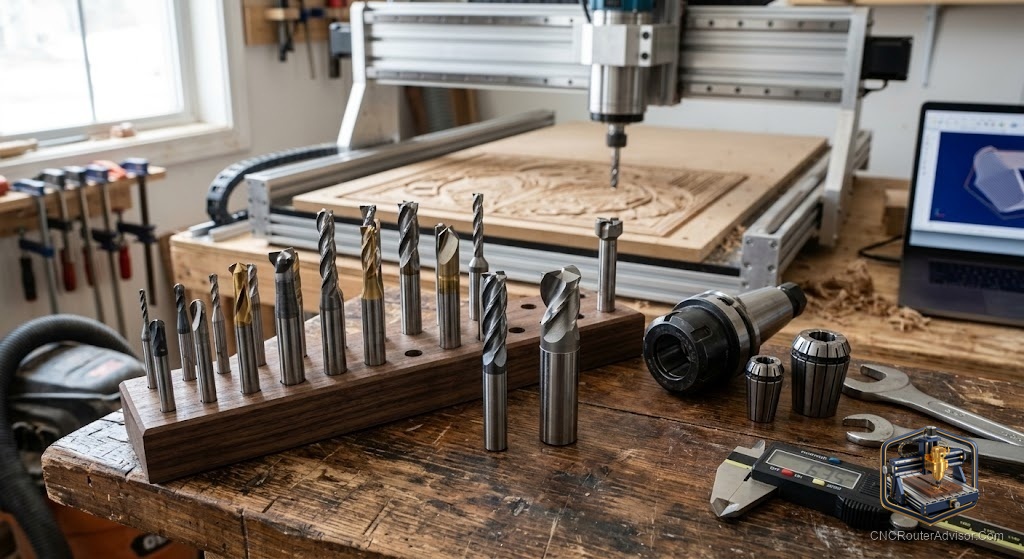
Bits are where quality shows fastest. A starter kit should cover the common jobs: a 1/4 inch upcut for general cutting, a downcut or compression bit for clean top or plywood surfaces, a V-bit for lettering, a ball nose for 3D, and a surfacing bit for flattening the spoilboard. Match shank size to your collet exactly. Buy mid-range quality like Whiteside or Freud for bits you use constantly, and value bits like SpeTool for small, breakable sizes. Premium Amana bits earn their keep in production.
Workholding: the most underrated upgrade
A part that moves during a cut is ruined, so workholding is where beginners should invest early:
- Clamps and hold-down kits with T-track or threaded inserts are the versatile default.
- Low tack tape plus CA glue holds small and thin parts flat without clamps in the toolpath.
- A surfaced spoilboard is the foundation under all of it, giving a true, sacrificial surface.
- A vacuum table speeds production but is overkill for occasional work.
Dust collection: a health tool, not a luxury
Wood dust is a recognized respiratory hazard, and fine MDF dust is worse. A dust shoe around the spindle connected to a shop vacuum or dust collector keeps the air clean and the cut visible. This is not about tidiness. It protects your lungs and your machine’s electronics, so treat it as core equipment, not an afterthought.
Probing and setup accessories
- A touch plate or Z-probe sets tool height accurately and repeatably, which saves material and frustration.
- An XYZ touch probe speeds workpiece origin setup and tool changes.
- A tool setter matters most on machines with tool changes or when you rezero often.
- Collets and a good wrench in the sizes you use, kept clean, because a worn or dirty collet causes runout and slip.
Buying considerations and priorities
When you cannot buy everything, this order serves most people:
- A sensible starter bit set and matching collets, because you cannot cut without them.
- Workholding and a surfaced spoilboard, because a moving part wastes everything.
- Dust collection, for your health and machine.
- A Z-probe or touch plate, for accuracy and less wasted stock.
- Nice-to-haves like a full touch probe, tool setter, and vacuum table as your work grows.
Match every tool to your machine’s collet, spindle, and controller. A tool your machine cannot mount or your software cannot use is just shelf decoration.
The honest verdict
Spend real attention on the tools, not just the machine. Good bits, solid workholding, and honest dust collection will improve your results and your enjoyment more than a spindle upgrade will. Buy the bits and workholding first, treat dust collection as health equipment rather than an option, add probing for accuracy, and leave the vacuum table and tool setter for when volume justifies them. The machine cuts. The tools decide how well.
Frequently asked questions
What tools do I need to start with a CNC router? A starter bit set with matching collets, workholding such as clamps or tape and glue, a surfaced spoilboard, and dust collection. Add probing for accuracy next.
What bits should be in a starter kit? A 1/4 inch upcut, a downcut or compression bit, a V-bit for lettering, a ball nose for 3D, and a surfacing bit for the spoilboard, all matched to your collet.
Is dust collection really necessary? Yes. Wood dust is a respiratory hazard and fine MDF dust is worse. A dust shoe on a vacuum or collector protects your lungs and your machine’s electronics.
What is a Z-probe and do I need one? A touch plate or Z-probe sets tool height accurately and repeatably. It saves material and frustration and is one of the best early accuracy upgrades.
Should I buy a vacuum table? Only for production. Screws into a surfaced spoilboard and clamps hold work reliably for occasional and hobby use, and a vacuum table is overkill there.
How do I choose workholding? Start with a clamp or hold-down kit for versatility, add tape and CA glue for thin and small parts, and build everything on a flat, surfaced spoilboard.
Do accessories need to match my machine? Yes. Match bits and collets to your spindle, and confirm probes and setters work with your controller and software before buying.