CNC Router Joinery: Precise Joints That Fit the First Time
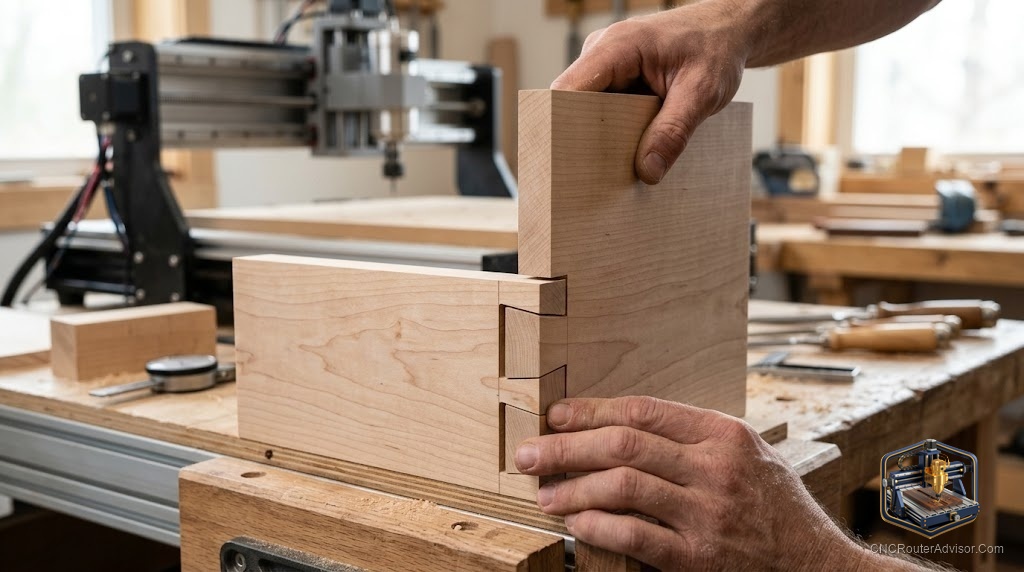
There is a particular satisfaction in a joint that taps together with a rubber mallet and holds without a clamp, and a CNC router is uncannily good at producing exactly that. What takes careful layout and steady hands with traditional tools becomes a repeatable, digital operation on a router: the same joint, cut identically, as many times as you need. For furniture makers and cabinet builders, CNC joinery is one of the most practical reasons to own a machine, once you understand how it differs from the hand-tool version.
CNC router joinery is the use of a CNC router to cut the interlocking joints that connect pieces of wood, such as mortise and tenon, box (finger) joints, dados, dovetails, and lap joints, using digital toolpaths for precise, repeatable results. The appeal is accuracy and repeatability: joints that fit consistently, part after part.
The direct answer before the detail: a CNC router excels at joinery that suits a vertically plunging round cutter, box joints, mortises, dados, laps, and puzzle-style joints, and it produces them with repeatable precision that is hard to match by hand. Its main quirks are that a round bit leaves rounded internal corners you must design around, and that classic hand-cut dovetails need special approaches. The sections below cover the joints the router does best, the round-corner reality, and how to get joints that fit the first time.
The joints a router does best
Because a router bit plunges and moves in a flat plane, it shines at joints cut from the face or edge: box (finger) joints for boxes and drawers, mortises for mortise-and-tenon assemblies, dados and grooves for shelves and panels, lap joints, and interlocking puzzle joints. These translate cleanly into toolpaths and come out identical every time, which is the whole advantage. For repeated furniture and cabinet parts, this repeatability turns fussy handwork into a reliable production step.
The round-corner reality
Here is the quirk every CNC joiner learns: a round bit cannot cut a sharp internal corner, so a slot or mortise ends up with rounded inside corners. You design around it in one of a few standard ways, cutting matching roundovers on the mating part, adding relief cuts (dogbone or T-bone fillets) at the corners so the parts still seat fully, or rounding the tenon to match the mortise. This is not a flaw so much as a rule of the medium, and once you design for it, joints fit perfectly. Ignore it, and parts will not seat.
Getting joints that fit the first time
Fit comes down to accuracy and testing. Account for bit diameter and tolerance in your design, add corner relief where needed, and always cut a test joint in scrap before committing to your real stock. Small adjustments to the fit allowance make the difference between a joint that is too loose to hold and one that is too tight to assemble. A rigid machine and sharp bits help, since flex and dull tools change the effective cut. Dial in a joint once in scrap, and you can reproduce it perfectly across a whole project.
Strong joinery relies on the workpiece staying put, so pair it with our guide to CNC router clamps.
Where hand tools still win
CNC joinery is not the answer to everything. Traditional through-dovetails with sharp corners and a hand-cut look are awkward for a router and often better by hand or on a jig. One-off joints may be faster to cut traditionally than to design and set up digitally. And very large joints can exceed a small machine’s work area. Use the router for repeatable, plunge-friendly joints, and keep hand tools for the cases that suit them, the two approaches complement each other.
Final verdict
CNC router joinery brings repeatable precision to the joints that hold projects together, excelling at box joints, mortises, dados, laps, and interlocking designs. Master one rule, the round bit leaves rounded internal corners, and design for it with matching roundovers or relief cuts, and your joints will seat cleanly every time. Test each joint in scrap, account for bit diameter, and let a rigid machine and sharp bits do the rest. Used this way, a router turns joinery from anxious handwork into a dependable step. Just keep hand tools nearby for the sharp-cornered dovetails and one-offs where they still win.
FAQ
What joints can a CNC router cut? Box (finger) joints, mortises for mortise-and-tenon, dados and grooves, lap joints, and interlocking puzzle joints all suit a router well, cut precisely and repeatably from digital toolpaths.
Why do CNC joints have rounded corners? A round router bit cannot cut a sharp internal corner, so slots and mortises have rounded inside corners. You design around this with matching roundovers or corner relief cuts.
What are dogbone and T-bone fillets? They are small relief cuts added at internal corners so mating parts seat fully despite the bit’s radius. Dogbone fillets round outward at the corner; T-bone fillets extend along one edge.
Can a CNC router cut dovetails? It can cut dovetail-style joints with a dovetail bit, but classic hand-cut through-dovetails with sharp corners are awkward for a router and often better by hand or with a jig.
How do I get a joint to fit the first time? Account for bit diameter and tolerance, add corner relief where needed, and cut a test joint in scrap first. Small fit-allowance adjustments dial in the perfect fit.
Is CNC joinery better than hand joinery? For repeatable, plunge-friendly joints, yes, thanks to precision and consistency. For sharp-cornered dovetails, one-offs, or oversized joints, hand tools often still win.
References
- Carbide 3D, joinery toolpaths and design guidance: https://carbide3d.com
- Autodesk, CAM strategies including dogbone fillets: https://www.autodesk.com
- Fine Woodworking, CNC and traditional joinery comparison: https://www.finewoodworking.com