
CNC Router Auction: How to Buy Used Iron Without Buying Someone Elses Problem
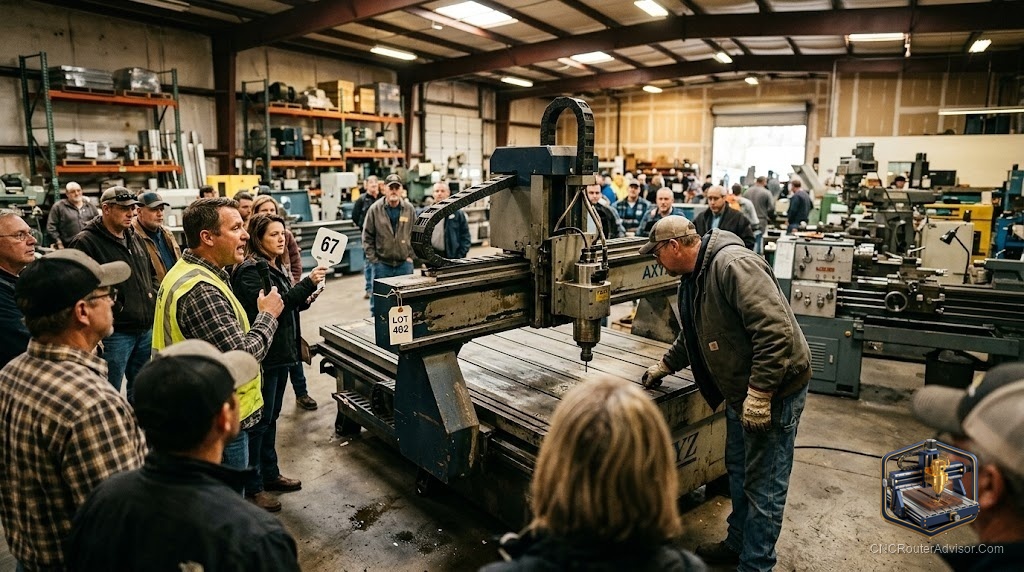
There is real money to be saved at a CNC router auction, and real money to be lost. A machine that cost a shop a fortune can sell for a fraction of that when a business closes or upgrades, and for a savvy buyer that is an opportunity. For an unprepared one, it is a heavy, expensive lesson in why the machine was being sold in the first place. Auctions reward homework and punish enthusiasm, so it pays to understand the game before you raise a paddle.
A CNC router auction is a sale, held online or in person, where used CNC routers and related equipment are sold to the highest bidder, often as part of a business liquidation, upgrade, or dealer clearance. Machines are typically sold as-is, meaning the buyer accepts whatever condition the machine is actually in.
Here is the direct advice: an auction can be an excellent way to buy a capable used CNC router for far less than new, but only if you inspect thoroughly, understand “as-is” risk, and budget for rigging, transport, and likely repairs. If you cannot inspect the machine, verify the controller and software, or move a heavy machine safely, an auction is a gamble rather than a bargain. The sections below cover what to check and what the hidden costs really are.
Why machines end up at auction
Most auction machines come from business closures, shops upgrading equipment, or dealers clearing inventory, and those are legitimate reasons that produce good deals. But some machines are sold because they were problematic, worn out, or expensive to keep running. Your job is to tell the difference. A closing shop’s well-maintained machine is a prize; a machine dumped because it never ran right is a trap wearing the same price tag.
What to inspect before you bid
Inspect in person whenever possible. Check the frame and gantry for damage and wear, look at the rails, ball screws or racks, and bearings for play or scoring, and test the spindle if power is available. Confirm the controller and software are present, current enough to use, and not locked to a proprietary system you cannot support. Ask for maintenance history and run hours. Photos in a listing are not inspection, so treat an uninspectable machine as high risk and bid accordingly.
The costs that are not in the bid
The winning bid is rarely the real price. Budget for a buyer’s premium on top of the hammer price, for rigging and transport of a heavy machine, and for the electrical and space requirements at your end. Add likely repairs, replacement tooling, and possibly a new controller if the original is obsolete. Total those before you decide your maximum bid, because a cheap machine that needs a spindle, a controller, and a specialist to move it can cost more than buying new.
If you are comparing this route against a new machine, our best CNC router for a small shop guide covers verified new options.
Who should skip a CNC router auction
Skip it if you are a beginner who cannot yet assess machine condition, if you have no way to inspect before bidding, or if you cannot handle rigging and transport. The savings are real only for buyers who can evaluate a machine and absorb the logistics. For everyone else, a new or dealer-refurbished machine with support is the safer money.
Final verdict
A CNC router auction is a genuine opportunity for a prepared buyer and a hazard for an unprepared one. Inspect the machine in person, verify the controller and software, learn why it is being sold, and total the real cost including premium, rigging, transport, and repairs before setting your maximum bid. Do that discipline and you can land far more machine than a new budget would buy. Skip it, bid on enthusiasm, and you may win a heavy reminder that as-is means exactly what it says.
FAQ
Are CNC routers at auction good deals? They can be, especially from business closures and upgrades. The savings are real only if you can inspect the machine, understand as-is risk, and budget for transport and repairs.
What does as-is mean at an auction? It means you accept the machine in whatever condition it is actually in, with no warranty or recourse. That makes inspection before bidding essential.
What should I check before bidding? The frame and gantry, rails, ball screws or racks, bearings, and spindle, plus the presence and usability of the controller and software. Ask for maintenance history and run hours.
What hidden costs come with auction machines? A buyer’s premium, rigging and transport of a heavy machine, electrical and space needs, likely repairs and tooling, and possibly a replacement controller if the original is obsolete.
Why is the machine being sold? Often a legitimate closure or upgrade, but sometimes because it was problematic. Determining the real reason is a key part of judging whether it is a bargain or a trap.
Should a beginner buy at auction? Usually not. Assessing machine condition and handling logistics takes experience. Beginners are typically better served by a new or dealer-refurbished machine with support.
References
- Association for Manufacturing Technology, used equipment buying guidance: https://www.amtonline.org
- Avid CNC, machine components and maintenance reference: https://www.avidcnc.com
- ShopSabre, CNC router specifications for condition comparison: https://www.shopsabre.com