
CNC Router 4 x 4: The Sweet-Spot Size, Explained Honestly
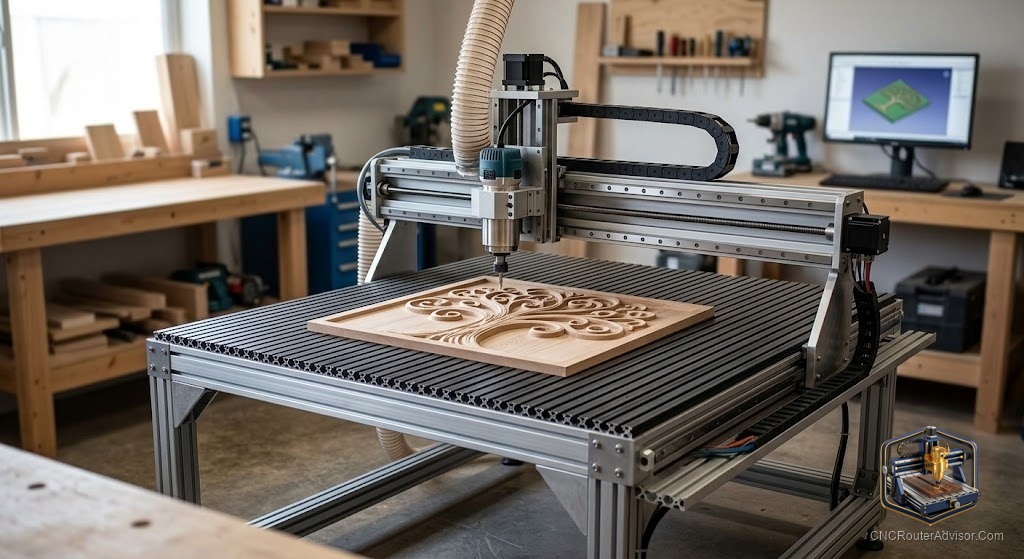
Ask a room full of CNC owners what size machine to buy and a surprising number will land on the same answer: 4 by 4. It is the size that cuts a half sheet in one setup, fits a normal shop without dominating it, and stays stiff enough for real work in a way a stretched-out full-sheet machine struggles to match on a budget. That is why the 4 x 4 has become the default recommendation for serious hobbyists, but the label hides some important details worth understanding before you buy.
A CNC router 4 x 4 is a mid-format gantry machine with a cutting area of roughly 48 by 48 inches, sized to process a half sheet of plywood in a single pass. It sits between compact desktop machines and full-sheet 4 x 8 production routers, and it is popular precisely because it balances capacity, rigidity, and footprint.
The honest summary before the detail: a 4 x 4 is the right size for most people who have outgrown a desktop machine but do not run full sheets weekly. Its strengths are half-sheet capacity and a good rigidity-to-size ratio; its catch is that a 48 inch gantry is long enough to flex if the machine is built cheaply, and “4 x 4” does not always mean a true 4-foot part. The sections below explain the capacity, the rigidity question, and what the size does and does not give you.
What a 4 x 4 actually cuts
The headline is half-sheet capacity: a 4 by 4 area handles a half sheet of plywood or MDF in one setup and nests many smaller parts per run. For cabinet parts, signs, furniture components, and most hobby and small-shop work, that is plenty. One caution: advertised work area and guaranteed part size are not always the same, because clamping and gantry clearance eat into the usable space. Confirm the real part capacity, not just the frame dimension, before you buy.
The rigidity question at this size
Forty-eight inches of gantry travel is long enough to flex, and flex causes chatter and tapered edges, especially in hardwood and metal. This is why heavier 4 x 4 machines cut cleaner: mass and a stout gantry resist deflection. When comparing two machines at this size, treat weight as an honest proxy for stiffness. A light 4 x 4 forces you to slow every cut, which erases the productivity the size was supposed to give you.
Motion, spindle, and upgrade paths
Motion hardware matters here. V-wheels are cheaper and fine for wood, while linear rails add rigidity and precision that pay off in hardwood and metal. Most machines ship with a mount for a trim router, with a VFD spindle as a common later upgrade for quieter, more powerful running. Buying a machine with a clear upgrade path is worth more than a slightly better starting spec, because your needs will grow.
If you want ranked recommendations rather than a size explainer, our best 4 x 4 CNC router guide compares the specific machines woodworkers actually name.
Who should size up or down
Size down to a desktop machine if you only carve small signs and ornaments, where a 4 x 4 wastes space and money. Size up to a 4 x 8 only if you genuinely process full sheets on a regular basis and can support the footprint, spindle, and dust collection. The 4 x 4 is built for the large middle, and most buyers belong there.
Final verdict
The CNC router 4 x 4 earns its reputation as the sweet-spot size: enough capacity for half-sheet work, enough rigidity to cut clean if you buy a stiff one, and a footprint a normal shop can live with. Prioritize frame mass and a true part-size figure over the headline dimension, choose a motion system that matches your materials, and make sure a spindle upgrade path exists. Do that and a 4 x 4 will serve you for years. Buy on size alone and skimp on rigidity, and you will spend those years cutting slowly to hide the flex.
FAQ
What can a CNC router 4 x 4 cut? It processes a half sheet of plywood or MDF in one setup and nests many smaller parts, making it well suited to cabinet parts, signs, furniture components, and most small-shop work.
Does 4 x 4 mean it cuts a true 4-foot part? Not always. Clamping and gantry clearance reduce usable area, so confirm the guaranteed part size rather than assuming the frame dimension is the cutting capacity.
Is a 4 x 4 rigid enough for hardwood and aluminum? A heavy, stiff 4 x 4 with linear rails can handle hardwood and light aluminum. A light machine will flex, so rigidity should drive the choice for demanding materials.
How much space does a 4 x 4 need? Expect a footprint larger than the 48 by 48 inch cutting area once the frame and gantry overhang are counted, plus clearance to load material. A 6 by 6 foot area is a sensible minimum.
Should I get a 4 x 4 or a 4 x 8? Choose a 4 x 4 unless you regularly process full sheets. A stiff 4 x 4 usually cuts cleaner per dollar than a bargain 4 x 8 and fits far more shops.
Can I upgrade the spindle later? Many 4 x 4 machines ship with a trim-router mount and support a later VFD spindle upgrade. Confirm the upgrade path before buying if more power and quieter running matter to you.
References
- Carbide 3D, 4x4 machines and true part-capacity guidance: https://shop.carbide3d.com/collections/4x4-cnc-router
- Onefinity CNC, Journeyman specifications: https://www.onefinitycnc.com
- SainSmart Genmitsu, PROVerXL machine line: https://www.sainsmart.com