
Best 4 x 4 CNC Router: The Features That Actually Decide the Winner
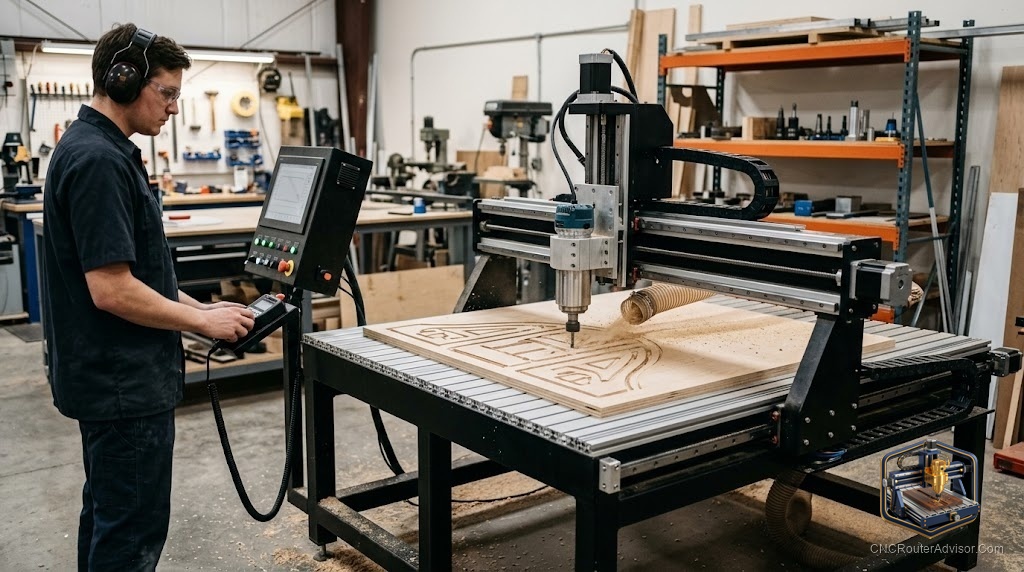
The 4 by 4 CNC router is the size most serious hobbyists talk themselves into, and for good reason. It cuts a half sheet in one setup, fits a garage without taking it over, and stays stiff enough for real work in a way a stretched-out 4 by 8 struggles to match on a budget. But “best” in this class is not one machine for everyone. It depends on whether you cut soft pine signs or hard maple and aluminum, and on how much assembly and tinkering you are willing to own.
A 4 by 4 CNC router is a mid-format gantry machine with a cutting area of roughly 48 by 48 inches, sized to process a half sheet of plywood in a single pass. It is the popular step up from desktop machines for people who have outgrown small work areas but do not need full-sheet capacity.
The honest short answer: the best 4 by 4 for you is the stiffest one you can fit and afford that runs software you can get help with. Rigidity beats every other spec in this size, because a long gantry that flexes ruins the cut no matter how nice the marketing is. Below are the features that separate a real 4 by 4 from a big flimsy one, and the machines woodworkers actually name.
Rigidity is the whole ballgame
A 48 inch gantry span is long enough to flex, and flex is the enemy of a clean cut. It shows up as chatter, tapered edges, and broken bits, especially in hardwood and metal. This is why the respected machines in this class are heavy: mass and a stout gantry cross-section resist deflection.
When you compare two 4 by 4 machines, weight is a surprisingly honest proxy for stiffness. Carbide 3D is blunt about this on its Shapeoko line, and the same logic applies across brands. If a machine seems light for its size, expect to slow your feeds and baby your cuts to get clean results.
Linear rails versus V-wheels
Motion hardware matters more at this size than on a desktop engraver. V-wheels are cheaper and fine for wood, but they wear and can introduce slop over a long travel. Linear rails cost more and add rigidity and precision that pays off in hardwood and metal. Several machines in this class, including the Onefinity and the higher Shapeoko models, lean on stiffer motion systems for exactly this reason.
If your work is signs and soft wood, V-wheels are acceptable. If you plan to cut aluminum or hard maple, prioritize a machine with rails or an upgrade path to them.
Spindle: trim router now, VFD later
Most 4 by 4 machines ship with a mount for a compact trim router, which is loud but capable for wood. A VFD spindle is quieter, more powerful, and better for long production runs, and many buyers upgrade to one later. Check whether your chosen machine supports a spindle swap, because an upgrade path is worth more than the starting spindle.
The machines woodworkers actually name
In real shop conversations, three names come up repeatedly in the 4 by 4 class: the Shapeoko 5 Pro from Carbide 3D, the Onefinity Journeyman, and Genmitsu’s larger PROVerXL machines. Shapeoko is praised for its stiff frame and strong support, and Carbide 3D is careful about what counts as a true 4-foot part capacity. Onefinity is repeatedly called out for fast assembly and rigid rails. Genmitsu is the value-forward option, heavier than some rivals at a given price and familiar to anyone who came from its desktop machines. Most of these premium 4 by 4 machines are sold direct from the manufacturer rather than through Amazon, so buy from the maker to be sure of the current model and warranty.
Comparing them, the pattern is clear: Shapeoko and Onefinity compete on rigidity and support at a higher price, while Genmitsu competes on value and mass. None of them wins for everyone. The right one depends on your budget, your materials, and how much assembly you want to do.
Who should skip a 4 by 4
Skip it if you only carve small signs and ornaments, where a desktop machine saves space and money. Also skip it if you genuinely process full sheets weekly, in which case a rigid 4 by 8 or a production machine is the better tool. The 4 by 4 is for the large middle: real projects, real materials, a normal shop.
Still deciding on size? Our 4 x 8 CNC router guide covers the full-sheet tradeoffs, and the best CNC router for a small shop guide covers the smaller end.
Final verdict
The best 4 by 4 CNC router is the stiffest, best-supported machine that fits your shop and budget, full stop. Chase rigidity first, motion quality second, and a spindle upgrade path third. Shapeoko and Onefinity lead on rigidity and support, Genmitsu leads on value, and the winner among them is whichever matches the materials you actually cut. Buy for the hard maple job you will eventually take, not the pine sign you are starting with, and you will not outgrow the machine in a year.
FAQ
What is the best 4 by 4 CNC router? There is no single winner. The best one for you is the stiffest, best-supported machine you can fit and afford. Shapeoko and Onefinity lead on rigidity and support, while Genmitsu leads on value.
Is a 4 by 4 CNC router big enough for cabinets? For most small-shop cabinet work, yes. It cuts a half sheet in one setup and nests many parts per run. Only high-volume full-sheet production really needs a larger machine.
Do I need linear rails on a 4 by 4? For wood and signs, V-wheels are acceptable. For aluminum and hardwood, linear rails add rigidity and precision that noticeably improve results, so prioritize them or an upgrade path.
Where do I buy the top 4 by 4 machines? Many premium 4 by 4 routers, including Shapeoko and Onefinity, are sold direct from the manufacturer. Buying from the maker ensures you get the current model and full warranty support.
Can a 4 by 4 cut aluminum? A rigid 4 by 4 with a suitable spindle and the right feeds and speeds can cut aluminum. Frame stiffness is the deciding factor, so choose a heavier, rail-equipped machine for metal.
How much space does a 4 by 4 need? Expect a footprint larger than the 48 by 48 inch cutting area once the frame and gantry overhang are included, plus clearance to load material. A 6 by 6 foot area is a sensible minimum.
References
- Carbide 3D, Shapeoko 5 Pro and true 4-foot capacity: https://shop.carbide3d.com/collections/4x4-cnc-router
- Onefinity CNC, Journeyman specifications: https://www.onefinitycnc.com
- SainSmart Genmitsu, PROVerXL machine line: https://www.sainsmart.com