
4 x 4 1212 CNC Router by IEHK: What to Check Before You Buy
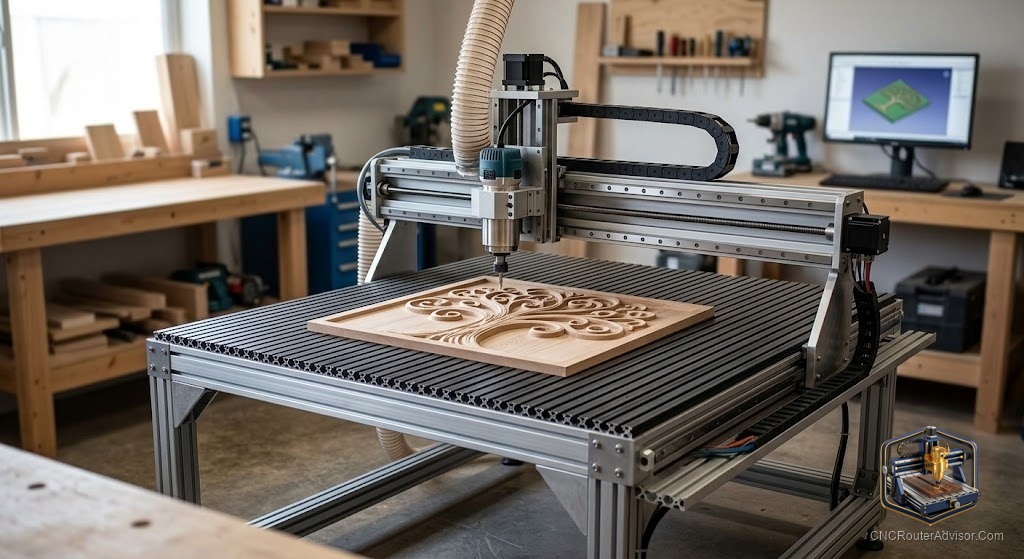
A 4 by 4 foot machine sits in a useful middle ground. It swallows half a plywood sheet, fits in a garage without taking over, and still has the reach for cabinet doors, large signs, and guitar bodies. The IEHK 1212 lands squarely in this class, and if you have found it while shopping, you are asking the right question: is a 1212-size router the right footprint for the work you actually do?
The “1212” in the name is the giveaway. It refers to a work area of roughly 1200 by 1200 millimeters, which is close to 47 by 47 inches, or a true 4 by 4 feet. A 4’ x 4’ 1212 CNC router by IEHK is a mid-format gantry machine built to cut a half sheet in one pass while staying small enough for a home or light commercial shop.
Before anything else, here is the direct answer: a 4 by 4 machine is the sweet spot for most serious hobbyists and small sign or cabinet shops, but with a brand-specific machine like this one, the specifications you must confirm are frame rigidity, spindle type, and controller support. Those three settle whether it holds up. Everything below explains why.
Why the 4 by 4 size makes sense
A 4 by 4 work area cuts a half sheet of plywood without tiling, which covers a huge share of real projects: cabinet parts, shelving, large signage, panels, and furniture components. It also keeps the gantry span short enough to stay stiff, which a 4 by 8 machine cannot claim without serious mass.
Compared to a desktop machine, a 1212 gives you room to nest many parts per setup, which saves time on production runs. Compared to full-sheet machines, it saves floor space, power, and money. For most people moving up from a small engraver, this is the size that removes the ceiling without adding a second mortgage of shop upgrades.
The three specs to verify on any 1212 machine
Frame rigidity. A 4 by 4 gantry is long enough to flex if the frame is thin. Look for heavy steel or thick aluminum extrusion, linear rails rather than V-wheels if you can get them, and a real gantry cross-section. Flex is what causes chatter and tapered cuts, and no software setting fixes a soft frame.
Spindle type. Ask whether the machine ships with a trim router mount or a proper VFD spindle. A trim router is fine for wood and light work but is loud and limited. A water- or air-cooled spindle runs quieter, lasts longer, and handles continuous production. Confirm which you are getting, because it changes what the machine can do.
Controller and software. Confirm what controller the machine uses and which software it accepts. GRBL-based controllers are common, well documented, and easy to support with free tools. A proprietary controller can lock you into one vendor’s software and slower support. This matters more than buyers expect on day one.
What to confirm directly with the seller
With a brand-specific machine, treat the product listing as the source of truth and verify current details before buying. Ask for the guaranteed cutting area (not just travel), the spindle power and cooling type, the controller model, the warranty terms, and where support and spare parts come from. A machine is only as good as the parts pipeline behind it, and long lead times on a broken part can idle a shop for weeks.
If you are still comparing sizes and brands, our best 4 x 4 CNC router guide walks through the features that separate a stiff, reliable machine from a big flimsy one.
Final verdict
The 1212 footprint is one of the smartest sizes in CNC: big enough for half-sheet work, small enough to stay rigid and shop-friendly. Whether a specific machine like the IEHK 1212 is the right buy comes down to the three checks above. Confirm a stiff frame, understand the spindle you are getting, and make sure the controller runs software you can actually get help with. Nail those, and a 4 by 4 will outgrow far fewer of your projects than a desktop machine ever could.
FAQ
What does 1212 mean on a CNC router? It refers to the work area in millimeters, roughly 1200 by 1200 mm, which is about 47 by 47 inches, or a true 4 by 4 feet.
Is a 4 by 4 CNC router big enough for cabinet work? For most small-shop cabinet work, yes. It cuts a half sheet in one setup and nests many parts per run. Full-sheet production shops eventually want a larger machine, but a 4 by 4 covers a wide range of doors, panels, and boxes.
Should I choose a trim router or a VFD spindle? A trim router is cheaper and fine for wood and light jobs. A VFD spindle is quieter, more durable, and better for long or continuous cutting. Choose based on how much you plan to run the machine.
Why does the controller matter so much? The controller decides which software you can use and how easily you can get help. Open, GRBL-based systems have huge community support and free tools, while proprietary systems can limit your options.
How much space does a 1212 machine need? Expect a footprint noticeably larger than the 4 by 4 cutting area once you add the frame and gantry overhang, plus clearance to load material and reach the controls. A 6 by 6 foot area is a reasonable minimum.
Can a 4 by 4 machine cut aluminum? With a rigid frame, a suitable spindle, and the right feeds and speeds, many 4 by 4 machines cut aluminum. Frame stiffness is the deciding factor, so verify the build before counting on metal work.
References
- Carbide 3D, 4x4 CNC router work area and rigidity notes: https://shop.carbide3d.com/collections/4x4-cnc-router
- Onefinity CNC, mid-format machine specifications: https://www.onefinitycnc.com
- GRBL project documentation (open-source CNC controller firmware): https://github.com/gnea/grbl/wiki