Open Build CNC Router: Models, Specifications, Support, and Buying Considerations
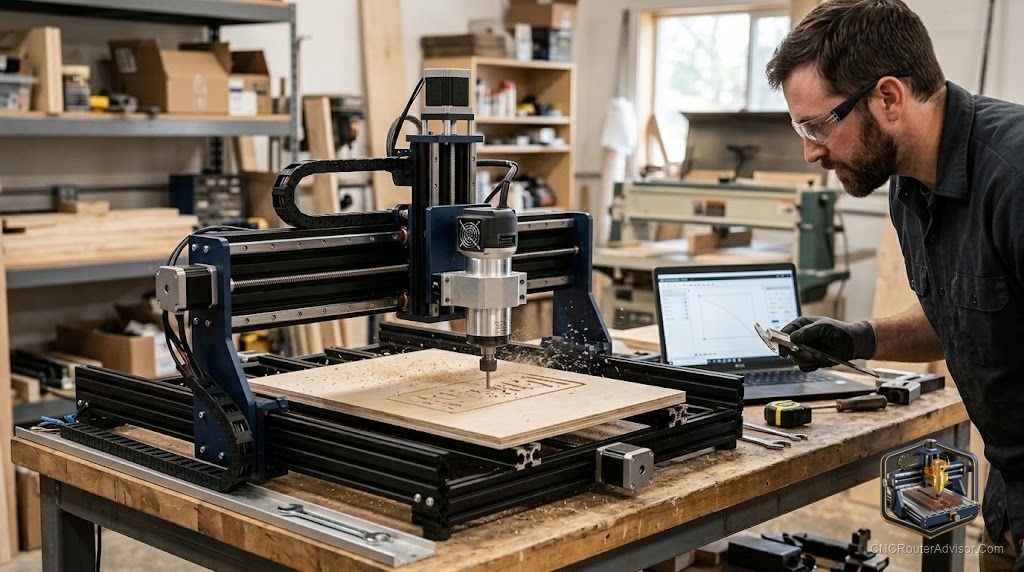
The open-build approach to CNC is a quiet rebellion against the closed, proprietary machine. Instead of a sealed box you cannot modify, an open-build router is made from standardized, documented parts, aluminum extrusion, common motion hardware, open electronics, that anyone can source, assemble, understand, and change. For makers who want to know their machine down to the last bolt and never be stranded by a discontinued part, that openness is the whole point. But it comes with responsibilities a turnkey machine does not.
An open build CNC router is a machine built on open-source, standardized components and designs, so the parts are documented, widely available, and modifiable rather than locked to one manufacturer. This approach centers on aluminum extrusion frames, common motion parts, and open electronics like GRBL controllers, giving flexibility, repairability, and community support. Choosing one means understanding the open-build philosophy, what you assemble and source, and the trade-offs against a sealed, turnkey machine.
Short answer: an open build CNC router uses open-source, standardized, documented parts, so you can source, assemble, understand, repair, and modify it freely, with strong community support. It suits makers who value flexibility and repairability over turnkey convenience, and mainly cuts wood and light materials. The trade is more assembly, sourcing, and setup responsibility. Confirm the specific design’s work area and parts, and lean on the community for support.
The open-build philosophy
Open build rests on a simple idea: standardized, documented, available parts:
- Open designs, published so you can understand and build the machine.
- Standard components, aluminum extrusion, common linear motion, standard stepper motors, so parts are widely available.
- Open electronics, typically GRBL-based controllers that work with common software.
- Modifiability, since nothing is locked, you can upgrade, resize, or repair freely.
The payoff is independence: you are never stranded by a proprietary part or a manufacturer that stops supporting a machine.
What you take on
That freedom carries responsibility a turnkey machine removes:
- Assembly. You build the machine, whether from a kit or sourced parts.
- Sourcing. You may source some components yourself, confirming compatibility.
- Setup and tuning. You configure the controller, square the machine, and dial it in.
- Self-support. You lean on documentation and community rather than a single vendor’s support line.
For makers who enjoy this, it is a feature; for those who just want to cut, it is a cost.
Specifications and configurations
Open-build designs come in many sizes and configurations, so capabilities vary widely. Confirm for any specific design:
- Work area, sized to your projects, with footprint larger than the cutting area.
- Frame and motion, extrusion size and linear motion quality, which set rigidity.
- Drive, lead screws, ball screws, or belts, trading precision and speed.
- Electronics, the controller and drivers, usually GRBL-based.
Because designs are open, you can often choose or upgrade these to fit your needs.
Software and support
Open-build machines use open electronics, typically GRBL, so they work with common, widely-supported CAD/CAM and sender software. Support comes from documentation and an active community rather than a single company, which is a strength if you engage with it: nearly every question has been answered by someone running a similar build. Confirm the software chain for your specific design and tap the community early.
The trade-offs versus turnkey
In its favor: flexibility, repairability, part availability, no proprietary lock-in, community support, and the ability to modify and upgrade freely. Worth weighing: more assembly, sourcing, and setup responsibility; support that is community-based rather than a single vendor; and quality that depends on the parts and care you put in. Compare an open build against a turnkey machine honestly based on how much you want to build and maintain versus simply cut.
Who should choose it, and who should skip
Choose an open build CNC router if you value flexibility, repairability, and understanding your machine, enjoy building and tuning, and want freedom from proprietary parts. Skip it if you want a machine that works out of the box with a single vendor’s support and minimal setup, since an open build asks more of you. For tinkerers and makers who want control and independence, though, the open-build approach is deeply rewarding.
The bottom line
An open build CNC router trades turnkey convenience for something many makers value more: standardized, documented, available parts you can source, assemble, understand, repair, and modify, backed by an active community. It suits wood and light-material work and rewards those who enjoy building and tuning. The cost is real responsibility for assembly, sourcing, and self-support. Confirm your chosen design’s work area and parts, engage the community, and if independence and flexibility matter to you, an open build is a machine you will never outgrow because you can always change it.
FAQ
What is an open build CNC router? A machine built on open-source, standardized, documented components, so the parts are widely available and modifiable rather than locked to one manufacturer.
How is it different from a turnkey machine? An open build uses standard, available parts you can source, understand, repair, and modify, with community support, versus a sealed machine with vendor support.
What are the benefits of open build? Flexibility, repairability, part availability, no proprietary lock-in, the freedom to upgrade or resize, and strong community support and documentation.
What are the downsides? More assembly, sourcing, and setup responsibility, support that is community-based rather than a single vendor, and quality that depends on your parts and care.
What software do open build machines use? Open electronics, typically GRBL-based, so they work with common CAD/CAM and sender software. Confirm the chain for your specific design.
Is an open build good for beginners? It suits beginners who enjoy building and tuning and will engage the community. Those who just want to cut may prefer a turnkey machine.
What can an open build CNC router cut? Mainly wood and light materials, with capability depending on the design’s rigidity, drive, and spindle. Configurations vary widely.
References
- CNCRouterInfo, how to choose a CNC router: https://cncrouterinfo.com/guides/how-to-choose-a-cnc-router/
- Instructables, DIY CNC router: https://www.instructables.com/DIY-CNC-Router/