
CNC Router Table 4 × 4 Guide: Work Area, Machine Size, and Buying Factors
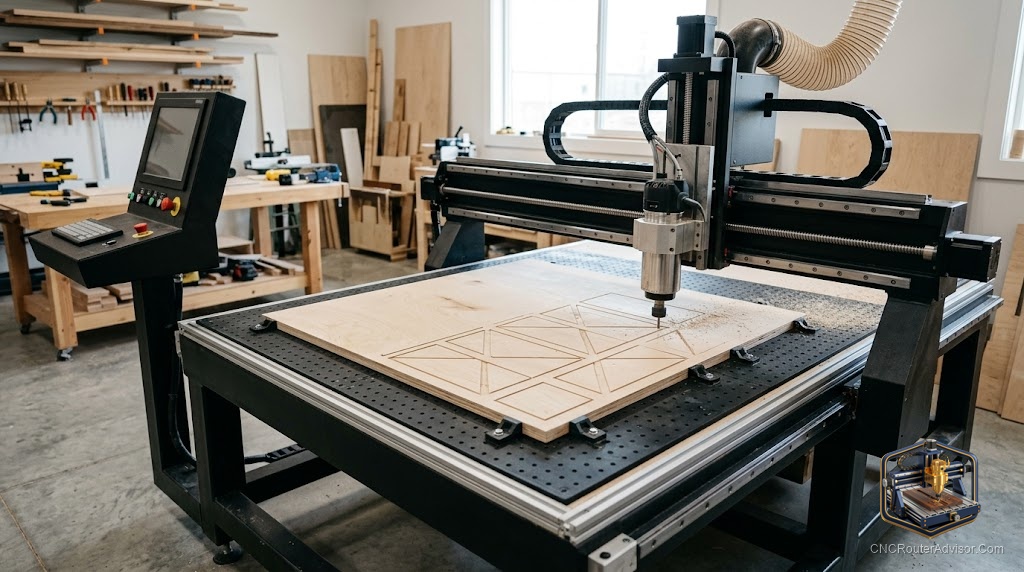
There is a size of CNC router that sits between the hobby bench and the full production floor, and it solves a very specific problem. A 4 by 4 foot table is big enough to cut real panels, large signs, and sizable furniture parts, yet compact enough to fit a serious home shop or small business without needing the floor space and full sheet handling of a 4 by 8 machine. For a lot of makers, it is the size that finally lets them stop cutting things in pieces.
A 4 by 4 CNC router table is a machine with a cutting area of roughly 48 by 48 inches. That square envelope handles large panels, sizable signs, and big carvings, and it works in materials from wood and plastic to light aluminum. It is a step up from desktop and 2 by 4 machines toward production capability, while staying more manageable than a full 4 by 8 sheet machine. The main buying factors are the true work area, frame rigidity across the larger span, drive system, and the accessories that keep big work flat and clean.
Short answer: choose a 4 by 4 router table if you cut large panels, big signs, and furniture parts but do not need full-sheet capacity or the space a 4 by 8 machine demands. Prioritize frame rigidity across the wide span, a solid drive system, adequate Z clearance, and strong workholding and dust collection. Confirm the true cutting area, since the machine footprint is larger than the 48 by 48 inch envelope.
Why the 4 by 4 size works
The appeal is capability without excess. A 48 by 48 inch bed covers a lot of real work: large signs, cabinet and furniture parts, big relief carvings, and sizable panels, often in a single setup. Yet it fits a dedicated home shop or small business floor far more easily than a full-sheet machine, and it is more approachable to power and maintain. For makers who have outgrown a 2 by 4 machine but do not routinely process full 4 by 8 sheets, it is a natural landing spot.
What to look for
Frame rigidity across the span. A wider bed means a longer gantry, and longer gantries are prone to flex and twist. Look for a stout frame, well-supported rails, and a rigid gantry, since rigidity across the full 4 foot width determines finish quality and cutting speed.
Drive system. Over a larger bed, the drive choice matters. Ball screws favor precision on shorter axes, while rack and pinion is common on larger machines for faster travel across distance. Belt drives appear on budget units and flex more under load. Match the choice to whether you value accuracy or speed.
Z-axis clearance and travel. Check how thick a workpiece fits and how deep the Z plunges, especially if you carve thicker stock or use tall fixtures.
Spindle power. A larger machine cutting bigger jobs benefits from a real VFD spindle over a trim router, for faster feeds, cleaner cuts, and quieter, longer runs.
Workholding. A bed this size needs excellent hold-down, T-slot clamping, a vacuum table, or both, to keep large panels flat. Panels that lift mid-cut ruin the job.
True work area and footprint. Confirm the actual cutting envelope, and remember the machine’s overall footprint is larger than 48 by 48 inches. Plan the shop space accordingly.
Accessories that matter
A larger table makes support equipment more important, not less:
- Dust collection. A dust shoe paired with a strong shop vacuum or dust collector keeps big jobs clean and protects your lungs.
- Workholding kit. Clamps, a clamping kit, or a vacuum setup, plus a flat spoilboard or wasteboard, to hold large stock.
- Touch probe or Z-probe. Speeds accurate tool and material zeroing across a big bed.
- Spoilboard surfacing. A surfacing bit to flatten the wasteboard so large panels cut to consistent depth.
- Safety gear. Safety glasses, ear protection, and respiratory protection, since larger jobs mean more dust and noise.
Materials and jobs it suits
A 4 by 4 table comfortably cuts plywood, MDF, hardwoods, softwoods, acrylic, and HDPE, and with care handles light aluminum. Typical work includes large signs, cabinet and furniture parts, big relief carvings, panel processing, and nested small-part production, all at a scale desktop and 2 by 4 machines cannot match in one setup.
The bottom line
A 4 by 4 CNC router table is the practical bridge between hobby and production, offering a 48 by 48 inch envelope for large panels, signs, and furniture parts without the space and handling demands of a full-sheet machine. Prioritize rigidity across the wide span, a solid drive system, enough spindle power, and strong workholding and dust collection, and confirm the true cutting area and footprint. Sized and equipped well, it opens up big work while still fitting a serious shop.
FAQ
How big is a 4 by 4 CNC router table? Roughly 48 by 48 inches of cutting area, enough for large panels, sizable signs, and big carvings, often in a single setup.
Will a 4 by 4 machine fit in a home shop? It fits a dedicated home shop or small business floor more easily than a 4 by 8 machine, but remember the footprint is larger than the cutting area.
Ball screw or rack and pinion at this size? Ball screws favor precision on shorter axes; rack and pinion favors faster travel across a larger bed. Match the choice to accuracy versus speed.
Can it cut a full sheet of plywood? Not a full 4 by 8 sheet. It handles up to about 48 by 48 inches, so rip larger sheets down or step up to a 4 by 8 machine for full sheets.
Do I need a spindle instead of a router? At this size a VFD spindle is worth it for faster feeds, cleaner cuts, quieter operation, and longer run times on big jobs.
What accessories does a 4 by 4 table need? Strong dust collection, a good workholding or vacuum setup, a flat spoilboard, a touch probe, spoilboard surfacing, and safety gear.
How do I keep large panels flat? Use a T-slot clamping kit, a vacuum table, or both, over a surfaced spoilboard, so panels stay flat and do not lift mid-cut.
References
- WorkshopCalc, best CNC routers guide: https://workshopcalc.com/guides/best-cnc-routers
- CNC Dad, best CNC router for beginners: https://www.cnc-dad.com/blog/best-cnc-router-for-beginners/