CNC Router Ideas Explained: Uses, Setup, and Key Considerations
A new CNC router owner usually goes through the same arc. The first week is all excitement and test cuts. Then comes a strange pause, the machine is ready, the skills are coming along, and the question becomes: what should I actually make? The answer is almost limitless, which is exactly why it can feel paralyzing. A good list of ideas, organized by skill level and purpose, turns that blank-page feeling into a queue of projects worth cutting.
CNC router ideas are the range of projects and uses a CNC router makes possible, from simple beginner signs to detailed 3D carvings and small production runs. The best ideas match your current skills, your machine’s capabilities, and the materials you have on hand. Starting simple and building complexity is how most makers grow, and knowing the landscape of possibilities helps you pick projects that teach and reward at the same time.
Short answer: good CNC router ideas span beginner projects like signs, coasters, and cutting boards; intermediate work like boxes, inlays, and furniture parts; and advanced projects like 3D relief carvings and small production runs. Match each idea to your skill level, tooling, and material, start simple to build confidence, and use projects to learn new techniques like V-carving, pocketing, and 3D finishing.
Beginner ideas
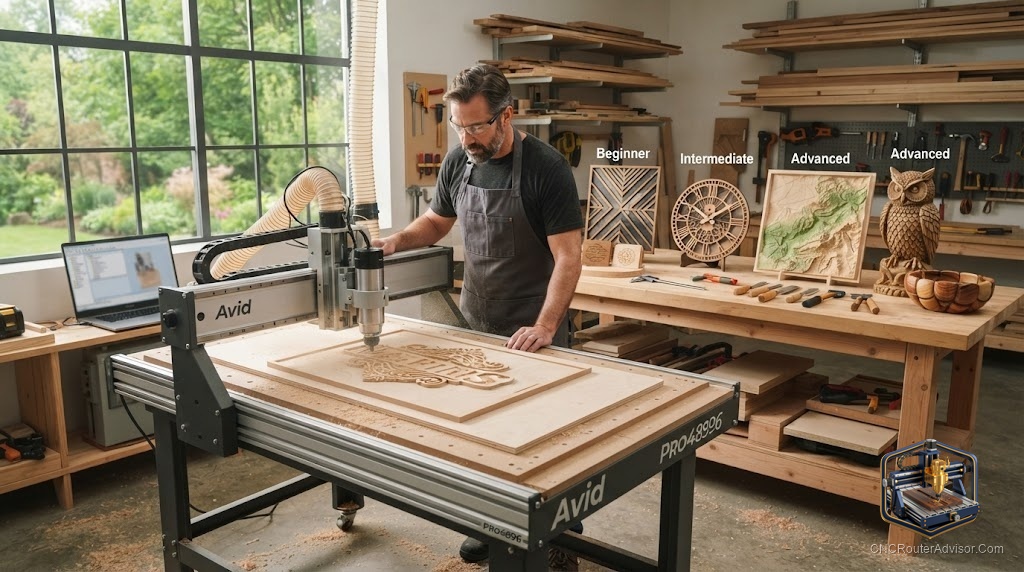
Start with projects that teach fundamentals and forgive small mistakes:
- Personalized name signs and quote signs, which teach V-carving and lettering.
- Coasters and cutting boards, simple engraving and profiling in hardwood.
- House number plaques and address plaques, practical and satisfying.
- Bookends and simple shelves, teaching profiling and assembly.
- Keychains and small ornaments, quick wins that build confidence.
These usually start from SVG or DXF vectors and use V-bits and straight bits in plywood or hardwood.
Intermediate ideas
Once the basics feel natural, add complexity:
- Jewelry boxes and piggy bank boxes, teaching pockets, lids, and joinery.
- Inlays, combining contrasting woods or materials for striking effects.
- Geometric wall art and animal silhouette pieces, blending design and profiling.
- Cribbage boards, precise drilling and layout.
- Furniture parts and small tables, moving toward functional builds.
These projects introduce multi-step toolpaths, tabs, and tighter tolerances.
Advanced ideas
With rigidity, good tooling, and experience, push further:
- 3D relief carvings, portraits, landscapes, and decorative panels using roughing and finishing passes with a ball-nose bit.
- Pet memorial photo frames and detailed personalized gifts, combining relief and lettering.
- Small production runs of signs or products, learning repeatability and nesting.
- Mixed-material projects, combining wood, acrylic, and metal accents.
These demand careful design, tight finishing stepovers, and patience with long run times.
Matching ideas to your setup
The right project depends on more than ambition:
- Skill level. Build from simple profiling to multi-step and 3D work as your confidence grows.
- Machine capability. A light desktop machine excels at signs and small parts; a rigid larger machine handles furniture and production.
- Tooling. V-bits for lettering, straight and upcut bits for clearing, ball-nose bits for relief. Match the project to bits you own.
- Material. Plywood and MDF for practice and painted work, hardwoods for premium pieces, acrylic for modern projects.
Setup considerations for any project
- Design for your tooling, keeping detail within your smallest reliable bit and corners within its radius.
- Plan workholding and tabs so parts stay secure and do not come loose mid-cut.
- Simulate before cutting to catch errors and save material.
- Start with test cuts on scrap when trying a new material or technique.
- Manage dust and chips for clean cuts and a healthy shop.
The bottom line
CNC router ideas run from a first carved sign to intricate 3D relief and small production runs, and the best ones meet you where your skills are. Start simple to build confidence, then use each project to learn a new technique, V-carving, pocketing, inlays, 3D finishing, while matching the idea to your machine, tooling, and material. Treat your project queue as a curriculum, and the machine becomes a tool for steadily growing skills, not just cutting parts.
FAQ
What can I make with a CNC router? A huge range: signs, coasters, cutting boards, plaques, boxes, inlays, wall art, furniture parts, 3D relief carvings, and small production runs.
What is a good first CNC project? A personalized name sign or a simple engraved coaster or cutting board. These teach V-carving and profiling while forgiving small mistakes.
How do I pick projects for my skill level? Start with simple profiling and lettering, then add pockets, inlays, and joinery, and finally 3D relief as your confidence and tooling grow.
What tooling do beginner projects need? Mostly V-bits for lettering and straight or upcut end mills for clearing and profiling, with a ball-nose bit added for relief work later.
Can I make money from CNC projects? Yes. Signs, plaques, personalized gifts, and small production runs all sell well once you can produce them cleanly and repeatably.
What materials should I start with? Plywood and MDF for practice and painted work, then hardwoods for premium pieces and acrylic for modern projects.
How do I avoid ruining projects? Design for your tooling, plan workholding and tabs, simulate before cutting, and run test cuts on scrap when trying something new.
References
- CNCRouterInfo, how to choose a CNC router: https://cncrouterinfo.com/guides/how-to-choose-a-cnc-router/
- CNC Dad, best CNC router for beginners: https://www.cnc-dad.com/blog/best-cnc-router-for-beginners/