
2 x 4 CNC Router Guide: Work Area, Machine Size, and Buying Factors
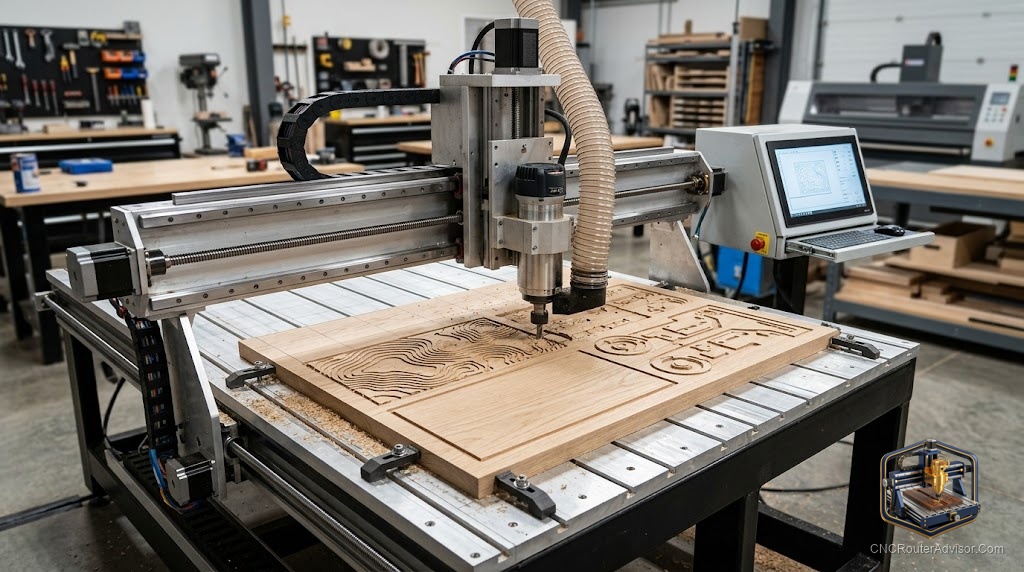
There is a sweet spot in CNC sizing that a lot of buyers land on after their first small machine. A desktop unit teaches the ropes but runs out of bed the moment you want to cut a cabinet door or a decent-sized sign. A full 4 by 8 machine solves that but swallows a two-car garage. The 2 by 4 foot class sits right in between, and for a huge number of hobbyists and small shops, it is the size that actually fits the work and the room.
A 2 by 4 CNC router is a machine with a cutting area of roughly 24 by 48 inches. That envelope handles half a standard sheet of plywood, most sign work, cabinet parts, and large carvings, while still fitting in a home shop without dominating it. It is one of the most practical formats for serious hobbyists and small businesses.
Short answer: buy a 2 by 4 CNC router if you have outgrown a desktop machine and want to cut larger panels, signs, and furniture parts without committing to a full-sheet machine’s footprint and cost. If you only cut small parts, a desktop unit saves space and money; if you process full sheets daily, step up to a 4 by 8.
Why the 2 by 4 size works
The appeal is simple. A 24 by 48 inch bed covers the material most makers actually use. You can rip a full sheet of plywood in half and feed it in, cut a large sign in one setup, or nest several cabinet parts at once. Yet the machine still fits along a wall in a single-car garage or a modest shop, and it runs on standard household power.
This size also hits a practical balance on price. It costs more than a desktop machine but far less than a full-sheet industrial router, and it opens up paying work like signs and furniture components that a small bed simply cannot handle.
What to look for
Frame rigidity. A larger bed means a longer gantry, and longer gantries flex more. Look for a stout aluminum extrusion or steel frame, well-supported rails, and a gantry that does not twist. Rigidity here determines your finish quality and how fast you can cut.
Drive system. At this size, the drive choice matters. Ball screws give precision on shorter machines, while rack and pinion is common on larger beds for faster travel over distance. Belt drives appear on budget models and are fine for light work but flex more under load.
Z-axis clearance and travel. Check how thick a workpiece you can fit and how deep the Z can plunge. If you plan to carve thicker stock or use tall fixtures, clearance matters.
Spindle power. A larger machine cutting bigger jobs benefits from a real VFD spindle over a trim router. More power means faster feeds and cleaner cuts across a big panel, plus quieter, longer runs.
Workholding. A bed this size needs good clamping or a vacuum or T-slot table to hold large panels flat. Sheet goods that lift mid-cut ruin the job.
Assembly and support. Bigger machines take longer to assemble and square. Good documentation and responsive support save hours of frustration during setup.
Materials and jobs it suits
A 2 by 4 machine comfortably cuts plywood, MDF, hardwood, softwoods, acrylic, and HDPE, and with care handles light aluminum. Typical work includes signs, cabinet doors and parts, large relief carvings, furniture components, and nested small-part production.
The bottom line
The 2 by 4 CNC router is the practical middle ground of the hobby and small-shop world. It cuts the panels and signs most makers actually want while still fitting a home shop and standard power. Prioritize a rigid frame, a solid drive system, and enough spindle power for the work, and this size will earn its place for years. Choose smaller only if you never cut big, and larger only if you process full sheets constantly.
FAQ
How big is a 2 by 4 CNC router bed? Roughly 24 by 48 inches of cutting area, enough for half a standard plywood sheet and most sign and cabinet parts.
Will it fit in a home garage? Yes. It fits along a wall in a single-car garage and runs on standard household power, which is a big part of its appeal.
Ball screw or rack and pinion at this size? Ball screws favor precision, rack and pinion favors speed over distance. Both work; match the choice to whether you value accuracy or fast travel.
Can it cut a full sheet of plywood? Not in one piece. Rip the sheet in half first, or step up to a 4 by 8 machine for full sheets.
Do I need a spindle instead of a router? A VFD spindle is worth it at this size for faster feeds, cleaner cuts, quieter operation, and longer run times.
Is a 2 by 4 machine good for a business? Yes. It handles signs, cabinetry parts, and furniture components, which are common paying jobs, without an industrial footprint.
What holds large panels down? A T-slot table with clamps, a vacuum table, or a combination. Keeping big panels flat is essential for clean cuts.
References
- CNCRouterInfo, how to choose a CNC router: https://cncrouterinfo.com/guides/how-to-choose-a-cnc-router/
- CNC Dad, best CNC router for beginners: https://www.cnc-dad.com/blog/best-cnc-router-for-beginners/