CNC Router With Tool Changer: Buying a Machine That Swaps Its Own Tools
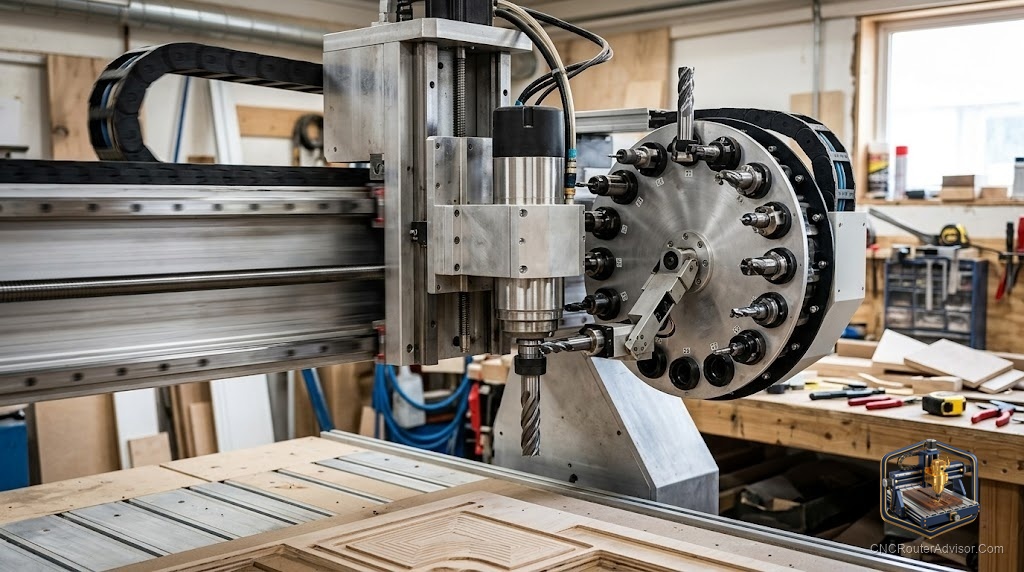
At some point the manual tool change stops being a minor chore and starts limiting what you can make. A production run means the same three-tool swap a hundred times. That is when people start shopping for a CNC router with a tool changer built in, where the spindle, rack, controller, and software are engineered together from the start.
Buying a machine with a built-in changer is different from adding one later. Everything is matched and tested together, sparing you the integration project of making mismatched parts cooperate.
Why buy the changer built in
Adding an ATC to a machine not designed for one requires a pneumatic spindle, tool holders, a rack, an air supply, and a controller that supports tool change commands. Many hobby machines simply cannot support it. Buying built in:
- Everything is engineered to agree.
- Support covers the whole system.
- It usually just works. Far less tuning than a DIY retrofit.
The trade-off: these machines sit at the prosumer-to-industrial tier, a real investment.
What to evaluate when buying
- Number of tool stations. Match to your typical job tool count.
- Spindle power. Often water-cooled. Confirm it suits your materials.
- Tool holder standard and cost. ISO 20 and HSK are common. Each tool needs its own holder.
- Air supply. The pneumatic drawbar needs clean, dry, reliable shop air.
- Work area and rigidity. Ensure it fits your work.
- Controller and software ecosystem. Confirm it runs software you will learn.
- Footprint and power. Larger machines need floor space and sometimes special electrical.
The tiers of machines with tool changers
Prosumer with ATC options. Onefinity offers ATC-ready setups engineered as a system; see the Onefinity machine lineup. The honest flaw is the price bracket and ecosystem commitment.
Light-industrial and production routers. Full-size machines from established makers like Grizzly typically include a tool changer as standard. The flaw is footprint, power requirements, and a cost that only makes sense as a business tool.
There is essentially no cheap hobby machine with a real ATC.
Is buying one right for you?
Makes sense if you: run multi-tool production jobs repeatedly; sell your work; run long unattended jobs.
Skip it if you: cut mostly single-tool jobs; are a hobbyist for whom pausing to swap a bit is no burden; would be better served by a capable machine plus a touch probe.
The bottom line
A CNC router with a built-in tool changer means the spindle, rack, controller, and software are engineered as one system. The catch is prosumer-to-industrial pricing, plus ecosystem commitment, air supply, and per-tool holders. Buy one if you run multi-tool jobs at volume or sell your work.
Frequently asked questions
What is a CNC router with a tool changer? A machine where the spindle, rack, controller, and software work together to swap tools automatically during a job.
Better to buy built-in or add later? Built-in means everything is engineered and supported together. Adding later requires ATC spindle, holders, air, and a compatible controller.
Are there cheap CNC routers with ATCs? Not really. Any genuine ATC machine requires at least prosumer investment.
How many tool stations? Match to your typical job tool count. Do not pay for more than you will use.
Do they need a compressor? Almost always. The pneumatic drawbar needs clean, dry, reliable air.
Who should buy one? Those running multi-tool production, selling their work, or running long unattended jobs.
References
- Onefinity CNC ATC configurations. Grizzly Industrial production CNC router specs.