
Automatic Tool Changer for CNC Router: Tool Capacity, Workflow Benefits, and Buying Factors
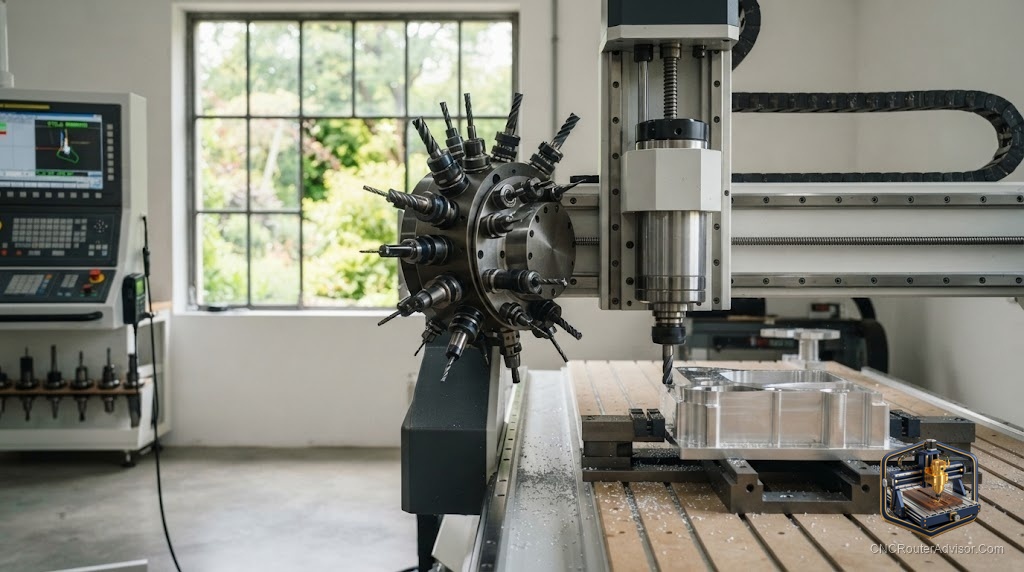
Watch a busy shop run a job with a dozen tool changes and you will see the real cost of a manual machine. The operator hovers, waiting for the spindle to stop, unscrewing a collet nut, swapping the bit, re-zeroing the Z height, and starting the next path. Multiply that by every job, every day, and it adds up to hours of a skilled person babysitting a machine. An automatic tool changer exists to buy that time back, and once a shop has one, almost nobody goes back.
An automatic tool changer (ATC) for a CNC router is a system that lets the machine swap cutting tools by itself, pulling each tool from a magazine and loading it into the spindle in seconds, with no operator intervention. The buying decision centers on three things: how many tools the magazine holds, what the automation actually does for your workflow, and whether your machine and spindle can support it. This guide takes each in turn.
The honest verdict: an ATC is transformative for multi-tool production work and pure overkill for occasional single-bit jobs. If your parts routinely need three or more tools and you run them often, an ATC pays for itself in labor and consistency. If you carve one-off signs on weekends, your money is better spent elsewhere.
How an automatic tool changer works
At its simplest, a manual tool change means stopping the spindle, loosening the collet nut, swapping the bit, and re-establishing the tool’s length. Each step is a chance for error and a pause in production. An ATC removes the operator from that loop entirely.
The spindle uses a standardized tool holder (common tapers include ISO30 and HSK on router-class machines) so tools seat identically every time. A magazine stores the tool holders, either in a rotary carousel or a linear rack. When the program calls for a tool, the machine parks, releases the current holder pneumatically, picks up the next, and resumes, often within seconds. A tool length sensor or laser setter measures each tool so the controller knows exactly where the tip is, which is what keeps depths accurate across changes.
Tool capacity: how many stations do you need
Magazines range from a handful of positions to dozens on industrial machines. More stations mean more tools staged and ready, which means longer unattended runs and more complex parts without reloading.
Be realistic about your work. Count the distinct tools your typical jobs use: a roughing bit, a finishing bit, a V-bit, a drill, a surfacing bit, and you are already at five. A magazine that holds eight to twelve tools covers a great deal of production woodworking and sign work with room to spare. Chasing a huge magazine you never fill is the same mistake as buying a work area you never use.
The workflow benefits that justify it
The headline benefit is reduced downtime: the machine changes tools in seconds instead of minutes, and it does it without a person standing by. That opens the door to longer unattended or lights-out runs, which is where an ATC changes the economics of a shop.
Consistency is the quieter benefit. Because each tool seats in a repeatable holder and gets measured automatically, you remove the human error of a slightly mis-set Z or an over- or under-tightened collet. Parts come out more uniform, and rework drops. The ATC can also swap a worn tool for a fresh one mid-job on some systems, protecting finish quality on long runs.
Buying factors: what actually decides fit
Machine and spindle compatibility. An ATC needs an ATC-ready spindle with an automatic drawbar and the matching tool holders. You cannot bolt a magazine onto a hand-tightened router spindle. Confirm your machine supports it before anything else.
Pneumatic supply. Tool release is pneumatic, so you need a suitable air compressor and clean, dry air. Factor that into the setup.
Holder standard and tooling investment. Every tool needs its own holder, and holders and setup add up. A larger magazine multiplies that tooling investment.
Rotary versus linear magazine. Rotary carousels are compact; linear racks can be simpler to reach and expand. Choose based on your machine layout and how you load tools.
Software support. Your CAM and controller must handle tool tables and automatic length measurement. Verify the whole chain, from CAM to control, supports the ATC workflow.
Who should skip an ATC
If your jobs use one or two tools, or you run the machine occasionally, an ATC is expense and complexity you will not recoup. Hobbyists and low-volume shops are usually better served by a good manual workflow with a tool-length setter, which captures much of the consistency benefit at a fraction of the cost and complexity.
The bottom line
An automatic tool changer for a CNC router is a productivity and consistency machine, best suited to multi-tool jobs run often. Size the magazine to the tools your real work uses (eight to twelve covers a lot), confirm your spindle and software support automatic changes, and budget for holders and clean compressed air. If your work is single-bit and occasional, put the money into rigidity, a spindle, or tooling instead. Matched to the right shop, an ATC turns a machine that needs babysitting into one that runs while you do something more valuable.
Frequently asked questions
What is an automatic tool changer on a CNC router? It is a system that lets the machine swap cutting tools by itself, pulling holders from a magazine and loading them into the spindle in seconds, with a sensor measuring each tool’s length so depths stay accurate.
How many tools should an ATC magazine hold? Count the distinct tools your typical jobs use; five is common once you include roughing, finishing, V-bit, drill, and surfacing. A magazine of eight to twelve stations covers most production and sign work comfortably.
Do I need a special spindle for an ATC? Yes. An ATC requires an ATC-ready spindle with an automatic drawbar and standardized tool holders (such as ISO30 or HSK). A hand-tightened router spindle cannot accept a magazine.
What are the main benefits of an ATC? Less downtime from fast automatic tool changes, longer unattended runs, and better consistency because each tool seats in a repeatable holder and is measured automatically, reducing human error and rework.
Does an ATC need an air compressor? Yes. Tool release is pneumatic, so you need a suitable compressor supplying clean, dry air. Include that in your setup planning and budget.
Is an ATC worth it for a hobbyist? Usually not. For one- or two-tool jobs run occasionally, an ATC is unnecessary cost and complexity. A manual workflow with a tool-length setter captures much of the consistency benefit for far less.
References
- ShopSabre CNC, “Benefits of an automatic tool changer and how it works” (shopsabre.com)
- Onefinity CNC, “What is an Automatic Tool Changer (ATC)?” (onefinitycnc.com)
- Wattsan, “Automatic tool change: how it works and why you might need it” (wattsan.com)