6040 CNC Router Guide: Work Area, Machine Size, and Buying Factors
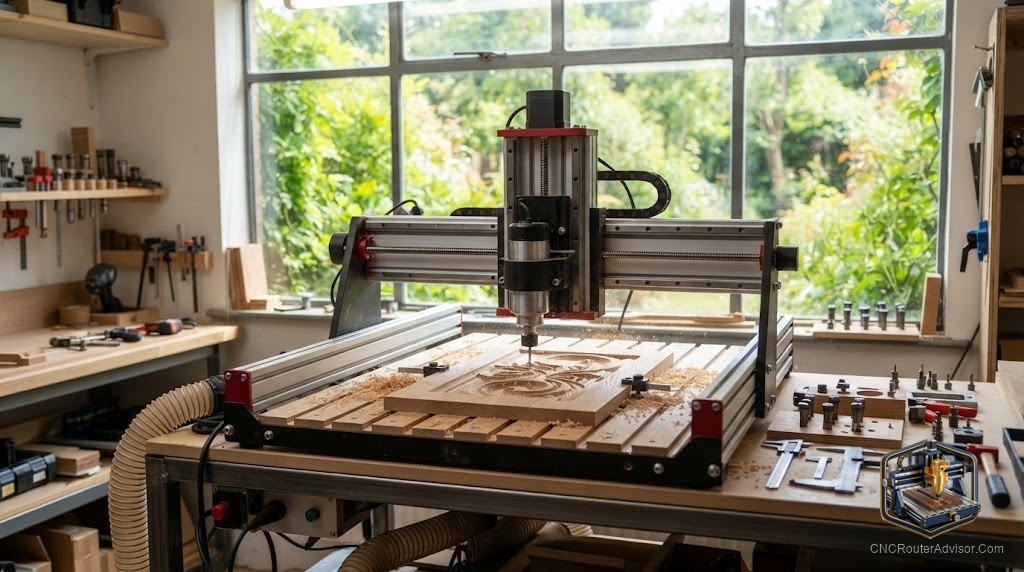
The 6040 CNC router is one of the most recognizable machine formats in the hobby and prosumer world, and the name tells you exactly what it is: a 600 by 400 millimeter work area, roughly 24 by 16 inches. That size sits comfortably above the tiny 3018-class desktop machines and below the full benchtop and floor-standing machines, and it has been a popular sweet spot for years because it handles a genuinely useful range of projects without demanding a dedicated room or a large budget. If you are researching a 6040, you are usually deciding whether this classic mid-compact size is the right step up, and this guide answers that directly.
What a 6040 CNC router is
A CNC router is a computer-controlled machine that moves a spinning cutter along programmed paths in the X, Y, and Z axes to cut and shape material from a design file, executing the resulting G-code repeatably. A 6040 is one with a 600 by 400 millimeter cutting area. The format originated in the wave of accessible Chinese-built desktop routers and remains a common size across many manufacturers, which means a large base of users, guides, and community knowledge exists for machines of this size.
The 6040 is a mid-compact machine: bigger than the pocket-sized 3018 and 3020, smaller than a 4040-plus benchtop or a floor machine. It suits wood, plastics, and, on rigid metal-frame versions, soft aluminum and engraving.
The short answer
Buy a 6040 CNC router when a 3018-class machine is too small for your projects but you do not need a full benchtop or floor machine. The 600 by 400 millimeter work area handles medium signs, panels, plaques, PCB and engraving work, and small production parts. Prioritize a rigid metal frame, a quality motion system, and, if you want soft aluminum capability, a VFD spindle over a trim router. Confirm the actual cutting travel and the controller type, and choose a version with good community support and available parts. The 6040 is a proven middle format, and a well-built one is a versatile machine.
Key specifications for a 6040
Work area is defined: 600 by 400 millimeters in X and Y. Confirm the Z-axis travel, which varies between 6040 versions and determines the material thickness and clamping height you can handle. Some 6040 machines have limited Z clearance, so check it against your projects.
Frame rigidity varies widely across 6040 machines because the format spans many manufacturers and quality levels. A rigid metal frame cuts cleaner and handles harder material; a lighter frame limits you to conservative cuts in wood and plastic. This is the specification that most separates a good 6040 from a mediocre one.
The motion system on 6040 machines ranges from lead screws to ball screws. Ball screws on linear rails give better accuracy and longevity and are worth seeking out. The spindle is often a VFD spindle even on budget 6040 machines, which is one of the format’s traditional strengths: many ship with an air-cooled or water-cooled VFD spindle that outperforms a trim router in control and quietness.
The controller varies. Many 6040 machines historically shipped with older parallel-port or proprietary controllers; modern versions increasingly use GRBL or better. Confirm the controller and its software compatibility before buying, as this affects your entire workflow.
Buying factors
Because the 6040 format spans so many manufacturers and quality tiers, the single most important buying factor is choosing a specific machine with a rigid frame, a proven controller, community support, and parts availability, rather than buying on the format name alone. A well-built 6040 from a supported platform is a versatile, capable machine. A poorly built one with an obscure controller and no support is a frustrating one.
Consider what you want to cut. For wood, plastic, and engraving, most 6040 machines are capable. For soft aluminum, prioritize a rigid metal frame and a good VFD spindle, and expect to run conservative cuts with proper chip evacuation.
Who should skip a 6040
Skip a 6040 if your projects fit a smaller 3018 or 3020 machine, since those cost less and take less space. Skip it in the other direction if you regularly cut large panels or full sheets, because the 600 by 400 millimeter area will constrain you and a benchtop or larger machine is the right choice. And skip any specific 6040 with an obscure controller, no community, or no parts availability, because the format’s quality range means those machines exist alongside good ones.
Comparison: 6040 among compact and mid machines
| Format | Work area | Best for |
| 3018 / 3020 | ~300 × 180 - 200 mm | Small signs, PCB, learning |
| 6040 | 600 × 400 mm | Medium signs, panels, engraving, soft aluminum |
| 4040-plus benchtop | 400 × 400 mm and up | Broader hobby and small-shop work |
Because 6040 quality varies, a well-supported alternative in the same capability range is often the safer buy. For a rigid metal-frame compact machine with soft aluminum capability and strong support, the Genmitsu 3030 PROVer Ultra is at this listing. For more work area with excellent community support, the Genmitsu 4040 PRO is at this listing. For a VFD spindle upgrade on a compatible machine, a 500W air-cooled kit is at this listing.
The verdict
The 6040 CNC router is a proven middle format with a 600 by 400 millimeter work area that handles a genuinely useful range of medium projects, and its traditional strength is often shipping with a VFD spindle at an accessible price. The catch is that the format spans many manufacturers and quality levels, so buy the specific machine, not the format name: prioritize a rigid frame, a proven controller, community support, and parts availability. Chosen well, a 6040 is a versatile and capable machine for wood, plastic, engraving, and light aluminum work.
Frequently asked questions
What does 6040 mean on a CNC router? It refers to the work area: 600 by 400 millimeters, roughly 24 by 16 inches. It is a naming convention shared across many manufacturers of this mid-compact machine size.
What can a 6040 CNC router cut? Wood, MDF, plywood, acrylic and other plastics, and, on rigid metal-frame versions with a good spindle, soft aluminum and engraving. The 600 by 400 millimeter area suits medium signs, panels, plaques, and small production parts.
Is a 6040 good for aluminum? A rigid metal-frame 6040 with a quality VFD spindle handles soft aluminum with conservative cuts and good chip evacuation. A lighter-frame 6040 is better kept to wood and plastic. Frame rigidity is the deciding factor.
What controller does a 6040 use? It varies by manufacturer and era. Older machines used parallel-port or proprietary controllers; modern ones increasingly use GRBL or better. Confirm the controller and its software compatibility before buying.
Is a 6040 CNC router worth it? A well-built 6040 with a rigid frame, proven controller, and good support is a versatile mid-compact machine. Because quality varies widely across the format, choose the specific machine carefully rather than buying on the format name alone.
How big is a 6040 work area in inches? Roughly 24 by 16 inches (600 by 400 millimeters). Confirm the Z-axis travel separately, as it varies between versions and affects material thickness and clamping height.
References
- CNC Router Info, How to Choose a CNC Router: https://cncrouterinfo.com/guides/how-to-choose-a-cnc-router/
- CNC Dad, Best CNC Router for Beginners: https://www.cnc-dad.com/blog/best-cnc-router-for-beginners/