
4×8 CNC Router Machine Guide: Work Area, Machine Size, and Buying Factors
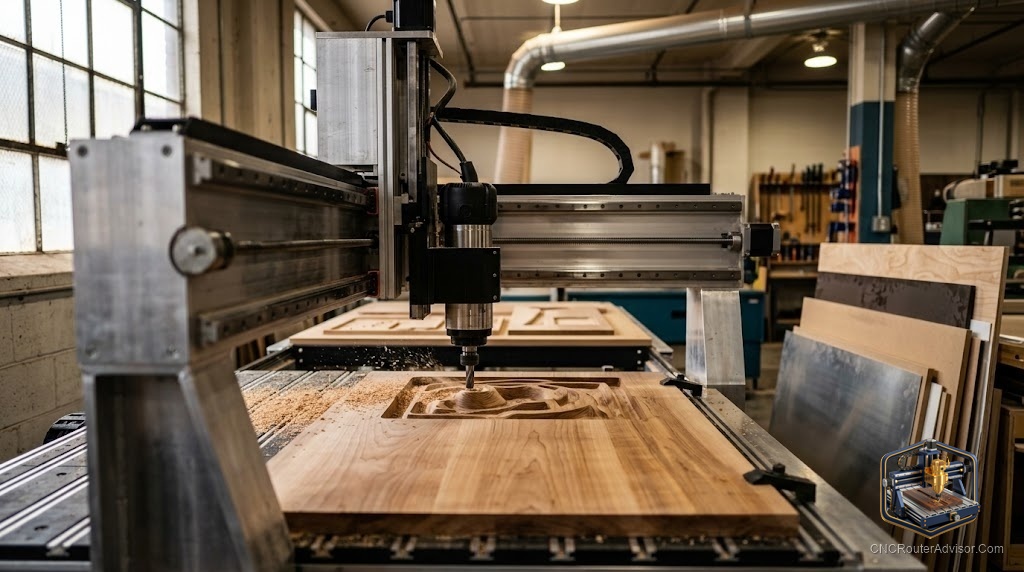
The 4 by 8 CNC router machine is where hobby ends and production begins. The number is not arbitrary: it matches the standard 4 by 8 foot sheet of plywood, MDF, plastic, and composite panel, which means the machine cuts a full sheet in a single setup. That one capability changes the economics of everything from cabinet making to sign production to composite fabrication. For anyone whose work is defined by sheet goods, the 4 by 8 machine is the tool that turns a design file into finished parts at a rate a smaller machine simply cannot match.
This guide takes the machine-selection view: what a 4 by 8 machine is, the specifications that define a good one, and the buying factors that matter most when you commit to a machine at this scale.
What a 4×8 CNC router machine is
A CNC router is a computer-controlled machine that moves a spinning cutter along programmed paths in the X, Y, and Z axes to cut and shape material. A 4 by 8 machine is one with roughly a 48 by 96 inch usable cutting area, sized to process a full standard sheet. The machine reads G-code generated from your design, and executes it repeatably, producing identical parts from the same file every time.
At this scale, the machine is a floor-standing production tool, not a benchtop device. The frame, gantry, drive system, spindle, and control electronics are all sized for sustained work over a large area. It is a serious purchase and a serious capability.
The short answer
Buy a 4 by 8 CNC router machine when your work genuinely involves full sheet goods on a regular basis. The defining advantage is processing a complete sheet in one setup, which transforms throughput for cabinet, furniture, sign, and panel work. Prioritize frame rigidity across the large span, a robust motion system, and a VFD spindle matched to your material. Plan the shop infrastructure, power, floor space, and dust collection before buying. And weight support and parts availability heavily, because a production machine down for parts is lost revenue.
Key specifications at 4×8 scale
Work area is the headline, but confirm the actual usable cutting travel in all three axes, not just the nominal sheet dimension. Z-axis travel determines the material thickness and clamping height you can accommodate.
Frame rigidity is the specification that most affects cut quality across a large span. Steel or heavy aluminum construction with a well-braced gantry resists the deflection that causes chatter and inaccuracy. At 96 inches of travel, a flimsy frame reveals itself immediately.
The motion system on the long axis is commonly rack and pinion at this scale, which handles the span and the feed rates well. Quality ball screws appear on some machines. Either can be excellent when properly implemented; both benefit from good linear rails.
The spindle should be a VFD unit sized for sustained production cutting. A trim router is undersized for a 4 by 8 machine running real work. VFD spindles deliver sustained power, variable speed, and quieter operation, and ATC options eliminate manual tool changes on multi-tool jobs.
The controller runs the machine. Confirm it is a proven, well-supported system with software compatibility for your CAM workflow.
Buying factors that matter most
Infrastructure readiness comes first. A 4 by 8 machine needs adequate power, sometimes three-phase, floor space for the machine plus working clearance and material handling, dust collection sized to production output, and a floor that supports the mass. Audit all of this before the purchase conversation.
Support and parts availability determine uptime. A production machine earns its keep by running; a machine idled waiting for a part or a service visit costs money. Evaluate the manufacturer’s support infrastructure, regional service access, and parts availability as carefully as the machine’s specs.
Workholding is part of the machine decision. A vacuum table gives fast, even hold-down across a full sheet without clamps in the cut path, which is why many production shops treat it as standard rather than optional.
Who should skip a 4×8 machine
Skip it if your projects rarely fill the bed. A smaller machine costs less to buy, run, and house, and occasional large jobs can go to a service shop. Skip it if your shop cannot provide the power, floor space, and dust handling the machine needs, because an underserved production machine runs at a fraction of its capability. And skip any machine at this scale whose support and parts story is unproven, because the downtime risk is too costly.
Comparison: machine tier by production need
| Need | Machine | Throughput |
| Learning, small projects | Benchtop (3018 to 4040) | One small part at a time |
| Larger projects, small shop | 4 × 4 | Large parts, half sheets |
| Full sheet production | 4 × 8 | Complete sheet per setup |
| High-volume industrial | Industrial 4 × 8 or larger | Shift production, automation |
True 4 by 8 machines are bought through prosumer and industrial manufacturers such as Avid CNC, ShopBot, Laguna, and industrial makers, with installation, training, and parts support. Evaluate through the manufacturer and confirm regional support before committing. For a well-supported benchtop machine while you build toward full sheet capacity, the Genmitsu PROVerXL 4030 is at this listing, and the 4040 PRO MAX is at this listing.
The verdict
A 4 by 8 CNC router machine is a production tool defined by its ability to process a full standard sheet in one setup. That capability transforms throughput for any shop whose work is built on sheet goods. Buy one when your work fills the bed regularly, prepare the shop infrastructure deliberately, prioritize a rigid frame and strong VFD spindle, and weight support and parts availability heavily. It is a significant investment, and for the right operation it pays back in throughput, consistency, and the work it makes possible.
Frequently asked questions
Why is 4x8 the standard CNC router size? Because plywood, MDF, plastic, and composite panels come in standard 4 by 8 foot sheets. A machine sized to that sheet cuts a full panel in one setup, eliminating the need to cut material down first and enabling efficient nesting of parts.
What does a 4x8 CNC router machine cost to run? Beyond the machine, budget for power, dust collection, tooling as a running cost, spoilboard material, and maintenance. Vacuum workholding adds a pump. The marginal cost per part is low once the machine is running, which is the production advantage.
What spindle does a 4x8 machine need? A VFD spindle sized for sustained production cutting, with variable speed to match materials and operations. ATC is worth considering for jobs using multiple tools. A trim router is undersized for a machine at this scale.
How much space does a 4x8 CNC router need? The machine footprint is roughly 5 by 10 feet or larger, plus working clearance on all sides for loading sheets, moving safely, and maintenance. Plan a dedicated production area, not a shared corner.
Do I need three-phase power for a 4x8 router? Some machines require three-phase; others run on single-phase. Confirm the electrical requirement with the manufacturer and plan the installation before purchase.
Where do I buy a 4x8 CNC router machine? Through prosumer and industrial manufacturers and dealers, such as Avid CNC, ShopBot, and Laguna, who provide installation, training, and parts. Evaluate through demonstrations and confirm regional support terms.
References
- CNC Router Info, How to Choose a CNC Router: https://cncrouterinfo.com/guides/how-to-choose-a-cnc-router/
- CNC Dad, Best CNC Router for Beginners: https://www.cnc-dad.com/blog/best-cnc-router-for-beginners/