
Portable CNC Router Machine Guide: Setup, Accessories, and Making It Work Anywhere
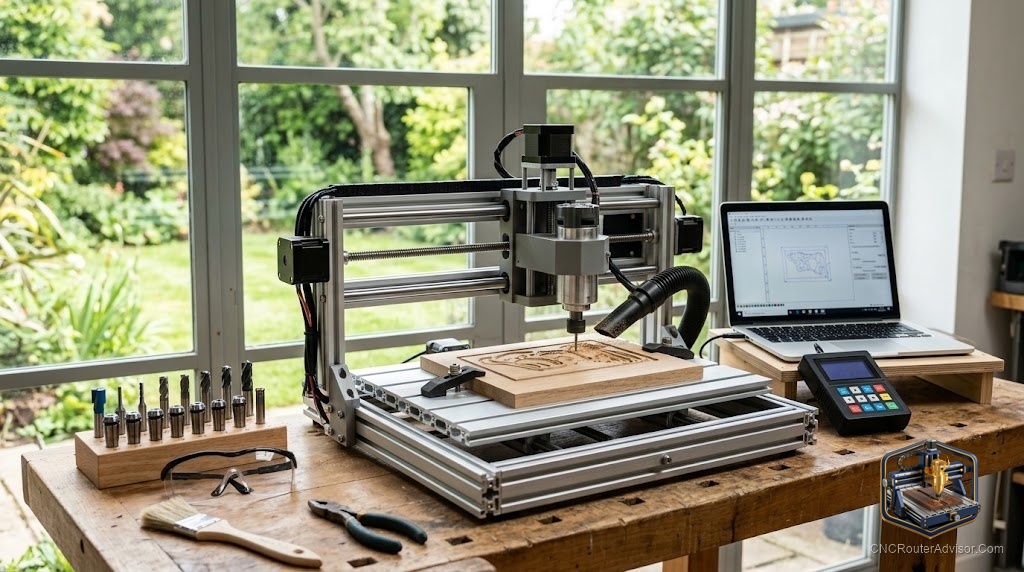
A portable CNC router machine is a different kind of tool than a shop-anchored router. The machine moves to the job, the event, the studio, the client site, and the farmer’s market booth rather than waiting for material to arrive at a fixed workbench. That mobility creates both the appeal and the constraints: you give up the heavy rigid frame and permanent wiring in exchange for the ability to cut anywhere a power outlet exists and a table is available. Getting the most out of a portable machine means setting up the workspace thoughtfully every time, because the workspace is not a given.
This guide covers what a portable CNC router setup requires, the accessories that make it work reliably on the move, and the honest trade-offs.
What portable means in CNC routers
Portable in this context means a machine light enough to carry, compact enough to transport in a car, and setup-ready in under an hour without permanent installation. That typically means a desktop footprint in the 3020 to 4040 class or smaller, a power supply that runs on standard household current, and a gantry and frame that travel well in a padded case or bag.
Portability is not the same as lightweight or flimsy. A well-built compact machine on a rigid metal frame travels well and still cuts accurately when set up correctly at the destination. The constraint is work area and spindle size, not necessarily cut quality.
The short answer
For a portable CNC router setup, combine a compact rigid machine with a stable portable workbench, a dust shoe and shop vacuum for contained dust management, a compact power and controller setup, and a protective carrying case or bag for transport. The key discipline is repeatable setup: a portable machine that takes thirty minutes to level, square, and configure at every location is exhausting; a setup that goes from bag to cutting in ten minutes is practical. Invest in the accessories and habits that create that speed.
Workspace setup accessories
A portable workbench or table that levels quickly is the foundation. Folding workbenches with adjustable legs are the standard choice: they pack flat, set up fast, and provide a stable surface that carries the machine without flexing under cutting loads. The table must be heavy enough to resist walking under vibration; lighter folding tables that wobble during cutting produce poor results.
A clamp and workholding kit that travels with the machine is the next essential. Portable work means no permanent T-slots or vacuum infrastructure, so a set of low-profile clamps, threaded inserts for a spoilboard, and a dedicated travel spoilboard that sets up quickly at every location forms the portable workholding system.
Dust management on the road
Dust management is more important in a portable context than in a fixed shop, because a fixed shop has a dust system; a portable setup often runs in someone’s garage, craft fair, or studio space where filling the room with MDF dust is not acceptable. A fitted dust shoe at the spindle connected to a compact shop vacuum handles this well. Choose a vacuum with a fine dust filter and HEPA collection, run it during every cut, and empty it after the session before transport.
For indoor or public event settings, keep cutting sessions short, choose materials that produce manageable dust rather than fine particulates, and let the vacuum run briefly after the cut finishes to pull down the residual air in the cutting zone.
Power and electronics transport
A portable machine’s controller box, power supply, and cable set need a transport strategy. Loose electronics in a bag are a reliability liability. A small organized case with foam cutouts or compartments for the controller, power supply, USB cable, and spare tools keeps everything together and arrives undamaged. Confirm the machine runs on the destination’s power supply voltage before traveling internationally.
Carrying cases and protection
Many portable machine manufacturers offer padded cases or bags sized to the machine. If yours does not, a hard-shell equipment case with foam cut to fit the machine’s footprint protects it from the knocks of regular transport. Protect the gantry rails and lead screws from impact, because a bent rail or damaged lead screw needs replacing before the next cut.
Who should skip a portable machine
Skip a portable CNC router if your work does not actually require mobility. A fixed shop machine gives more rigidity, a larger work area, and a permanent dust solution for the same money or less. Portable is a real trade-off of capability for mobility. Make that trade only when mobility is a genuine requirement, not just an option that seems appealing.
Comparison: portable setup components
| Component | Best portable choice | Why |
| Machine | Compact rigid frame, 3020-4040 class | Light enough to carry, accurate enough to cut |
| Workbench | Adjustable folding, heavy enough to resist vibration | Stable setup at any location |
| Dust control | Dust shoe plus compact HEPA vacuum | Source capture in any setting |
| Workholding | Travel spoilboard with clamps and inserts | No permanent infrastructure needed |
| Transport | Hard or padded case per machine | Protects rails and electronics |
For a compact, travel-friendly rigid machine, the Genmitsu 3020 PRO MAX is at this listing. For a 400 by 400 mm mid-size option with a solid frame, the Genmitsu 4040 PRO is at this listing.
The verdict
A portable CNC router machine setup is entirely workable when the accessories and habits are right. The machine needs a stable surface, repeatable dust management, organized electronics transport, and a carrying case that protects it between locations. The trade-off versus a fixed shop machine is real in rigidity and work area, but for a maker who needs to cut at the studio, the event, or the client site, the trade is the right one. Build the portable setup system as deliberately as you choose the machine itself, and the result is a reliable cutting capability that goes where the work is.
Frequently asked questions
What is the best portable CNC router machine? A compact, rigid metal-frame machine in the 3020 or 4040 class with GRBL control, standard power requirements, and a good community. The Genmitsu family is a well-documented choice for portable use.
How do I set up a portable CNC router at an event or studio? Level a stable folding workbench, mount the machine and confirm it sits flat, set up the travel spoilboard with workholding, connect the dust shoe and vacuum, load the design, and run a quick test cut before the production job.
How do I manage dust with a portable CNC router? A dust shoe at the spindle connected to a compact shop vacuum with a HEPA filter captures dust at the source. Run it during every cut and keep sessions short in settings where dust management is especially important.
Can I take a portable CNC router on a plane? The machine itself can travel as checked baggage if protected well, but confirm airline rules on batteries and electronics. A compact machine in a hard case is manageable. Always check destination voltage before traveling internationally.
What accessories do I need for a portable CNC router? A stable portable workbench, a travel spoilboard with workholding clamps, a dust shoe and compact vacuum, an organized electronics carry case, and a protective case or bag for the machine.
Is a portable CNC router as accurate as a fixed machine? With proper setup at each location, a good compact machine cuts accurately. The constraint is the smaller work area and lighter frame, not the accuracy of the motion system itself.
References
- CNC Router Info, How to Choose a CNC Router: https://cncrouterinfo.com/guides/how-to-choose-a-cnc-router/
- Bubble Relief, CNC Router Projects for Beginners: https://bubblerelief.com/cnc-router-projects-for-beginners/