CNC Routers Near Me: How to Compare Local Dealers and Machines
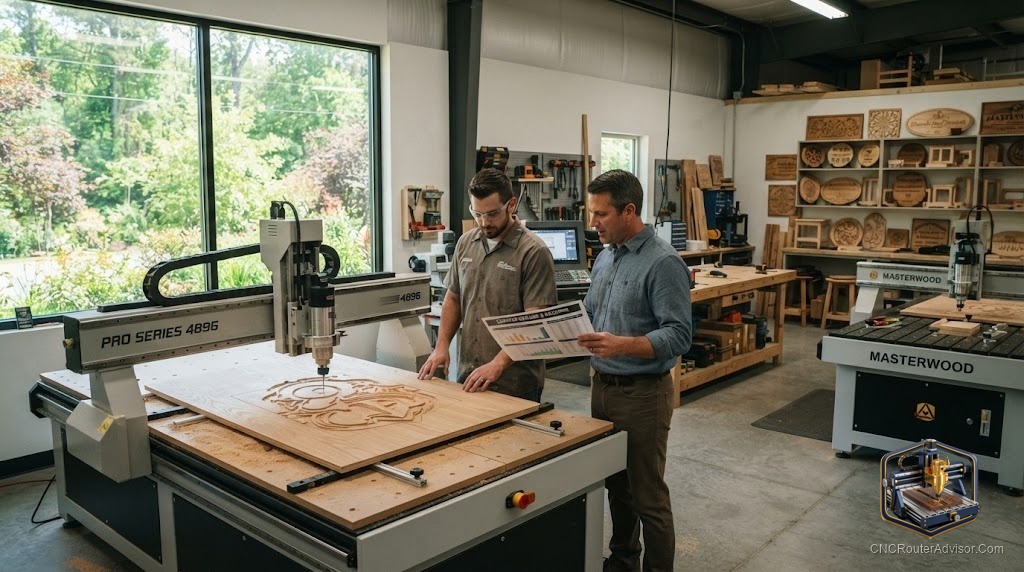
Searching for a CNC router near you is a smart instinct, because local has advantages that online buying cannot replicate. You can see the machine run. You can touch the frame, feel the gantry travel, and hear the spindle before committing money. You can get training, see a real cut in your material, and ask questions to someone who has installed dozens of the machine you are considering. For a first time buyer or anyone stepping into a more capable tier, a local evaluation changes the quality of the decision.
This guide covers how to find local dealers and suppliers, what to do when you find them, and how to compare them honestly so you walk away with the right machine rather than the one a salesperson was most motivated to move.
Why local matters for a CNC router purchase
CNC routers are not consumer electronics where a spec sheet tells the whole story. The difference between a machine that chatters and one that cuts cleanly is often invisible on paper and obvious in five minutes of watching it run. A local dealer gives you access to that five minutes. You also establish a relationship that matters if you need support, parts, or training later.
For larger machines, local also affects installation. A full sheet or industrial router requires delivery, positioning, and often installation support. A local dealer with that infrastructure saves you from managing a pallet drop at your loading dock and figuring out the rest yourself.
How to find local dealers
Start with the manufacturer’s website. Most makers who sell through dealers list authorized dealers by region, and a dealer in that list has an established relationship with the manufacturer, which usually means training, parts access, and support accountability.
Trade shows and regional manufacturing events are another path, especially for industrial and prosumer machines. CNC demonstrations at these events let you see multiple platforms in one visit and compare them directly.
Local makerspaces and community workshops often have machines on the floor and members who have shopped the market recently. Their experience with what is available near you and what the support has actually been like is more useful than any listing.
Online search with your region is the obvious starting point, but filter carefully: a retailer that ships from a warehouse is not a local dealer in the meaningful sense. You want someone who can show you the machine running and support it after purchase.
What to do when you visit a dealer
Ask to see the machine run in your material, or at least in a comparable one. A dealer who cannot demonstrate the machine in real material is giving you a spec sheet in person, which is less useful than reading it at home.
Feel each axis. With the machine off, move the gantry by hand and feel for smooth, play free travel. Any grinding, binding, or slop tells you something about the motion system.
Ask specifically about service: how long does a service call take in your region, who handles parts, and what the warranty actually covers. A dealer who gets vague or defensive here is signaling a support gap.
Ask about training. A machine you understand runs better and lasts longer. A dealer who offers onsite or nearby training is investing in your success rather than just your purchase.
How to compare dealers honestly
Demo quality is the first comparison. Did the machine cut cleanly in real material with no special setup, or did the sales rep spend ten minutes tweaking it to get one good pass? A machine that performs right out of the scheduled demo is a confident dealer.
Service infrastructure matters more than price. A dealer who can have a technician on site quickly, who stocks common parts, and who answers the phone after the sale has genuine value over one who is cheaper but absent when the machine needs help.
Ask for references. A dealer with happy customers in your region should be able to give you one to call. A dealer who hesitates probably cannot.
Who should skip the local dealer search
Skip the local dealer hunt if you are buying a well supported consumer machine that ships well, has strong online community support, and where you are comfortable with self-service troubleshooting. A Genmitsu or similar platform ships safely, has enormous community documentation, and the installation is within reach of most buyers without dealer support. The dealer search pays off most for prosumer and industrial machines where the purchase relationship carries forward into training, service, and parts.
Comparison: local dealer vs direct online purchase
| Factor | Local dealer | Direct online |
| Pre-purchase demo | Yes, in real material | No |
| Ongoing support | On-site possible | Remote only |
| Installation help | Often included | Self-managed |
| Best for | Prosumer and industrial | Well supported consumer machines |
| Price | Sometimes higher with service included | Transparent, competitive |
For well supported consumer machines that ship safely and have large online communities, the Genmitsu PROVerXL 4030 is at this listing and the Genmitsu 4040 PRO MAX is at this listing. For prosumer and industrial machines where local support matters most, use the manufacturer’s dealer locator.
The verdict
Searching for a CNC router near you is most valuable when the machine you need is complex enough that a demo, training, and on-site support justify the local relationship. For industrial and prosumer machines, local dealer quality is a real part of the purchase and worth the search. For well supported consumer machines with large communities and straightforward installation, the online purchase delivers the machine and the community delivers the support. In either case, the instinct to evaluate in person before committing is right: a real demo answers questions that no spec sheet can.
Frequently asked questions
Is buying from a local dealer better than buying online? For larger and more complex machines where installation, training, and on-site service matter, yes. For well supported consumer machines with strong communities, online purchasing works well and the community provides support.
How do I find authorized CNC router dealers near me? Start with the manufacturer’s dealer locator on their website. Authorized dealers have an established relationship with the maker, which usually means parts access and support accountability.
What should I ask a local CNC router dealer? Ask for a live demo in real material, ask about service call response time and parts availability in your region, ask about training options, and ask for customer references.
Can I negotiate price with a local dealer? Often yes, especially on larger machines. A dealer who wants to establish a long-term service relationship has flexibility. Negotiate alongside service terms rather than against them.
What if there are no dealers near me? For well supported consumer machines, direct online purchase is a fine alternative, because community support substitutes for dealer support effectively. For industrial machines, consider whether the nearest qualified dealer’s service area covers you before buying.
Is a demo important before buying? Very much so for any machine above the consumer tier. Seeing a machine cut your material answers more questions than any spec sheet, and a dealer who will not demo the machine running is giving you much less than a confident one.
References
- CNC Router Info, How to Choose a CNC Router: https://cncrouterinfo.com/guides/how-to-choose-a-cnc-router/
- CNC Dad, Best CNC Router for Beginners: https://www.cnc-dad.com/blog/best-cnc-router-for-beginners/