
CNC Router 4 × 4 Buying Guide: Work Area, Machine Size, and What It Enables
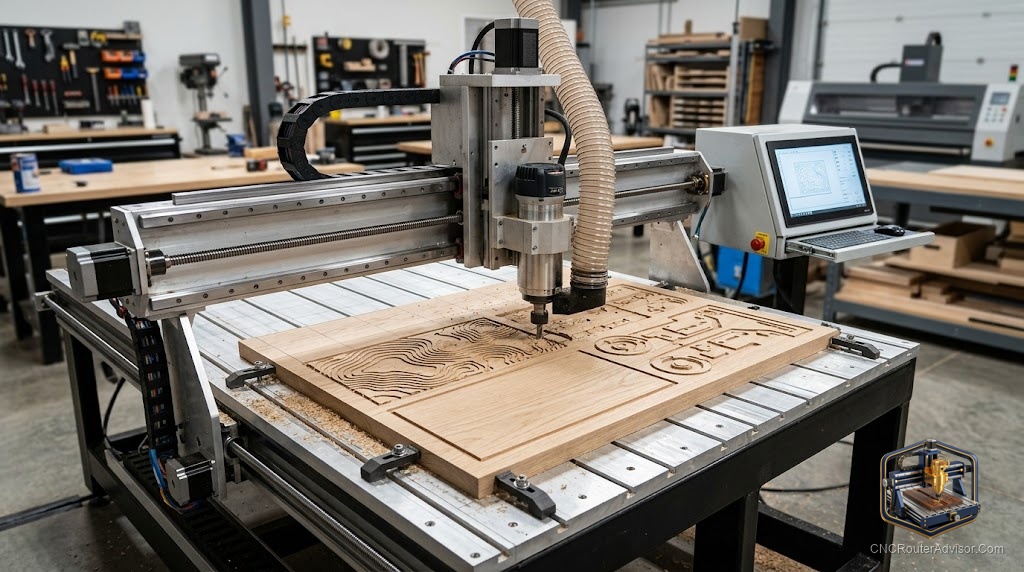
A 4 by 4 work area sits in a productive middle ground that a lot of buyers land on after their first machine proves too small. It is big enough to cut a genuine range of projects without being so large it demands a dedicated room and industrial power. If you have outgrown a compact desktop machine or you are sizing a first machine and want room to grow, the 4 by 4 class is worth understanding on its own terms, because the machines in it span a wide range of quality and the buying decisions are different from either end of the size spectrum.
What a 4 × 4 work area opens up
A 4 by 4 work area, roughly 400 by 400 millimeters on a metric desktop machine or a true 4 by 4 foot bed on a larger freestanding one, changes what you can make in one setup. On the desktop metric size, you move from tiny signs and jewelry to genuine medium signs, small furniture parts, game boards, and panels up to about 40 centimeters square. On the full 4 by 4 foot size, you handle large signs, cabinet door panels, small shelf units, and production parts that would require repositioning on a smaller machine.
The distinction between the metric desktop 4040 class and a full 4 by 4 foot machine is significant: they share a name pattern but are very different machines in cost, footprint, and capability.
The short answer
For a desktop 4040 class machine, the Genmitsu 4040 PRO and 4040 PRO MAX are the well supported standard in this size range. For a full 4 by 4 foot machine, you are in prosumer and light industrial territory where direct-sale brands like Avid CNC, Onefinity, and Sienci LongMill are common choices. Decide which you actually mean based on your real projects, then evaluate within that tier on frame rigidity, motion system, and support rather than on size alone. The 4 by 4 name covers both, and the buying decision looks very different at each end.
Desktop 4040 class: what you get
The desktop 4040 is the next step up from a 3018 or 3020 machine and covers a genuine range of hobby and small shop work. Medium signs, engraving boards, box lids, small panels, and detailed craft work all fit comfortably. The machines in this tier use a trim router spindle or a small VFD, run GRBL, and pair with beginner friendly software. Work area is roughly 400 by 400 millimeters with a Z travel that accommodates most material thicknesses.
The Genmitsu 4040 PRO is a well supported entry at this listing, and the 4040 PRO MAX adds a stronger 710W spindle at this listing. These run in one of the largest user communities in the hobby space, which matters more than any single spec when you are learning.
Full 4 × 4 foot class: what changes
A full 4 by 4 foot machine handles large format signs, cabinet parts, and production work at a scale that a desktop 4040 never reaches. The footprint needs a dedicated bench or floor space, and the motion system at this size requires more engineering: rack and pinion or ball screws across a much longer span, a heavier gantry, and a more powerful spindle. These machines cost significantly more and the buying process often involves a direct sales relationship with the manufacturer.
Established brands in this tier include Avid CNC Benchtop Pro, the Sienci LongMill at the accessible end, and Onefinity at the premium end. All are direct-sale machines best evaluated through the manufacturer and community forums rather than a generic product comparison.
Frame rigidity at 4 × 4 scale
At either size, frame rigidity still wins. A desktop 4040 with a stiff gantry cuts cleaner than a loose one with the same motors, and a full 4 by 4 foot machine with a heavy, well braced structure handles dense material far better than one that flexes over its longer span. At this size, gantry mass and frame bracing are what separate the machines that hold tolerances from those that drift over a long cut.
Who should skip the 4 × 4 class
Skip a desktop 4040 if you already know your projects run larger: you will outgrow it faster than you expect and the upgrade cost is real. Skip a full 4 by 4 foot machine if your projects fit a desktop and your shop cannot properly house a larger footprint, since a constrained shop is a safety and workflow problem. And skip the cheapest 4040 machines with vague specs and no community documentation, because a second regret is spending money on a machine you cannot get help running.
Comparison: desktop 4040 vs full 4 × 4 foot
| Factor | Desktop 4040 | Full 4 × 4 foot |
| Work area | ~400 mm × 400 mm | ~1200 mm × 1200 mm |
| Best projects | Signs, panels, craft work | Large signs, furniture, production |
| Footprint | Bench top | Large bench or floor space |
| Purchase | Marketplace, easy | Direct sale, more involved |
| Support | Large consumer community | Brand specific community |
The verdict
A 4 by 4 CNC router is a strong mid-size option at both ends of what that name means, but you need to know which end you are shopping. The desktop 4040 is the well proven next step after a compact hobbyist machine: capable, well supported, and sized for a genuine range of work without demanding a dedicated room. The full 4 by 4 foot machine is a prosumer or light industrial purchase for serious production and large format work. Match the tier to your projects honestly, prioritize frame rigidity and a quality motion system within your chosen tier, and let a real project need rather than ambition alone make the case for the bigger purchase.
Frequently asked questions
What is the difference between a desktop 4040 and a 4 × 4 foot CNC router? A desktop 4040 has a work area of roughly 400 by 400 millimeters, suited to medium hobby projects. A full 4 by 4 foot machine has a work area roughly three times larger and is a prosumer or light industrial machine for large format production work.
Is a 4040 router big enough for signs? For medium signs and custom work in this bed size, yes. For large commercial signage, you need a larger machine.
What should I look for in a desktop 4040? Frame rigidity, a well supported GRBL controller, spindle power matched to your materials, and an active user community. The Genmitsu 4040 series is the most documented in this class.
Can a 4040 cut aluminum? On metal framed models with a real spindle, soft aluminum is possible with careful technique. On lighter plastic framed 4040 machines, stick to wood and plastic.
Who makes a full 4 × 4 foot CNC router? Avid CNC, Onefinity, Sienci LongMill, and others at the prosumer level. These are direct sale machines evaluated through the manufacturer and community rather than a marketplace listing.
Should I buy a 4040 or save up for a larger machine? Buy the 4040 if it fits your current projects with margin. Save for larger if you already know you will cut large panels and furniture parts, since outgrowing a smaller machine quickly is the most expensive upgrade.
References
- CNC Router Info, How to Choose a CNC Router: https://cncrouterinfo.com/guides/how-to-choose-a-cnc-router/
- CNC Dad, Best CNC Router for Beginners: https://www.cnc-dad.com/blog/best-cnc-router-for-beginners/