
CNC Router 3-Axis Buying Guide: What to Look For and Key Trade-Offs
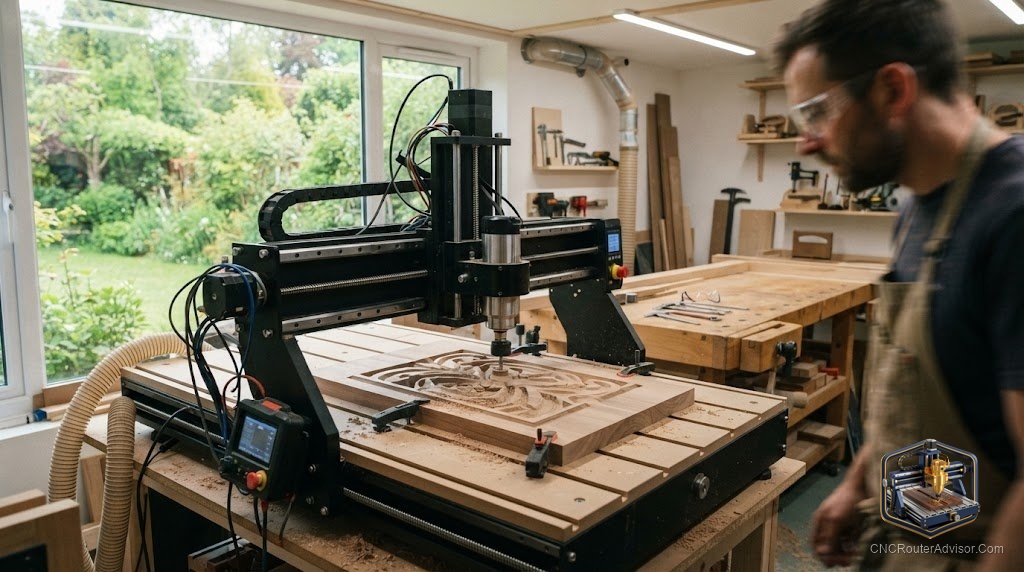
Every standard CNC router is a three axis machine, which means when you search for a 3-axis CNC router, you are not filtering a special category. You are looking at the entire core of the market. The useful question is not whether a machine has three axes but whether it executes those three axes well, and what the specifications, drive mechanism, and frame tell you about how accurately and reliably it will cut. Getting that judgment right is the whole skill in buying a 3-axis router.
This guide focuses on the buying side: what to look for in a 3-axis machine, the specifications that actually predict cut quality, and the trade-offs that matter across the range from entry hobby to prosumer.
Why all standard routers are 3-axis
The three axes are X, Y, and Z, the three linear directions the cutter can travel. X runs the length of the machine, Y runs the gantry across its width, and Z moves the spindle up and down. Every standard benchtop and full size CNC router uses this combination. Adding a fourth or fifth axis adds rotary motion, but the baseline for every router you will find in the hobby and small business market is three axes, varying in quality and execution.
So evaluating a 3-axis router is evaluating how well the machine implements those three axes: how rigidly the frame holds position, how precisely the motion system translates commands into movement, and how repeatably the machine returns to the same point across a job and between jobs.
The short answer
When buying a 3-axis CNC router, prioritize four things in order: frame rigidity, motion system quality, work area sized to your projects, and a well supported controller and software chain. A rigid frame on a quality ball screw and linear rail system is the combination that produces clean, accurate, repeatable cuts. A flexible frame or a sloppy belt and V-wheel drive undermines every other spec on the sheet. Match work area to your projects with margin, insist on a documented controller, and weight community support as a real specification, especially for a first machine.
What frame rigidity actually means
Frame rigidity determines how much the machine deflects under cutting force. Every cutter pushes back against the machine as it removes material, and a frame that flexes under that force cuts inaccurately and chatter. Heavy, well designed frames with beefy gantries and solid connections keep the cutter where the file says it should be.
Rigidity shows up in machine mass and construction. A heavier machine with a larger cross section frame is usually stiffer. Aluminum extrusion frames are lighter and less rigid than steel frames. At the same build quality, a machine built for durability over lightness cuts better.
Motion system: where precision lives
The motion system translates motor steps into physical movement. Ball screws on quality linear rails are the premium option: low backlash, precise, durable, and consistent over long service. Lead screws with anti-backlash nuts are adequate for wood and plastic on a budget and cheaper, but they carry more friction and a higher risk of lost steps under load. Belt and V-wheel systems are the lowest cost option and suit very light hobby work, but wear faster and lose precision as they age.
Positioning accuracy and repeatability, the ability to return to the same point reliably, both depend directly on the motion system. These are the numbers that predict whether your hundredth part matches your first.
Work area and Z travel
Work area caps what you can cut in one setup. Size it to your realistic projects with a margin for clamping. Z travel is often overlooked: it determines how thick a material you can mount, how high your workholding can be, and how deep a relief you can carve. Confirm both before buying.
Software and controller compatibility
A 3-axis router is only as usable as its software chain. GRBL is the widely adopted open source controller firmware for this class of machine, pairing with a broad range of CAM and control software and supported by the largest communities. A controller on a well documented system keeps your options open and your troubleshooting resources rich. A closed, proprietary controller narrows your software choices and makes vendor dependency a real risk.
Trade-offs across the range
At entry level, you accept a smaller work area and a lighter frame in exchange for a lower outlay. The right trade-off is one where the frame is still rigid enough to cut cleanly and the community is active enough to help. At mid level, a larger bed and a better motion system open up more materials and larger projects. At prosumer, rigidity and production capability become the defining factors, and a quality ball screw and linear rail system is the baseline.
The wrong trade-off at any level is accepting a large, flexible machine over a smaller, rigid one, because the rigid machine cuts cleaner parts at every size.
Comparison: 3-axis motion systems
| System | Accuracy | Durability | Cost | Best for |
| Ball screw + linear rails | High | Long | Higher | Precision work, aluminum |
| Lead screw + linear rails | Good | Moderate | Mid | Wood, plastic, general hobby |
| Belt + V-wheels | Adequate | Lower, wears | Low | Very light hobby work |
For a well supported mid size 3-axis machine with good rigidity, the Genmitsu PROVerXL 4030 is a strong pick at this listing. The metal framed Genmitsu 3030 PROVer Ultra is the step up to ball screw and rigid metal construction at this listing. For a larger ballscrew kit, the FoxAlien XE-PRO is at this listing.
The verdict
Buying a 3-axis CNC router well means knowing what the three axes actually require to perform: a rigid frame to resist cutting forces, a quality motion system to translate commands precisely, a work area matched to your projects, and a well documented controller with a strong community. Resist the pull of headline work area numbers and focus on what makes those axes actually execute. A smaller, rigid, well supported machine will cut cleaner and teach you more than a larger, flexible, unsupported one at any price point. Buy the execution, not just the axes.
Frequently asked questions
Is a 3-axis CNC router enough for most work? Yes. Signs, carvings, furniture parts, panels, engraving, and most production work fit within three axes. Four and five axis work covers a specialized minority of applications.
What motion system should I prioritize? Ball screws on linear rails for accuracy-sensitive or aluminum work. Lead screws on linear rails for solid general hobby use. Belt and V-wheels for very light work where cost is the constraint. Choose the system for the work you will actually do.
Why does frame rigidity matter for a 3-axis machine? The cutter pushes back against the frame during every cut. A flexible frame deflects, which causes chatter, inaccuracy, and poor finish. A rigid frame keeps the cutter where the file says, which is the entire point of a CNC machine.
What is positioning accuracy and why does it matter? It is how closely the machine reaches the commanded position. Higher positioning accuracy means parts match the design more closely and repeat jobs more faithfully. Ball screw systems achieve this better than belt systems.
What is a good work area for a first machine? Size it to your realistic projects plus a margin. Most beginners underestimate how often they want to cut larger than they planned. A mid size bed covers a wide range of hobby and small shop work.
Does a closed controller really matter? Yes. A proprietary controller ties you to the vendor’s software and leaves you stranded if their support disappears. GRBL based machines work with broadly supported tools that outlast any specific vendor.
References
- CNC Dad, Best CNC Router for Beginners: https://www.cnc-dad.com/blog/best-cnc-router-for-beginners/
- WorkshopCalc, Best CNC Routers guide: https://workshopcalc.com/guides/best-cnc-routers