
Good CNC Router Guide: Features, Specifications, and Buying Considerations
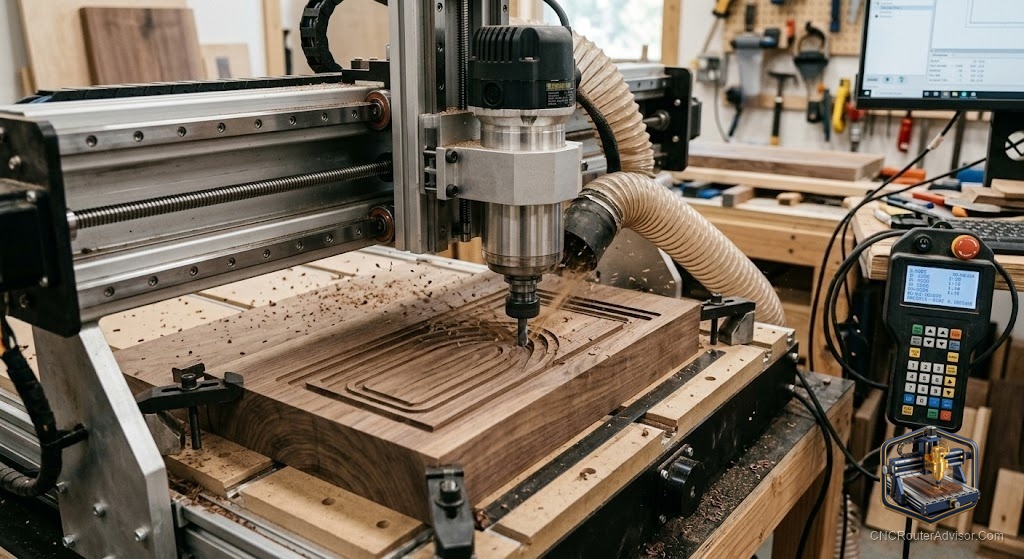
“What makes a CNC router good?” is the question underneath almost every machine search, and it is a better question than “which one is best.” Best depends on someone else’s needs. Good depends on yours. A machine that is perfect for a sign maker cutting acrylic all day might frustrate a woodworker cutting hardwood joinery, and both would bore a hobbyist who just wants to engrave gifts on weekends. So the real skill is knowing which qualities make a router good for the work you actually do.
This guide defines what “good” means in concrete terms, the specifications that back it up, and the buying considerations that decide whether a machine earns the label for you.
What makes a CNC router “good”
A good CNC router is one that cuts your materials accurately and repeatably, holds up over time, and is supported well enough that problems become quick fixes instead of dead ends. Break that down and it is four things: rigidity for clean cuts, a precise motion system for repeatable accuracy, a spindle matched to your materials, and a well documented control and software chain backed by real support.
Notice what is not on that list: the biggest bed, the highest spindle number, or the flashiest feature. Those help only if your work needs them. A good machine is one whose strengths line up with your projects, built well enough to keep delivering them.
The short answer
A good CNC router, for you, is the one that matches your materials and project size with rigidity, precision, and support intact. Prioritize frame rigidity and a quality motion system with ball screws or good linear rails, match the spindle to your densest material, and choose a machine running well supported software like GRBL. Then size the work area to your projects plus margin. Avoid judging by headline specs alone, because a rigid, well supported mid size machine outperforms a big, flimsy, unsupported one in every way that matters.
Features that define a good machine
Rigidity comes first because it caps cut quality. A stiff frame and solid gantry let the cutter take a real bite without chatter, which shows up as clean edges and accurate parts. Flex is the enemy, and no other feature compensates for it.
The motion system defines repeatability. Ball screws and quality linear rails move precisely with minimal backlash, so the hundredth part matches the first. Belts and V-wheels cost less and suit lighter work but give up some of that consistency.
Spindle and material match come next. A good machine pairs enough spindle power for your densest material with a frame that can use it. Power without rigidity is wasted, and rigidity without enough power leaves you crawling through hardwood.
Specifications that back up “good”
When you read a spec sheet, look for evidence of the qualities above. The motion system tells you about precision, so favor ball screws and linear guides for accuracy sensitive work. Frame material and machine mass hint at rigidity, since heavier, stiffer machines cut cleaner. Spindle power and type, a trim router versus a VFD spindle, tell you the material range. Controller and software matter too, so confirm a documented, well supported system rather than a closed one. Finally, work area caps part size, so size it to your projects with margin rather than maximizing it blindly.
Buying considerations that seal it
Support is the consideration buyers underrate most. A good machine from a maker with an active community, available parts, and responsive help stays good, because setbacks get solved fast. The same specs with no support behind them can strand you.
Build quality and consistency matter over time. Read owner experiences for reports of parts wearing, frames staying square, and cuts staying accurate after months of use. And factor space and dust, because even a good machine is a poor fit if it does not suit your shop.
Who should skip chasing a “good” all rounder
Skip the generic “good machine” hunt if your work is highly specialized, because a machine tuned to your exact material and size will beat a jack of all trades. A production sign shop, a hardwood furniture maker, and a metal focused user each want different strengths. Skip the biggest, most feature loaded machine if your projects are modest, since you will pay for capability you never use. And skip any machine, however well specced, that lacks support, because on a tool you rely on, support is part of what makes it good.
Comparison: what “good” looks like by user
| User | Top qualities | Work area | Notes |
| Hobbyist | Ease, support, rigidity | Compact to mid size | Well supported platform matters most |
| Woodworker | Rigidity, precision, power | Mid size to large | Joinery demands accuracy |
| Sign and craft shop | Speed, reliability | Mid size | Uptime and repeatability |
| Aluminum focused | Rigidity, real spindle | Mid size, metal frame | Rigidity over bed size |
For a well supported, rigid machine that fits most hobby and woodworking needs, the Genmitsu PROVerXL 4030 is a strong all round choice at this listing. For a metal framed machine aimed at tougher materials, the Genmitsu 3030 PROVer Ultra is available at this listing. For a compact, well supported starter, the Genmitsu 3020 PRO MAX is at this listing.
The verdict
A good CNC router is not a single model, it is a match. The machine that is good for you cuts your materials accurately, repeats reliably, holds up over time, and is backed by support that turns problems into quick fixes. Prioritize rigidity, a precise motion system, and a spindle matched to your materials, insist on well documented software and real support, and size the bed to your work with margin. Resist the pull of headline specs you will never use. Get that match right and the machine is good in the only way that counts: it makes the parts you want, again and again.
Frequently asked questions
What makes a CNC router good? A good router cuts your materials accurately and repeatably, holds up over time, and has real support behind it. That comes down to rigidity, a precise motion system, a spindle matched to your materials, and well documented software.
Is a more expensive router always better? No. A machine is good only if its strengths match your work. A rigid, well supported mid size machine can outperform a larger, flimsier one for your projects, and you avoid paying for capability you never use.
What specs should I focus on? Prioritize the motion system for precision, frame rigidity for clean cuts, and spindle power matched to your densest material. Then confirm well supported software and size the work area to your projects with margin.
Does brand matter when buying a CNC router? Support and community matter more than the badge. A brand with active help, available parts, and documented software keeps a machine good over time, because you recover from problems quickly.
What is a good first CNC router? A rigid, well supported machine running GRBL, sized to your projects, is a good first pick. The strength of the community behind it matters as much as raw specs when you are learning.
Can one router be good for wood, plastic, and aluminum? A rigid, metal framed machine with a real spindle can handle wood, soft plastics, and soft aluminum well. Prioritize rigidity over bed size, and match feeds and speeds to each material.
References
- CNC Router Info, How to Choose a CNC Router: https://cncrouterinfo.com/guides/how-to-choose-a-cnc-router/
- CNC Dad, Best CNC Router for Beginners: https://www.cnc-dad.com/blog/best-cnc-router-for-beginners/