
Cubiko CNC Router Guide: Features, Specifications, and Buying Considerations
Every so often a compact CNC router shows up in beginner forums with a name that is hard to pin down, and Cubiko is one of those. If you have landed here after seeing the name and want to know whether it is the right first machine, the useful thing I can give you is not marketing copy. It is a framework: the features that actually matter on a small desktop router, how to read the specifications honestly, and how to compare any compact machine, Cubiko or otherwise, against the well supported options that dominate the beginner space.
I will be candid where information on a specific model is thin, because guessing at specs helps no one. What follows is how to evaluate a compact desktop router so you buy on facts, not on a name.
What to expect from a compact desktop router
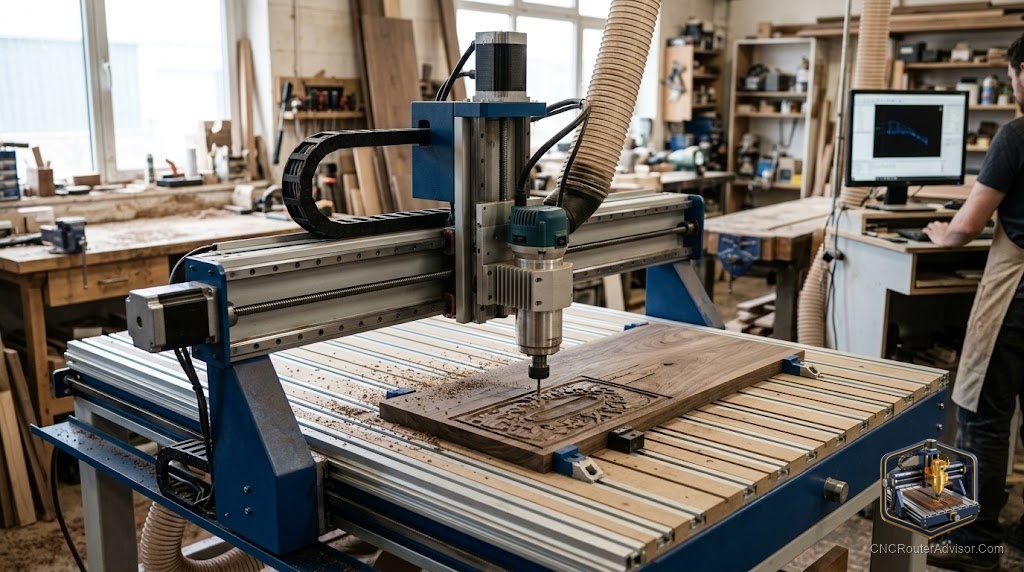
Machines in this class are small footprint CNC routers aimed at hobbyists and beginners. They use a moving gantry over a modest work area, driven along the X axis, Y axis, and Z axis, with either a small spindle or a mount for a trim router. Most run a GRBL controller and cut G-code generated from beginner friendly software. They handle wood, soft plastics such as acrylic and HDPE, and light engraving, and the better ones can touch soft aluminum with care.
The defining traits of the category are a small work area, a lightweight frame built from aluminum extrusion, and a focus on easy setup over outright capability. That is the right tradeoff for learning, and the wrong one if you already know you need to cut large or tough parts.
The short answer
Before buying any compact router, including Cubiko, confirm four specifics: the exact work area, the spindle power and type, the motion system, meaning whether it uses lead screws or ball screws and what guides it rides on, and the controller and software. Then weigh those against the well supported machines beginners rely on, because community support and parts availability matter as much as raw specs on a first machine. If you cannot get clear specifications and evidence of active support for a given model, treat that as a reason to choose a machine that publishes them plainly.
Features that actually matter
Work area comes first, because it caps what you can make. Measure your realistic projects and add margin. A tiny bed is fine for coasters, jewelry, and small signs, and frustrating the moment you want a larger panel.
Frame rigidity comes second. A stiffer frame cuts cleaner and lets you push harder without chatter. Lightweight extrusion keeps cost and weight down but flexes more, which shows up as poorer finish in dense material.
Spindle power and type come third. A small DC spindle is quiet and simple, while a mounted trim router gives more cutting power. Either works for wood and plastic. More power widens what you can cut and how fast.
Specifications to read carefully
Do not take a single headline number at face value. For work area, check whether the quoted size is the full travel or the outside dimension. For the motion system, ball screws move more precisely with less backlash than lead screws or belts, so a machine’s drive mechanism tells you a lot about finish and repeatability. For control, confirm it runs a well documented system like GRBL, which means broad software compatibility and easy troubleshooting. And check the spindle: its power rating and whether it is a fixed spindle or a router mount.
Buying considerations beyond the machine
Support and community are the quiet dealbreakers. On a first machine, an active user base, available spare parts, and responsive help turn setbacks into quick fixes. A machine with great specs and no support can strand you the first time something jams. This is exactly why the popular beginner platforms stay popular: not because they are perfect, but because when you hit a wall, thousands of people have already hit it and posted the fix.
So when you evaluate Cubiko or any lesser known name, look hard for evidence of that ecosystem. If it is thin, a machine with a bigger community may serve you better even if the spec sheet looks similar.
Who should skip a compact desktop router
Skip this class if you already know you need a large work area for panels or furniture parts, because you will outgrow a small bed fast. Skip it if your main material is metal, which needs a rigid, purpose built machine. And skip any specific model, however appealing the name, if you cannot verify its work area, motion system, and support before buying. A first machine you cannot get answers for is a frustrating way to learn.
Comparison: how to size up a compact router
| Spec to check | What to ask | Why it matters |
| Work area | Full travel in X, Y, Z | Caps the size of what you can make |
| Motion system | Ball screw, lead screw, or belt | Drives precision and finish |
| Spindle | Power and fixed vs router mount | Sets cutting power and material range |
| Controller | GRBL or documented system | Software compatibility and support |
| Support | Community and spare parts | How fast you recover from problems |
The verdict
A compact desktop router can be a great first machine, but a name alone should never close the deal. Whether you are looking at Cubiko or any small router, buy on verified facts: the work area, the motion system, the spindle, the controller, and above all the strength of the support behind it. Where a model’s specifications and community are clear and healthy, judge it on those merits. Where they are thin or hard to confirm, lean toward the well documented beginner platforms that publish their specs and back them with an active user base. On a first machine, the answers you can get matter as much as the parts in the box.
Frequently asked questions
Is the Cubiko CNC router good for beginners? A compact desktop router can suit beginners well, but judge any specific model on verified specs and support rather than the name. Confirm its work area, motion system, spindle, and community before deciding.
What can a compact desktop CNC router cut? Wood, soft plastics like acrylic and HDPE, and light engraving are the core. Rigid models can touch soft aluminum with careful technique. Metal and large panels are outside this class.
How do I check if a machine has good support? Look for an active user community, published documentation, and available spare parts. If help and parts are easy to find, problems become quick fixes. If not, treat it as a real drawback.
Ball screw or lead screw on a small router? Ball screws offer smoother motion and less backlash, which improves finish and repeatability. Lead screws and belts cost less but give up some precision. The drive mechanism tells you a lot about cut quality.
What work area do I need? Measure your realistic projects and add margin. Small beds suit coasters, jewelry, and small signs. If you plan larger panels, buy bigger from the start to avoid outgrowing the machine.
Should I choose a lesser known brand or a popular one? If the lesser known model has clear specs and real support, it can be fine. When those are uncertain, a popular platform with a large community and easy parts is the safer first machine.
References
- CNC Router Info, How to Choose a CNC Router: https://cncrouterinfo.com/guides/how-to-choose-a-cnc-router/
- CNC Dad, Best CNC Router for Beginners: https://www.cnc-dad.com/blog/best-cnc-router-for-beginners/